
Economy
Over 70% of Iraq's Money Supply Remains Untapped
A significant portion of Iraq's currency is hoarded outside banks, indicating a deepening crisis in the financial system due to lack of trust.
Aug 31, 2026, 7:28 PM | 1-2 min read | By Wadi News Editorial Team
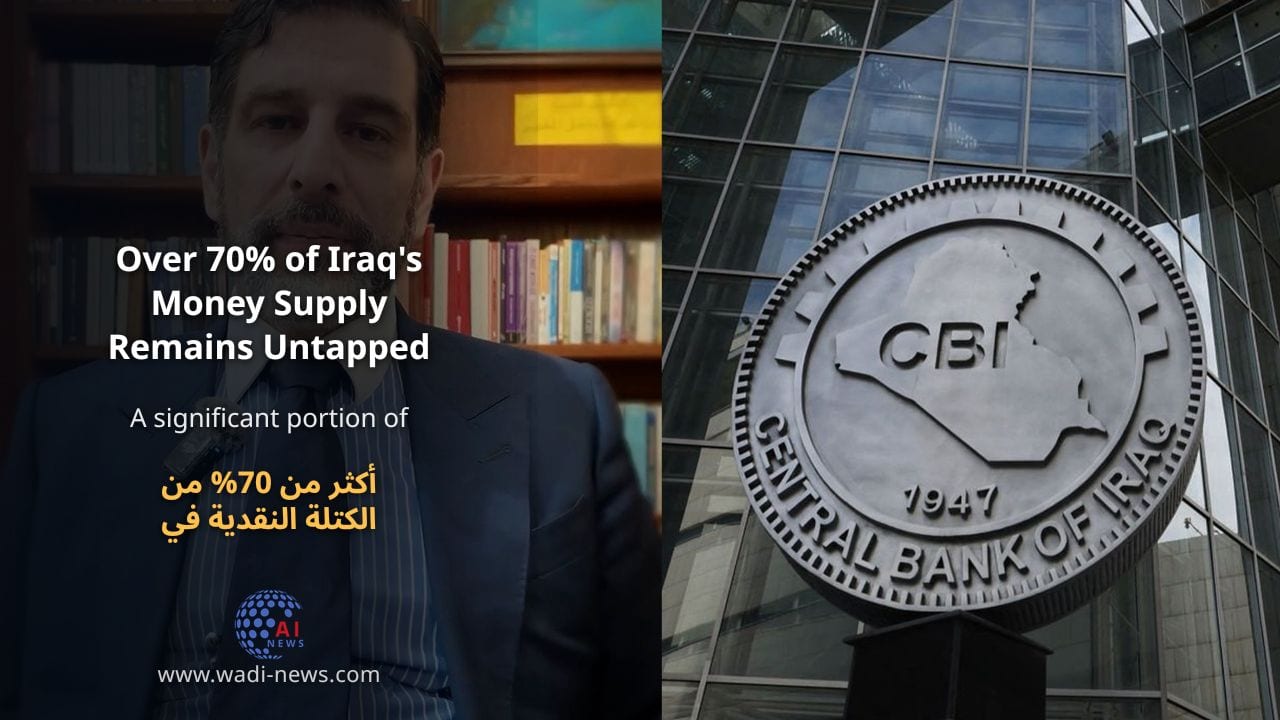
The current financial landscape in Iraq reveals alarming statistics, with over 70% of the total money supply reportedly hoarded outside of formal banking institutions. This situation has escalated to an astonishing 91.7% of the currency issued, highlighting a profound crisis in the trust that citizens place in the banking system. Many Iraqis prefer to keep their money in cash rather than deposit it in banks, reflecting a significant loss of confidence in banking services and regulations.
The roots of this crisis can be traced back to a combination of factors, including historical economic instability, inadequate banking infrastructure, and a lack of effective regulatory oversight. Citizens feel that their savings are safer in physical form rather than in bank accounts, where they fear potential losses or restrictions. This has led to a substantial amount of liquidity being trapped outside the formal economy, which in turn hampers financial growth and investments.
Experts suggest that urgent and comprehensive solutions are needed to address this issue. Modernizing the banking system and restoring public trust are paramount. Measures could include enhancing transparency within banks, improving customer service, and implementing robust regulatory frameworks to protect depositors. Additionally, financial education initiatives are essential to inform citizens about the benefits of utilizing banking services.
In conclusion, the crisis of hoarded cash in Iraq represents a critical challenge for the country's economic future. Without significant reforms and a renewed focus on building trust in the banking sector, the economy will continue to suffer from stagnation and inefficiency. The government and financial institutions must collaborate to devise strategies that encourage citizens to engage more actively with the banking system, thereby unlocking the potential of the country's financial resources.