
Politics
Libya's Agreement Under Scrutiny: A Path to Elections or Continued Disputes?
The signing of the '4+4' committee's final agreement raises questions about the legitimacy of the outcomes and the ability of Libyan institutions to implement them towards actual elections.
Aug 31, 2026, 2:08 PM | 1-2 min read | By Wadi News Editorial Team
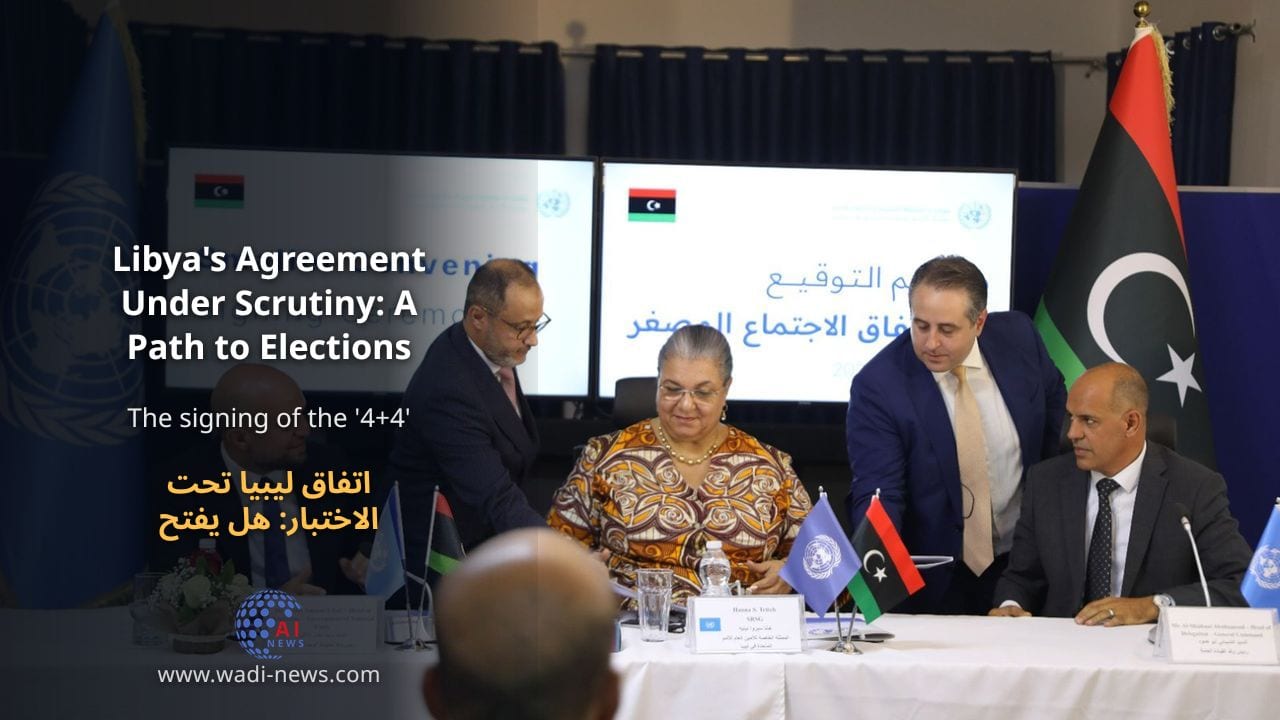
The recent signing of the final agreement by Libya's '4+4' committee marks a significant milestone in the ongoing political landscape of the country. This agreement, which aims to facilitate a roadmap for elections under international supervision, brings forth a host of new questions regarding the legitimacy of its outcomes. As Libya has been grappling with political instability for years, the success of this agreement is crucial in determining whether it will pave the way for the long-awaited elections or simply prolong existing disputes.
One of the main concerns surrounding this agreement is the capability of Libyan institutions to transform the discussed outcomes into tangible actions that lead to elections. The '4+4' committee, established to bridge divides among various factions, faces the challenge of gaining the trust of the populace. As the country has experienced a series of failed attempts at establishing a unified government, the current agreement must demonstrate a commitment to genuine progress and reconciliation.
Moreover, the international community's role in overseeing the implementation of this roadmap cannot be overstated. With Libya's history of foreign interference complicating its internal politics, the involvement of international bodies is essential to ensure that the process remains transparent and accountable. Observers are watching closely to see if this agreement can indeed serve as a catalyst for change or if it will merely lead to further complications and delays.
In conclusion, the signing of the '4+4' committee's agreement is a pivotal moment for Libya. While it represents hope for a potential path towards elections, the real test lies in the ability of Libyan institutions and the international community to collaborate effectively. Only time will reveal whether this agreement will lead to a stable political environment or if it will extend the cycle of disputes that have plagued the nation for far too long.