
Fun
Global Artists Call for Support for Palestine at Venice Film Festival
Over 200 artists and cultural figures worldwide have signed an open letter urging the Venice Film Festival to take a stand in support of Palestine as the festival prepares for its 83rd edition.
Aug 30, 2026, 7:28 AM | 1-2 min read | By Wadi News Editorial Team
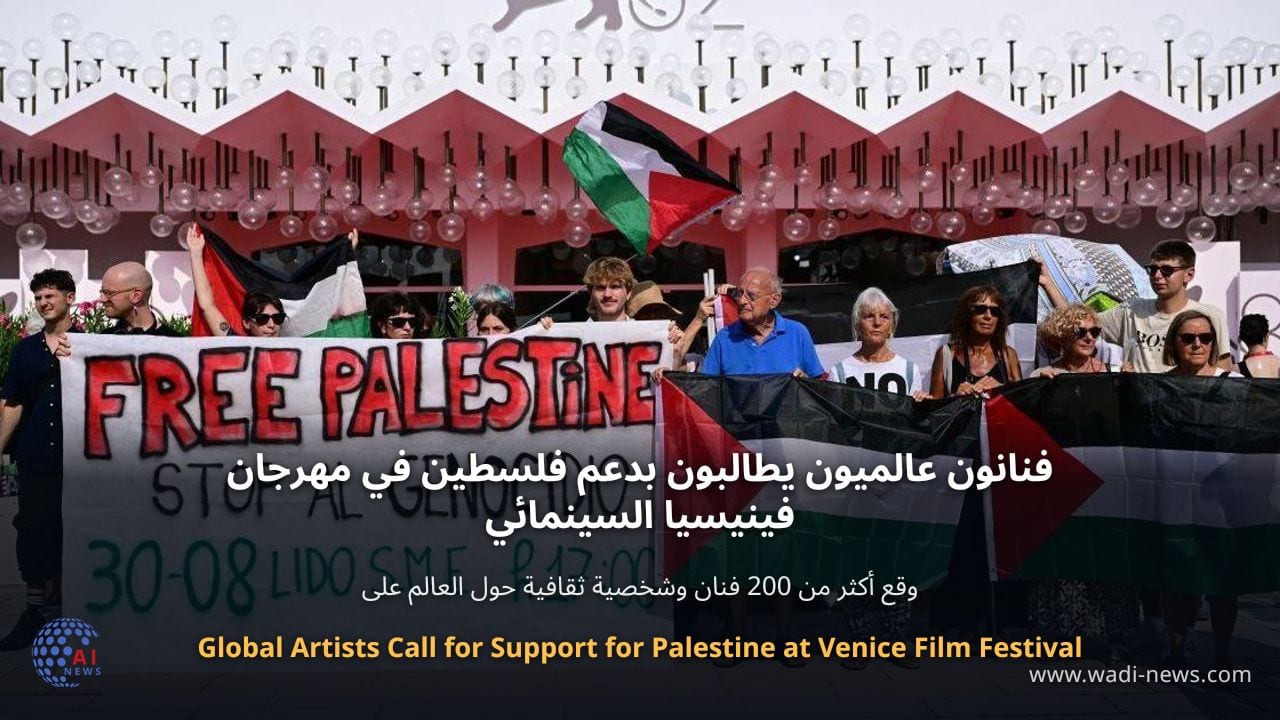
As the Venice Film Festival gears up for its 83rd edition, a significant movement has emerged from the artistic community. More than 200 prominent artists and cultural figures from various countries have joined forces to sign an open letter directed at the festival's administration. This letter calls for the festival to take concrete actions in support of the Palestinian people amidst ongoing conflicts and humanitarian crises in the region. The artists express their concerns regarding the situation in Palestine and emphasize the importance of using influential platforms to advocate for justice and human rights.
The Venice Film Festival, known for its prestigious history and global reach, presents a unique opportunity for artists to voice their opinions on pressing social issues. The signatories of the letter include filmmakers, actors, and musicians who have made significant contributions to the arts. They believe that the festival should not only celebrate cinematic achievements but also acknowledge and address critical global issues that affect humanity. By urging the festival to act, these artists aim to raise awareness and encourage dialogue about the plight of the Palestinian people.
This initiative reflects a growing trend among artists to engage in activism and advocate for social justice. Many of the signatories have previously participated in various movements aimed at promoting peace and equality. Their collective effort at such a renowned event as the Venice Film Festival underscores the intersection of art and activism, highlighting how cultural platforms can be harnessed to effect change. The letter serves as a reminder that the arts can play a pivotal role in shaping public discourse and influencing policy decisions.
As the festival approaches, it remains to be seen how the administration will respond to this powerful call for action. The artists' plea not only seeks to support Palestine but also aims to inspire other cultural institutions to take similar stances in favor of human rights. The Venice Film Festival has the potential to set a precedent for how art can engage with and reflect upon the socio-political landscape, reaffirming its role as a space for dialogue and advocacy. In conclusion, the open letter serves as a clarion call for solidarity and justice, urging all stakeholders in the arts to recognize their power in promoting positive change.