
Politics
Transitioning Oil Fields and Military Integration: The Path Ahead for Damascus and the Kurds
The agreement between Damascus and Kurdish forces has entered a critical phase that requires military, security, and political actions amidst significant challenges.
Aug 27, 2026, 4:48 PM | 1-2 min read | By Wadi News Editorial Team
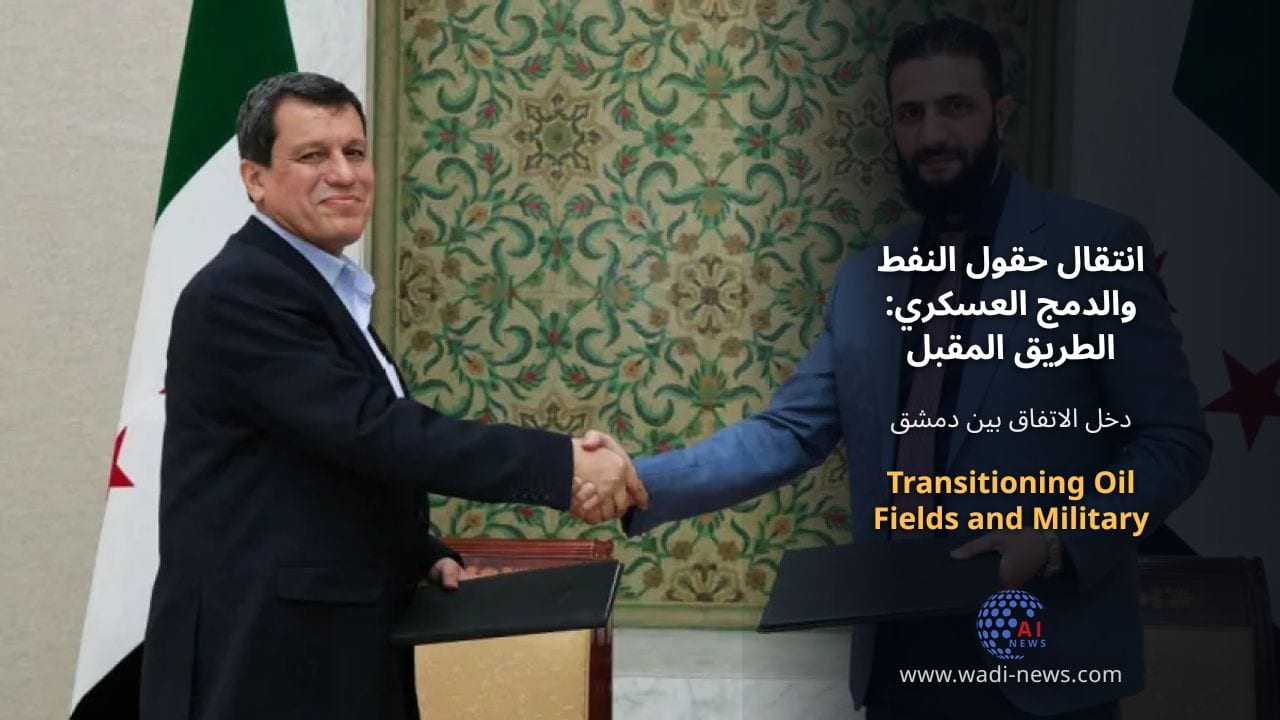
The recent decision to dissolve the Syrian Democratic Forces (SDF) marks a pivotal moment in the ongoing negotiations between the Syrian government and Kurdish factions. This agreement signals a shift towards a more integrated approach to governance and security in the region. The complexities of this transition involve not only the military integration of forces but also the management of vital resources, particularly oil fields, which have been a point of contention for years. As both parties navigate this delicate landscape, they face a multitude of challenges that require careful consideration and strategic planning.
One of the primary objectives of this agreement is the transfer of control over oil fields from the SDF to the Syrian government. This move is expected to bolster the government's revenue streams while simultaneously addressing the economic needs of the region. However, the transfer of these resources is fraught with potential conflict, as local populations and former SDF members may resist changes that threaten their livelihoods. The government must tread carefully to ensure that the integration process does not exacerbate existing tensions or lead to unrest.
Moreover, the military integration of Kurdish forces into the Syrian national army presents its own set of challenges. Trust issues persist between the two sides, stemming from years of conflict and differing political agendas. Building a cohesive military unit will require not only political will but also significant efforts in terms of training, communication, and operational coordination. The success of this integration will be crucial in establishing a stable security environment in the region.
In conclusion, while the agreement between Damascus and the Kurdish forces represents a significant step towards resolving long-standing issues, its implementation will demand a careful balance of military, economic, and political factors. Both sides must work collaboratively to navigate the complexities of this transition, ensuring that the rights and needs of the local population are respected. The coming months will be critical in determining the future of this agreement and the broader stability of the region.