
Politics
Trump's America First Policy: A Detriment to the Nation and a Boon for the World
A recent article suggests that Trump's America First approach may undermine the country's global standing while encouraging other nations to establish a more independent international system.
Aug 22, 2026, 10:08 AM | 1-2 min read | By Wadi News Editorial Team
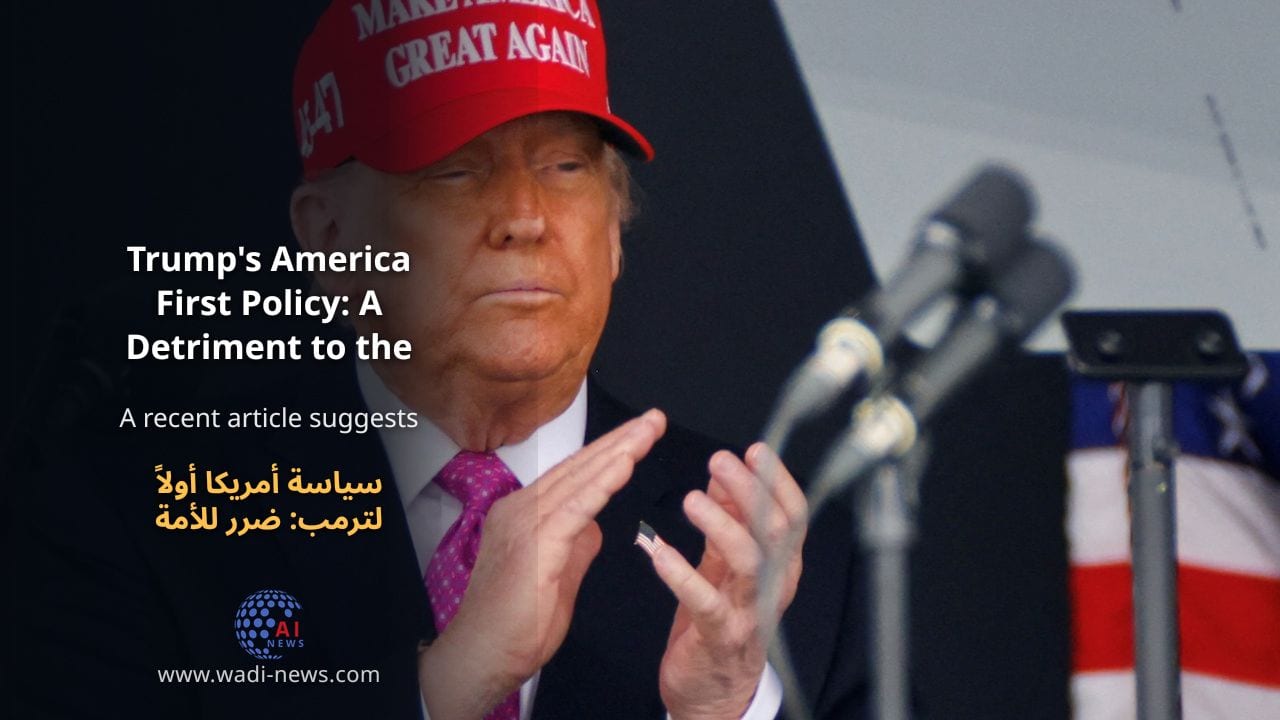
In a thought-provoking article published by the Washington Post, Zachary Karabel argues that President Trump's 'America First' doctrine may ultimately harm the United States' position on the global stage. The commentary highlights that while this policy is aimed at prioritizing American interests, it could lead to a decline in the country's influence abroad. As the world witnesses this shift, other nations might feel compelled to forge a more autonomous international framework, reducing their reliance on the U.S. This transition could result in a significant reorganization of global power dynamics, positioning the United States in a less dominant role.
Karabel notes that the implications of such a shift are profound. Countries that have historically aligned with the U.S. may begin to reconsider their partnerships, seeking alternatives that promote their own sovereignty. The article emphasizes that the notion of 'America First' is not merely an internal policy but one that reverberates across borders, influencing international relations and trade agreements. As nations navigate this new landscape, the potential for increased cooperation among them could emerge, leading to a collective strength that diminishes America's traditional leadership role.
The author also points out that while Trump's administration may view these changes as beneficial to American citizens, the long-term effects could be detrimental. By prioritizing nationalistic policies, the U.S. risks alienating allies and creating a vacuum that other powers, such as China and Russia, may exploit. This could accelerate the emergence of a multipolar world where American supremacy is challenged, resulting in a more fragmented global order.
In conclusion, the article serves as a cautionary tale about the repercussions of an isolationist approach in a highly interconnected world. It urges policymakers to reconsider the long-term impacts of 'America First' on both national and global scales. While short-term gains may be appealing, the broader implications for international relations and the United States' standing could lead to unforeseen challenges that require careful navigation.