
Tech
NASA's Swift Rescue Mission Faces Setback
NASA's attempt to elevate the Swift Observatory is hindered by a control failure, yet the agency remains committed to advancing satellite servicing technologies.
Aug 22, 2026, 7:28 AM | 1-2 min read | By Wadi News Editorial Team
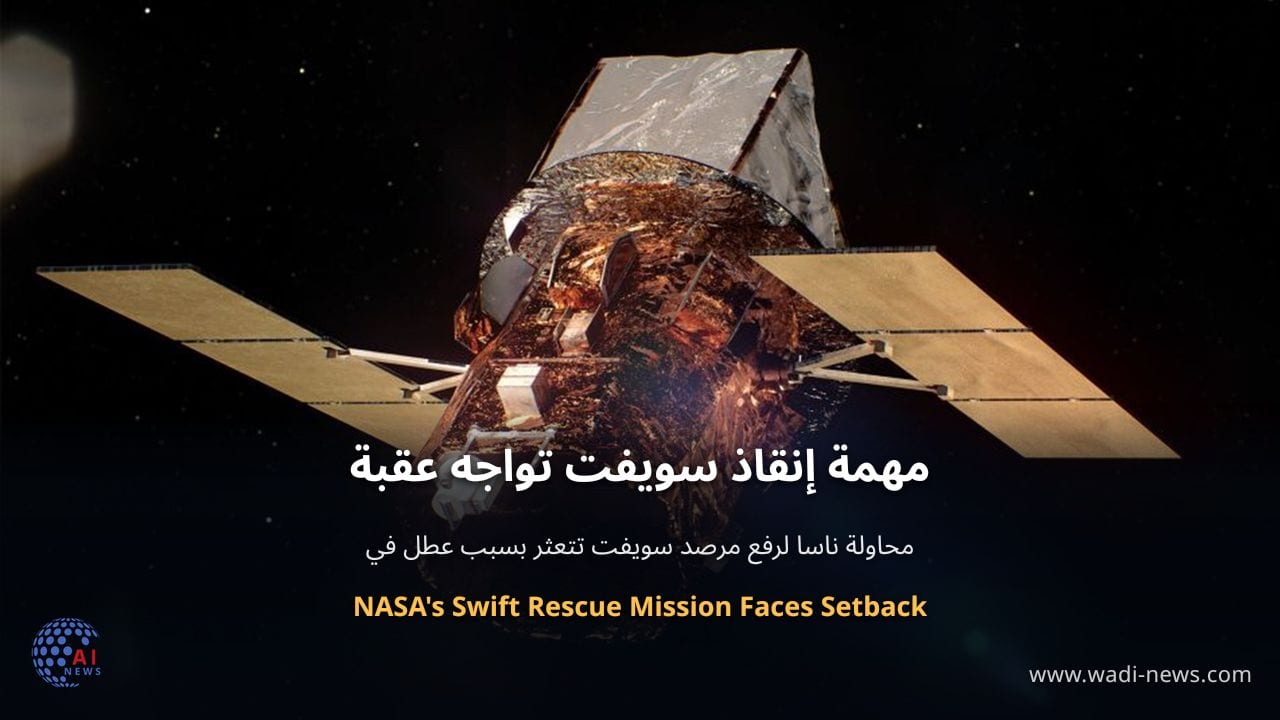
NASA has announced a significant setback in its mission to elevate the Swift Observatory to a higher orbit. This mission was crucial for enhancing the observatory's operational capabilities and extending its lifespan in space. Unfortunately, the spacecraft designated for this task, known as Link, encountered a control malfunction that has rendered it incapable of carrying out the necessary maneuvers. Despite this disappointing news, NASA officials have expressed their determination to continue pursuing the mission's objectives, albeit in a modified manner.
The Link spacecraft was designed to test new satellite servicing technologies that could prove invaluable for future missions. NASA's commitment to this mission reflects its broader strategy of advancing capabilities in space operations, especially in the realm of maintaining and repairing satellites. The agency believes that even in the face of setbacks, there are lessons to be learned that can inform future endeavors. As the space industry evolves, the ability to service and upgrade satellites is becoming increasingly important.
In response to the control failure, NASA plans to continue its efforts to approach the Swift Observatory. The agency aims to gather data and insights that could enhance its understanding of satellite operations and servicing techniques. This approach aligns with NASA's long-term vision of developing robust solutions for satellite maintenance, which is crucial for the sustainability of space exploration.
While the current situation poses challenges, NASA's resolve to push forward demonstrates its commitment to innovation and exploration. The agency hopes that by overcoming these obstacles, it can pave the way for more successful missions in the future. The lessons learned from the Swift mission will undoubtedly contribute to the development of more reliable systems for satellite servicing, ultimately benefiting a wide range of scientific and commercial applications.