
Politics
Debate Erupts Over Gulf Naming During Qalibaf's Visit to Iraq
The visit of Iranian official Mohammad Bagher Qalibaf to Iraq has sparked a heated debate on social media regarding the terms 'Arabian Gulf' and 'Persian Gulf', with Iraqi politician Mohammed al-Halbousi's image receiving significantly more engagement.
Aug 21, 2026, 12:48 AM | 1-2 min read | By Wadi News Editorial Team
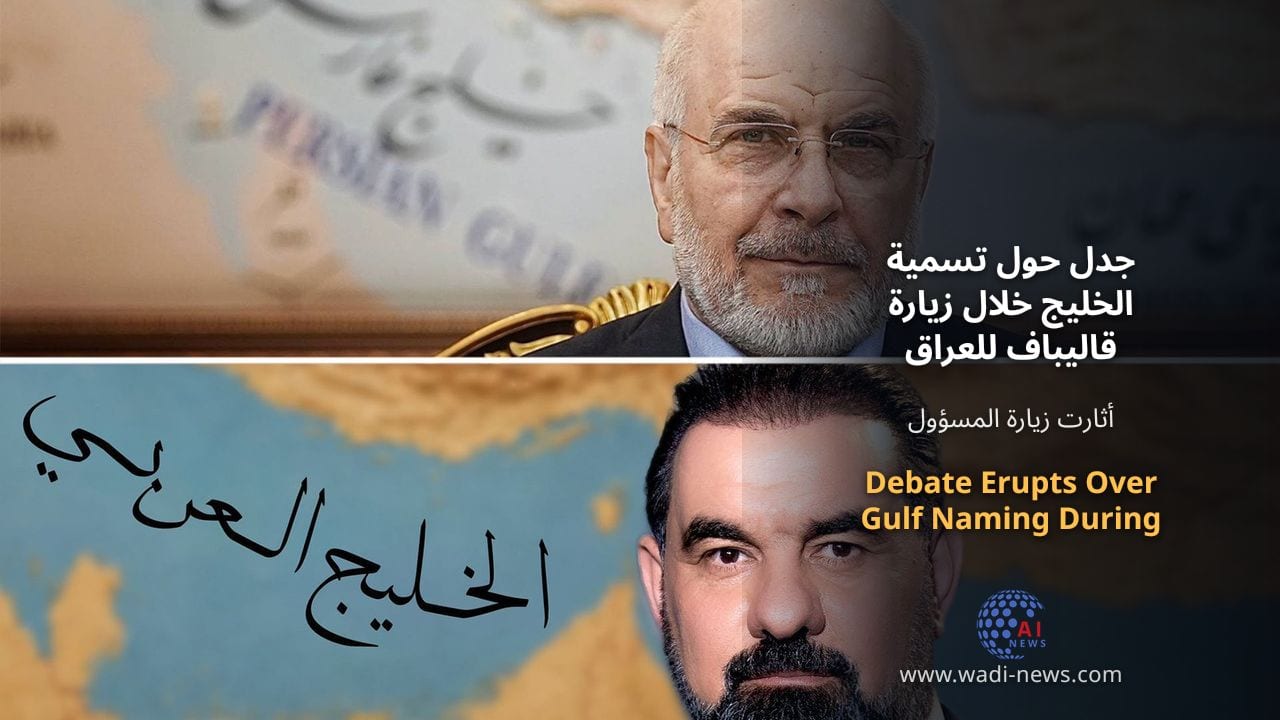
The recent visit of Iranian parliamentary speaker Mohammad Bagher Qalibaf to Iraq has ignited a significant online controversy, particularly regarding the nomenclature of the body of water between Iran and the Arabian Peninsula. During a meeting with Iraqi Parliament Speaker Mohammed al-Halbousi, the two leaders were photographed together, but the focus quickly shifted to the labels they used to describe the gulf. This has led to a social media frenzy, with users passionately taking sides in the debate over whether to refer to it as the 'Arabian Gulf' or the 'Persian Gulf'.
Al-Halbousi's image from the meeting rapidly gained traction, attracting over four times the engagement compared to Qalibaf's photo. This disparity highlights the intense feelings surrounding the naming issue, which has been a contentious topic in regional politics for decades. Supporters of the 'Arabian Gulf' label argue that it reflects the historical and cultural ties of Arab nations, while proponents of the 'Persian Gulf' term emphasize its historical significance dating back to ancient times.
The social media discourse has also been marked by a mixture of humor and serious discussions, as users shared memes and posts that either supported their preferred terminology or mocked the opposing view. The debate has extended beyond just the images and comments, with some users calling for a more nuanced understanding of the historical context behind each name. This unfolding situation underscores the complexities of national identity and regional politics in the Middle East.
As the conversation continues to evolve, it remains to be seen how this debate will influence future diplomatic relations between Iran and Iraq, as well as the broader Arab world. The incident serves as a reminder of the power of social media in shaping public discourse and the ongoing relevance of historical narratives in contemporary politics.