
Politics
Armenia at a Crossroads: Can Russia Persuade Yerevan to Abandon its European Path?
Armenia faces a critical decision as Russia pressures Prime Minister Pashinyan to choose between the Eurasian Economic Union and the European Union within a month.
Aug 19, 2026, 2:08 AM | 1-2 min read | By Wadi News Editorial Team
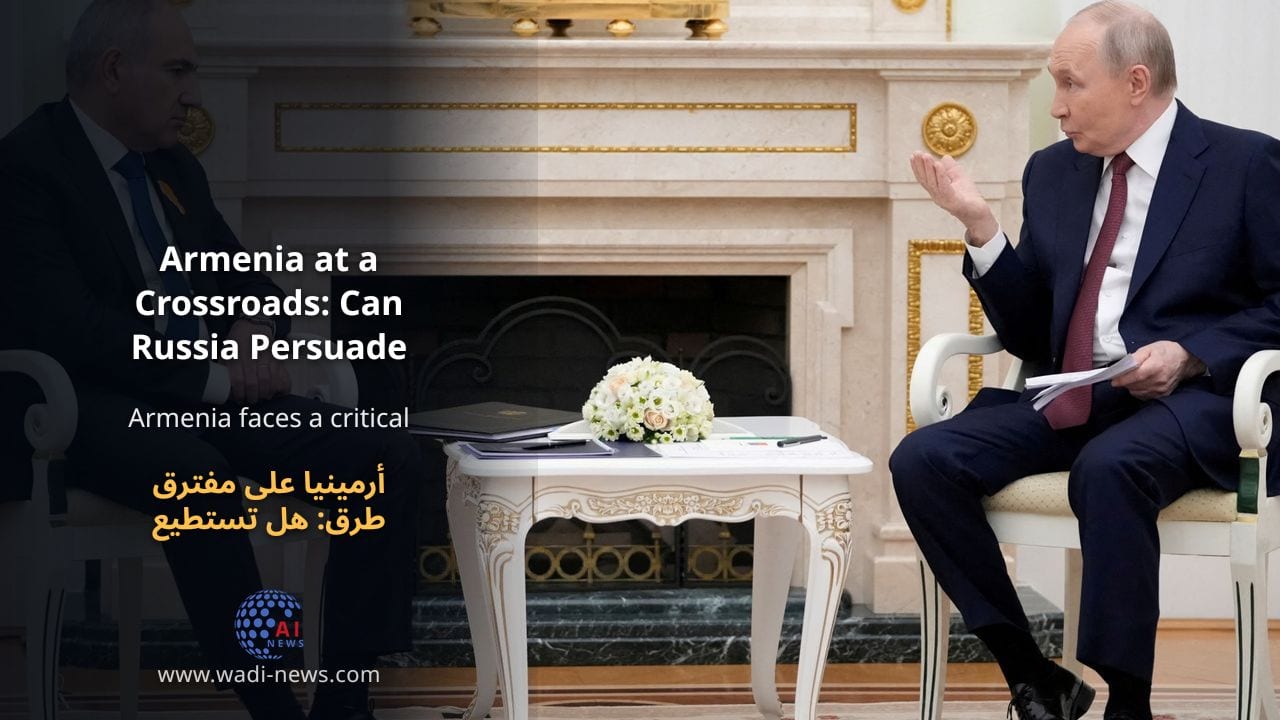
Armenia is currently at a pivotal juncture, with significant geopolitical implications as it contemplates its future alliances. The Armenian government has been given a deadline of approximately one month by Russia to decide whether to remain a member of the Eurasian Economic Union (EAEU) or to pivot towards the European Union (EU). This ultimatum reflects the growing tensions and shifting dynamics in the region, especially in light of Armenia's aspirations for closer ties with Europe. Prime Minister Nikol Pashinyan's government is now faced with a daunting choice that could reshape Armenia's foreign policy and economic landscape.
The pressure from Russia is not merely a diplomatic maneuver; it is a strategic attempt to maintain influence over Armenia, which has historically been aligned with Moscow. Reports suggest that if Armenia opts for the European Union, it could trigger a "second phase of more stringent pressure" from Russia. This raises concerns about the potential repercussions for Armenia's sovereignty and its ability to navigate a path that aligns with its national interests. As Armenia weighs its options, the implications of this decision extend beyond mere economic affiliations; they encompass national security, regional stability, and the future of its democratic institutions.
In recent years, Armenia has shown a growing inclination towards European integration, viewing it as a means to foster economic development and enhance democratic governance. However, this shift has been met with resistance from Russia, which perceives the EU's encroachment as a threat to its influence in the South Caucasus. The Armenian population is also divided on this issue, with some citizens advocating for deeper ties with Europe, while others remain cautious, fearing potential backlash from Russia.
As the deadline approaches, the Armenian government must carefully consider the consequences of its decision. Engaging with the EU could open up new avenues for investment and collaboration, but it may also lead to increased tensions with Russia. Ultimately, the path Armenia chooses will not only define its international relationships but also shape the future of its internal politics and societal cohesion. The coming weeks will be crucial in determining whether Armenia can balance its aspirations for European integration with the realities of its geographical and historical ties to Russia.