
Economy
Closure of Hormuz Straits Impacts Iraqi Oil Exports
The closure of the Hormuz Strait is causing a significant decline in Iraqi oil exports, putting pressure on the country's financial revenues.
Aug 18, 2026, 9:28 PM | 1-2 min read | By Wadi News Editorial Team
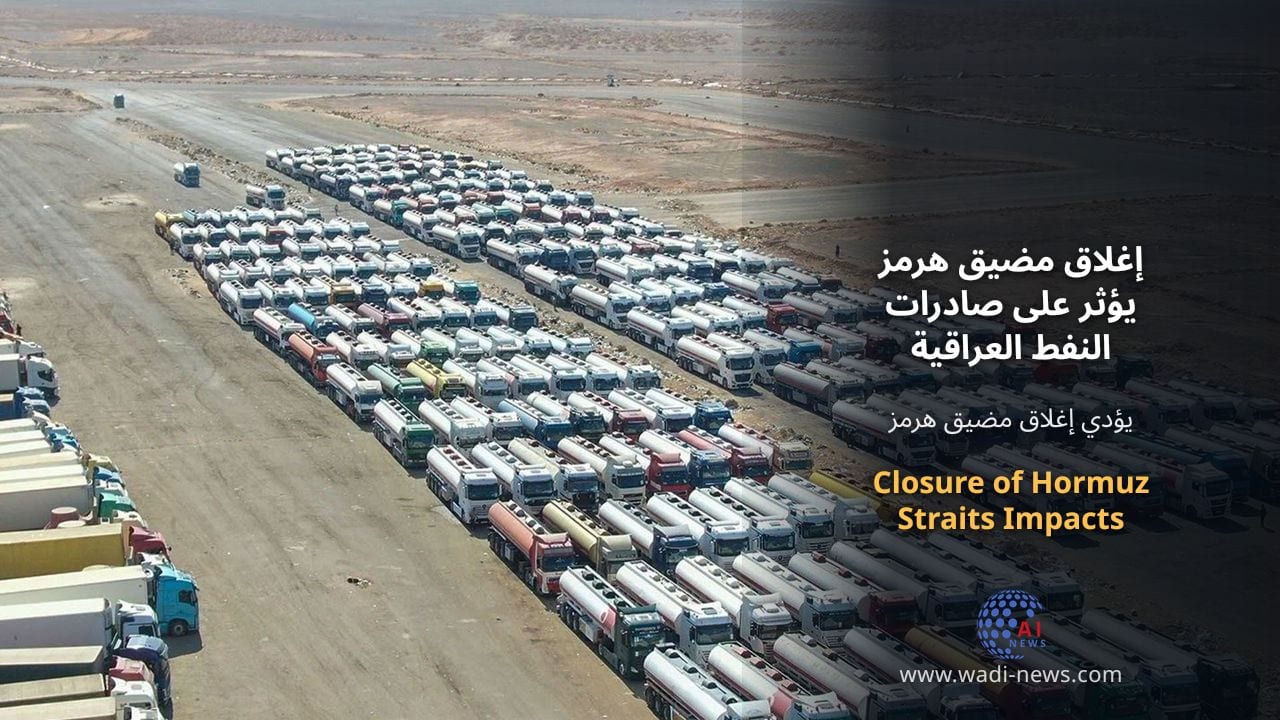
The recent closure of the Hormuz Strait has had a profound impact on Iraqi oil exports, which are crucial for the country's economy. The downturn in oil shipments has raised concerns regarding Iraq's financial stability, as the nation heavily relies on oil revenues to fund its public services and development projects. Reports indicate that the decline in exports could lead to a budget shortfall, affecting government operations and economic growth.
In addition to the immediate effects of the Hormuz closure, there are ongoing discussions regarding the Kirkuk-Banias pipeline, which is expected to take approximately four years to complete. This timeline contrasts sharply with previous estimates from Syrian officials, who suggested that the project could be finished in about 30 months. The extended duration for the pipeline's completion adds another layer of complexity to Iraq's oil export challenges.
Industry experts are closely monitoring the situation, as the Hormuz Strait is a strategic waterway through which a significant portion of the world's oil supply is transported. Any disruption in this area can have cascading effects on global oil prices and supply chains. As Iraq grapples with these challenges, the government is urged to diversify its economy and reduce dependency on oil revenues to mitigate future risks.
In conclusion, the combination of the Hormuz Strait's closure and the delayed Kirkuk-Banias pipeline construction poses serious threats to Iraq's economic stability. Policymakers must act swiftly to address these issues and explore alternative solutions to safeguard the nation's financial health.