
Economy
Chinese Refinery Becomes Financial Lifeline for Iran Amid Sanctions
A major Chinese refinery has stepped in to purchase Iranian oil, providing crucial financial support to Tehran as it navigates through tough American sanctions.
Aug 17, 2026, 8:17 AM | 1-2 min read | By Wadi News Editorial Team
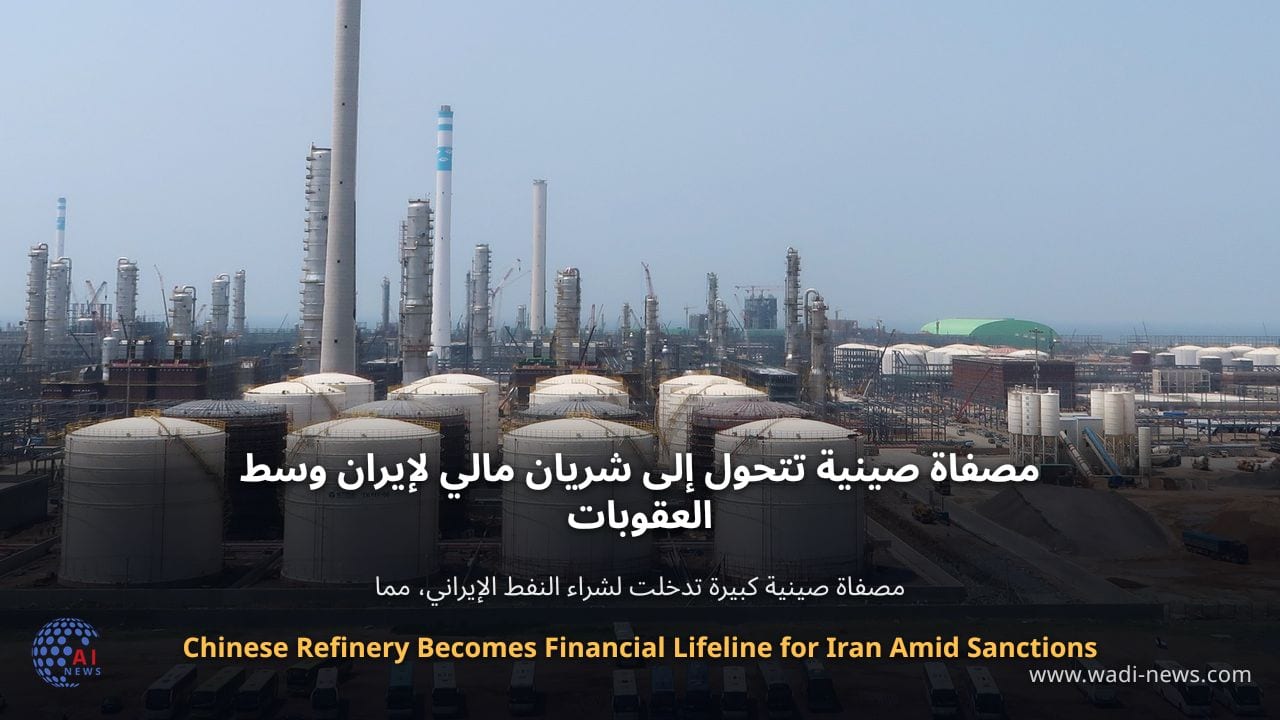
The Hengli Refinery in China has emerged as a significant player in the global oil market, particularly for Iran, by purchasing large quantities of Iranian crude oil. This strategic move is seen as a vital financial lifeline for Tehran, which has faced increasing pressure from U.S. sanctions aimed at crippling its economy. According to reports from the Wall Street Journal, Hengli's operations have allowed Iran to generate billions of dollars, thus helping it to sustain its economy during challenging times.
The Chinese refinery's involvement in the Iranian oil trade highlights the growing economic ties between China and Iran, particularly as both nations seek to counterbalance U.S. influence in the region. By facilitating the purchase of Iranian oil, Hengli not only aids Iran in circumventing sanctions but also secures a steady supply of crude oil for its own operations, which are crucial for meeting China's energy demands.
Moreover, this partnership reflects a broader trend of increasing cooperation between countries that are often at odds with the U.S. The Hengli Refinery's actions could lead to further investments in Iran's energy sector, potentially opening up new avenues for economic collaboration. As Iran continues to face isolation from Western markets, the role of Chinese companies like Hengli becomes even more critical.
In conclusion, the Hengli Refinery's engagement with Iranian oil signifies a shift in the global energy landscape, where geopolitical tensions can create unexpected alliances. This relationship not only provides financial relief to Iran but also reinforces China's position as a key player in the Middle Eastern energy market. As both nations navigate these complex dynamics, their partnership may evolve further, impacting global oil supply chains and market stability.