
Politics
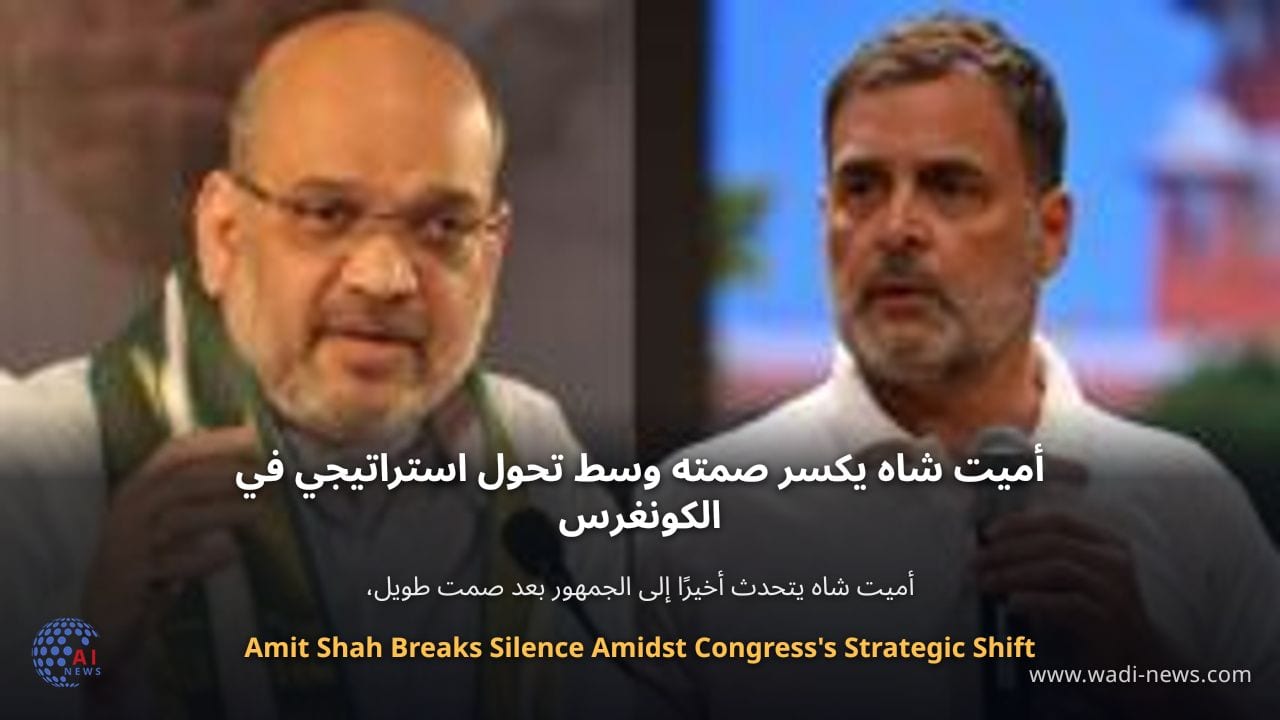
Amit Shah Breaks Silence Amidst Congress's Strategic Shift
Amit Shah has finally addressed the public after a prolonged silence, coinciding with a significant change in Congress's approach.
Aug 13, 2026, 3:37 PM | 1-2 min read | By Wadi News Editorial Team
In a surprising turn of events, Amit Shah, the Union Home Minister, has broken his silence just before the conclusion of the Monsoon Session of Parliament. This announcement comes at a time when the Indian National Congress has also altered its strategy, marking a significant shift in the political landscape. Shah's decision to speak out has raised questions regarding his prolonged silence and the timing of his statements.
For several weeks, political analysts and party members speculated about the reasons behind Shah's quiet demeanor. His absence from the political discourse was notable, especially as opposition parties ramped up their criticisms. The Congress party had been preparing to launch a series of counter-strategies aimed at challenging the ruling party's narrative, making Shah's eventual remarks even more critical.
As Shah addressed the media, he emphasized the government's commitment to addressing the pressing issues facing the nation, including economic challenges and social welfare programs. His speech aimed to reassure the public of the government's proactive measures and to counter any negative perceptions that may have arisen during his period of silence. The timing of his statements appears to be a calculated move to regain momentum for the ruling party as the Monsoon Session wraps up.
The Congress party's strategic shift has been characterized by a more aggressive stance, aiming to capitalize on any perceived weaknesses of the ruling government. This change has led to a more vibrant opposition, and Shah's comments are seen as an attempt to reassert the dominance of the Bharatiya Janata Party (BJP) in the current political climate. As the political battle intensifies, the implications of these developments will be closely monitored by both parties and the electorate, as they could influence the upcoming electoral scenarios.