
Economy
Rising Costs of Chartering Oil Tankers Soar Near $500,000 Daily
The cost of chartering massive oil tankers between the Middle East and China has surged to approximately $500,000 per day amid ongoing conflicts and decreased willingness of shipping companies to transit through the Strait of Hormuz.
Aug 11, 2026, 6:57 PM | 1-2 min read | By Wadi News Editorial Team
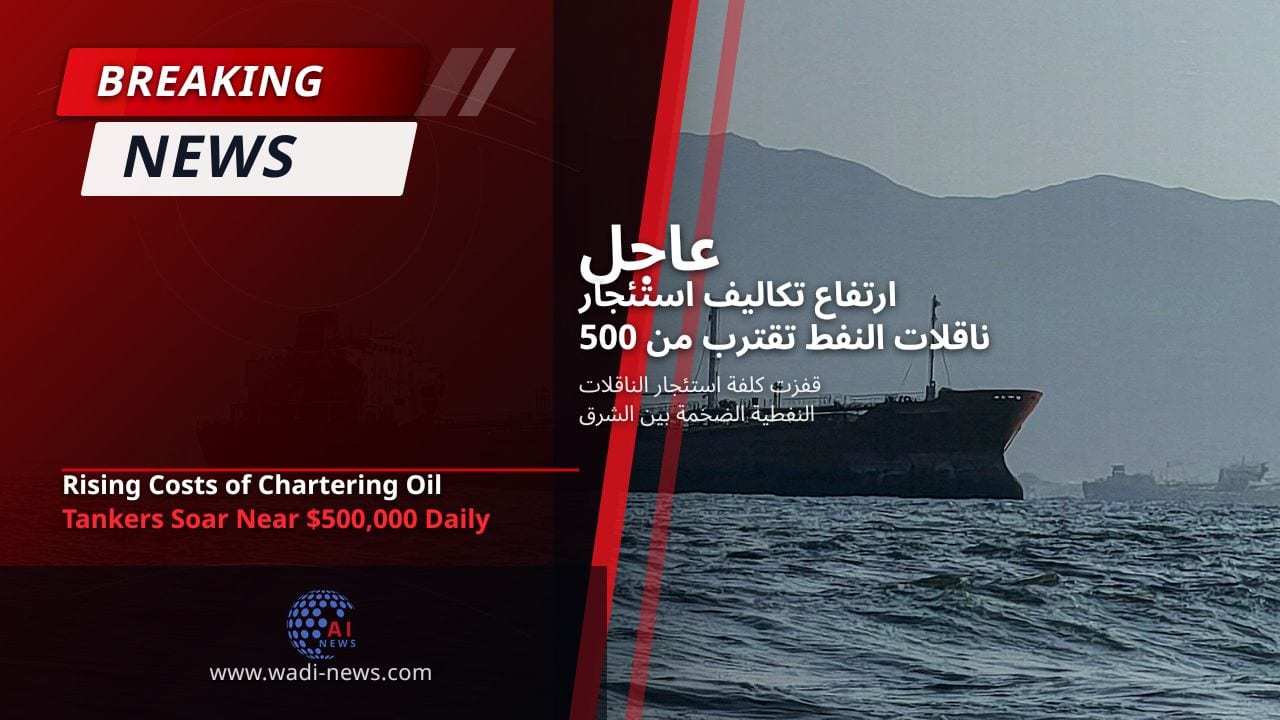
In a significant development within the global oil market, the expenses associated with chartering large oil tankers have skyrocketed to nearly $500,000 per day. This unprecedented increase is largely attributed to the ongoing conflicts in the region, which have heightened risks and uncertainties for shipping companies. As a result, many firms are hesitant to navigate through the strategic Strait of Hormuz, a vital passageway for oil shipments.
The Strait of Hormuz, which connects the Persian Gulf with the Gulf of Oman, is a crucial route for oil transportation. Approximately 20% of the world’s oil passes through this narrow waterway. The ongoing geopolitical tensions, particularly in the Middle East, have made this route increasingly perilous for oil tankers. Shipping companies are now facing tough decisions regarding their operational routes, with many opting for longer and safer pathways, thereby increasing overall shipping costs.
Moreover, the rise in chartering costs is expected to have a ripple effect on global oil prices. As shipping expenses climb, these costs are likely to be passed on to consumers and industries that rely heavily on oil. Analysts predict that this scenario could lead to a spike in fuel prices, affecting everything from transportation costs to consumer goods.
In conclusion, the escalation in the cost of chartering oil tankers reflects broader challenges facing the oil market amid geopolitical instability. As shipping companies navigate these treacherous waters, the implications for global oil prices and economic stability remain significant.