
Economy
Extension Granted for Currency Exchange in Eastern Syria
The Central Bank of Syria has announced an extension for the exchange of old currency in Raqqa, Hasakah, and Deir ez-Zor until August 20, 2026.
Aug 5, 2026, 7:35 PM | 1-2 min read | By Wadi News Editorial Team
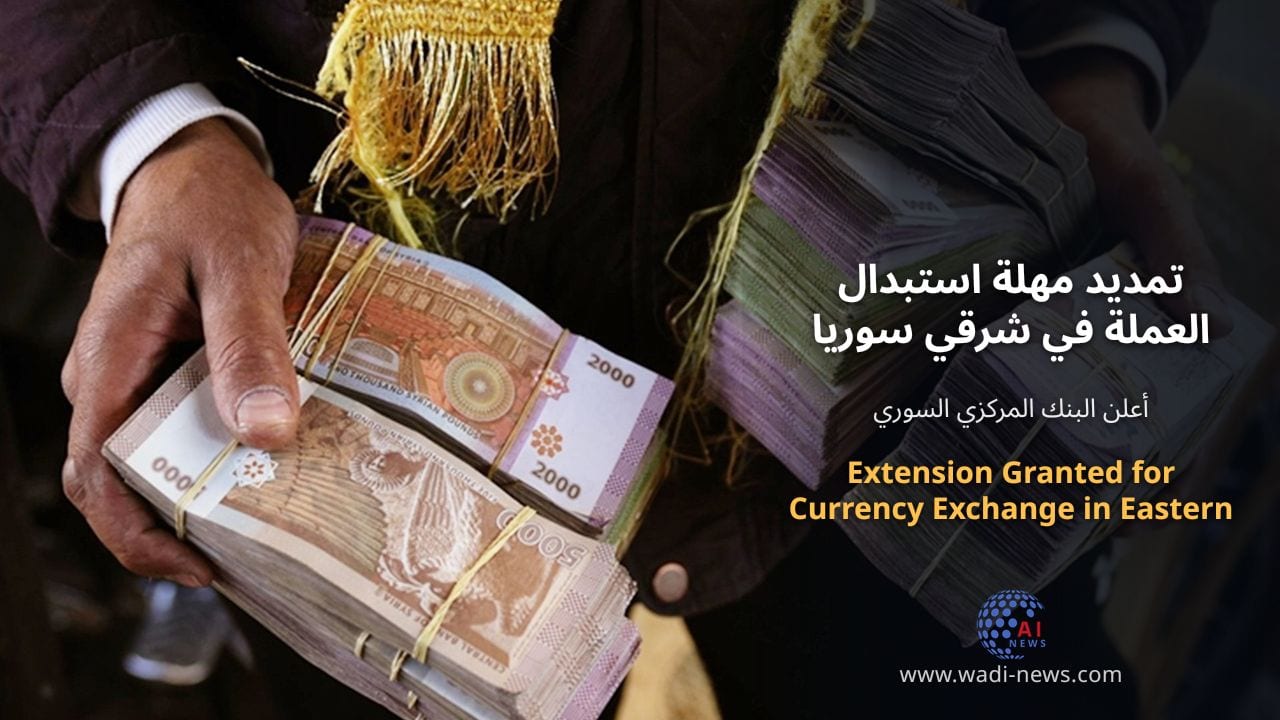
In a significant move aimed at easing the ongoing currency exchange issues in Eastern Syria, the Central Bank of Syria has officially announced an extension for the replacement of old currency notes. Residents of Raqqa, Hasakah, and Deir ez-Zor will now have until August 20, 2026, to exchange their old banknotes for the new ones. This decision comes in response to the recent surge in crowds and congestion at exchange centers, which had raised concerns among the local population.
The extension is part of a broader strategy to manage the currency transition smoothly. Alongside this announcement, the bank has introduced several organizational measures to help streamline the process. One of the key initiatives is the launch of the "Sham Cash" app, designed to facilitate transactions and reduce the physical presence of individuals at exchange centers. This digital solution aims to make the currency exchange process more efficient and accessible, particularly in light of the logistical challenges faced by residents in these regions.
The previous deadline for currency exchange had led to long lines and significant delays, prompting the Central Bank to act decisively. By extending the deadline, the authorities hope to alleviate the pressure on residents who may have been struggling to meet the original timeline. The introduction of digital tools like the "Sham Cash" app is expected to further enhance the efficiency of this transition, allowing individuals to carry out exchanges with greater convenience.
As the deadline approaches, it remains crucial for residents to stay informed about the procedures and any additional measures that may be implemented. The Central Bank of Syria has urged the public to utilize the available resources to ensure a smooth exchange process. With these developments, residents can expect a more manageable path forward in updating their currency, ultimately contributing to economic stability in the region.