
Tech
Surveillance Tactics: How the U.S. Targets Critics of ICE and Palestinian Activists
Recent reports unveil the advanced surveillance methods employed in the U.S. to monitor critics of ICE and Palestinian activists, detailing the use of high-tech tools for identity tracking and relationship profiling.
Aug 5, 2026, 8:15 AM | 1-2 min read | By Wadi News Editorial Team
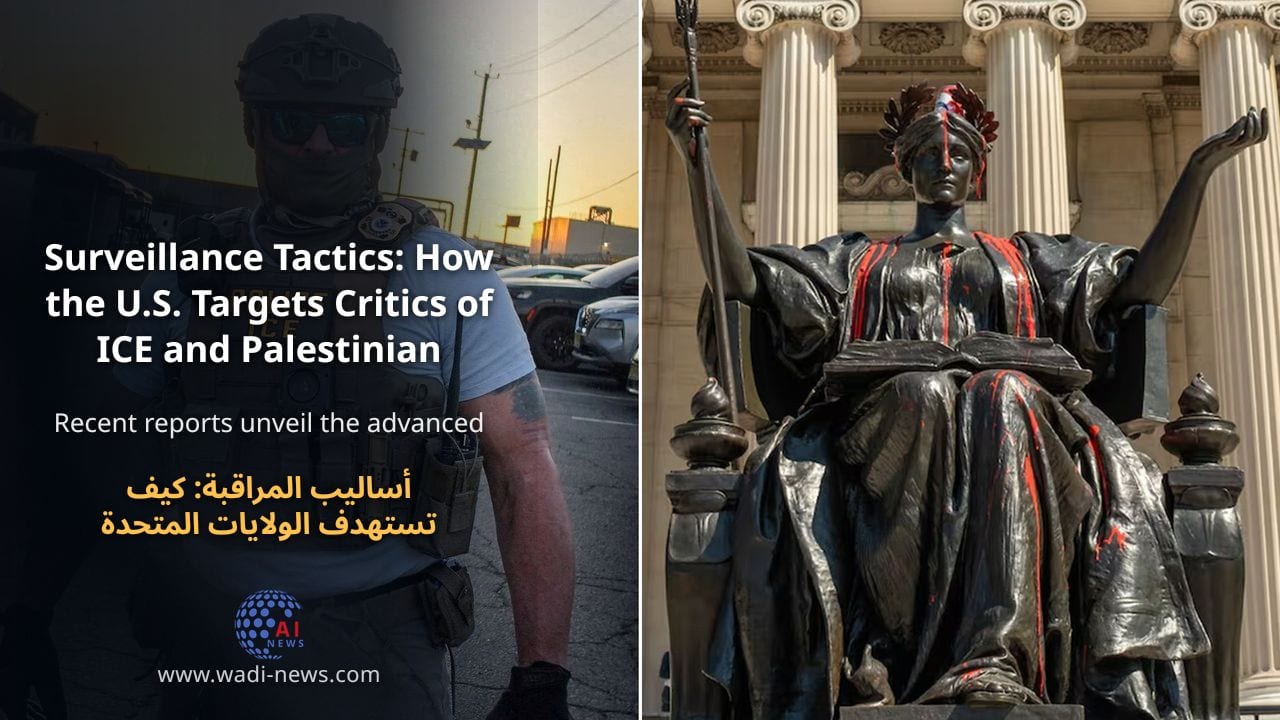
In a revealing analysis, recent investigations shed light on the sophisticated surveillance mechanisms that the United States has been employing against critics of the Immigration and Customs Enforcement (ICE) agency and Palestinian activists. These methods range from the use of high-tech cameras to identify unknown individuals to advanced facial recognition technologies that track movements in public spaces. The implications of such surveillance practices raise significant concerns about privacy and civil liberties for those who engage in activism or dissent against government policies.
The reports indicate that the U.S. government has increasingly turned to digital tools to gather intelligence on individuals who oppose its immigration policies or advocate for Palestinian rights. This includes not only the monitoring of social media activities but also the collection of data through various means, creating comprehensive profiles of activists and their networks. The chilling effect of such surveillance is evident, as many individuals may hesitate to voice their opinions or participate in protests due to fear of retaliation.
Moreover, the intersection of technology and law enforcement raises critical questions about accountability and oversight. Critics argue that while surveillance may be justified in the name of national security, it often leads to the infringement of basic rights. The use of facial recognition and other tracking technologies has sparked debates about their accuracy and potential for misuse, particularly against marginalized communities. Activists are calling for more transparency and regulations governing the use of such technologies to protect citizens from unwarranted scrutiny.
As these surveillance tactics become more prevalent, the need for a public discourse on the balance between security and individual freedoms is more urgent than ever. The ongoing scrutiny of activists highlights a broader trend of governmental overreach in the digital age. It is essential for society to engage in discussions about the ethical implications of these technologies and advocate for the protection of civil rights in the face of increasing surveillance.