
Politics
Maduro's Message from US Prison Highlights Venezuela's Dialogue
Nicolas Maduro, the imprisoned Venezuelan president, praises the national dialogue in Venezuela, facilitated by the US, while opposition leader Maria Corina Machado remains excluded.
Aug 3, 2026, 3:35 PM | 1-2 min read | By Wadi News Editorial Team
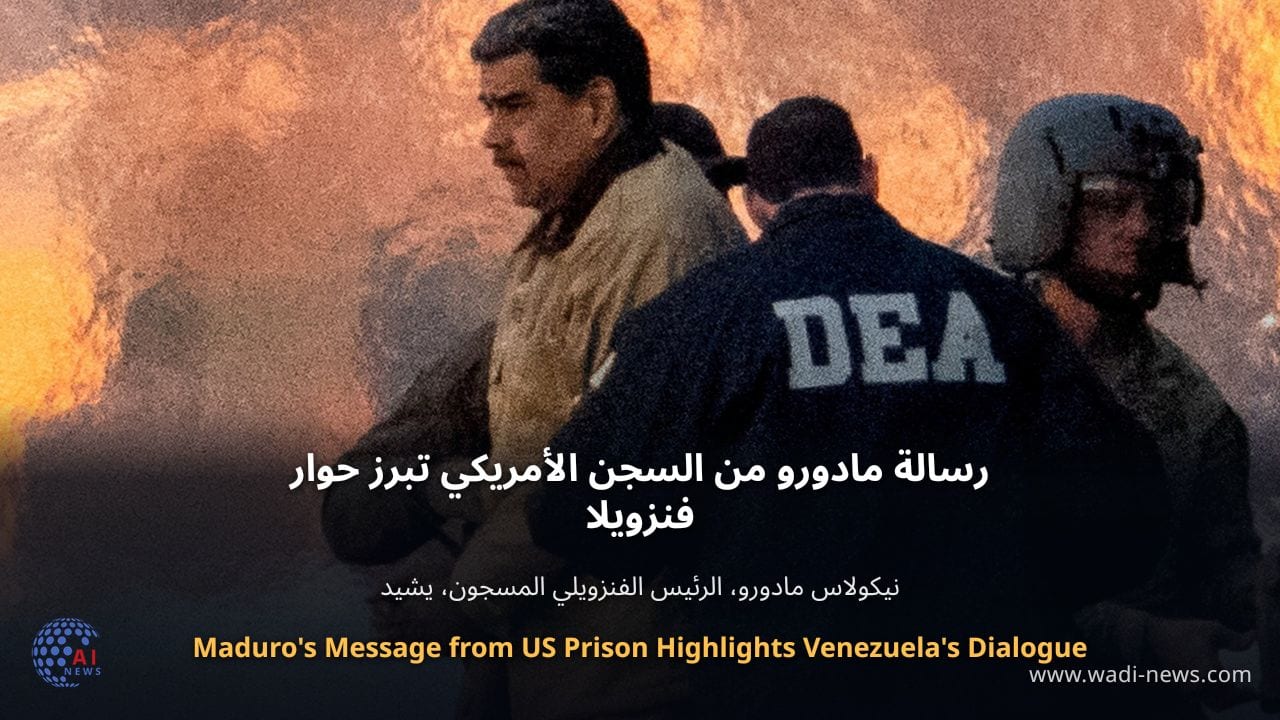
Nicolas Maduro, the Venezuelan president currently imprisoned in the United States, has sent a message highlighting the importance of the national dialogue in Venezuela. This message, which was shared through his official channels, underscores the ongoing efforts to foster political discussions aimed at addressing the country's ongoing crises. While Maduro's comments commend the dialogue process, they also point out the significant absence of key opposition figures, particularly Maria Corina Machado, who has not been invited to participate in these discussions. This exclusion raises questions about the inclusivity and effectiveness of the dialogue in representing the diverse political landscape of Venezuela.
The situation in Venezuela has been fraught with political turmoil and economic challenges, leading to widespread discontent among the population. The dialogue process, which is backed by the United States, aims to create a platform for various political factions to come together and address the pressing issues facing the nation. However, the lack of participation from prominent opposition leaders like Machado may hinder the legitimacy of the process. Critics argue that without the involvement of all significant political players, the dialogue risks becoming a mere formality rather than a genuine attempt at reconciliation and reform.
In his message, Maduro expressed optimism about the potential outcomes of the dialogue, emphasizing the need for unity among Venezuelans. He called for a collaborative approach to solve the systemic problems that have plagued the country for years, including economic instability and social unrest. Maduro's statements reflect a desire to project an image of cooperation and progress, even from behind bars, as he seeks to maintain influence over the political narrative in Venezuela.
As the dialogue unfolds, observers will be watching closely to see how it impacts the political dynamics in Venezuela. The involvement of international mediators, particularly from the US, adds another layer of complexity to the situation. The effectiveness of this dialogue will largely depend on the willingness of all political actors to engage in meaningful discussions and the extent to which the process can facilitate real change in Venezuela's political landscape.