
Economy
Hungary's Paks Nuclear Plant to Cease Operations Due to Low Water Levels
Hungary's Paks nuclear power facility will be shut down for the first time, prompted by unprecedented low water levels on the Danube River, raising concerns about the country's power supply.
Aug 2, 2026, 2:55 PM | 1-2 min read | By Wadi News Editorial Team
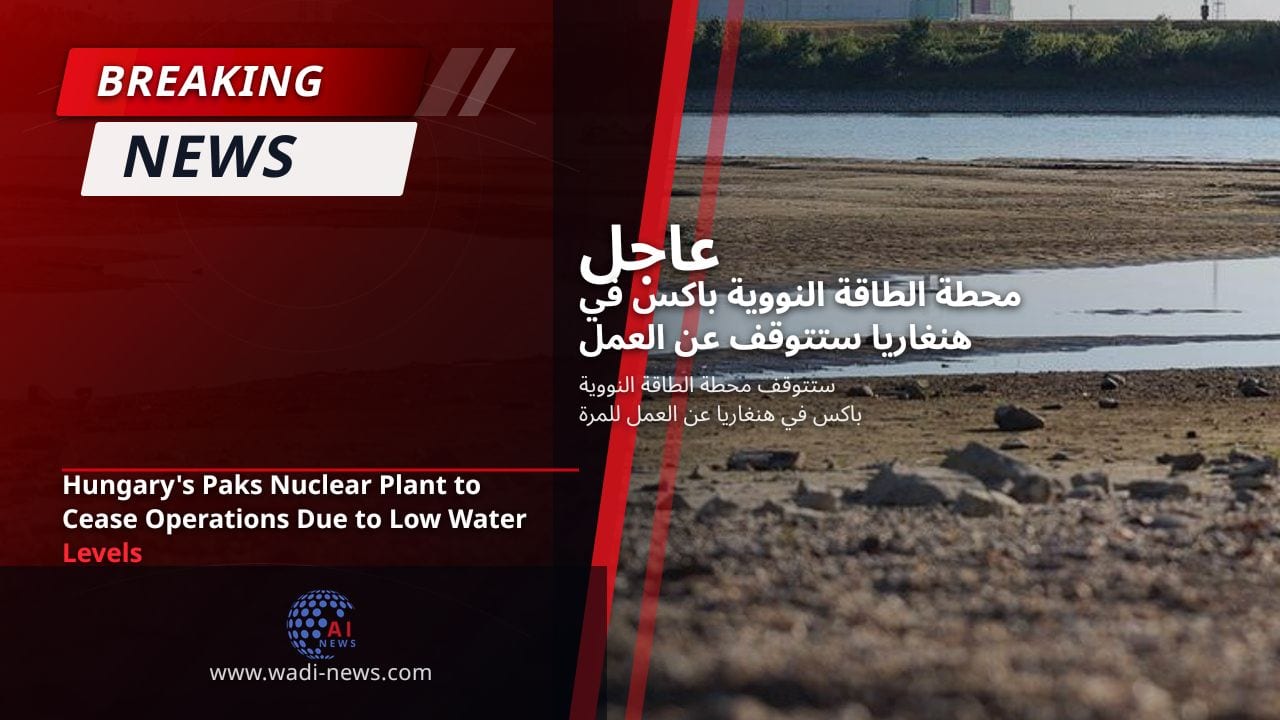
In a significant development for Hungary's energy sector, the Paks nuclear power plant is set to shut down on Sunday, marking the first time the facility will cease operations. This unprecedented decision comes in response to alarmingly low water levels in the Danube River, which have raised concerns about the plant's cooling systems and overall operational viability. The Paks plant, which is Hungary's only nuclear facility, plays a crucial role in the nation's energy supply, contributing significantly to the generation of electricity. With the current situation, the country faces the risk of a power crunch, potentially impacting both residential and industrial consumers.
The Danube River has experienced record-low water levels due to a combination of factors, including prolonged drought conditions and climate variability. These environmental changes have not only affected Hungary but have also raised alarms across Europe regarding water resources and energy generation. Given that nuclear plants require substantial amounts of water for cooling, the Paks facility's reliance on the Danube has placed it in a precarious situation. As the plant prepares for its shutdown, officials are scrambling to assess alternative power sources to mitigate the potential impact of reduced electricity generation.
Energy experts have expressed their concerns about the implications of this shutdown. The Paks plant has been a cornerstone of Hungary's energy strategy, providing around 40% of the country's electricity. The sudden halt could lead to increased reliance on fossil fuels and imported energy, which may not only elevate costs for consumers but also contradict Hungary's goals for sustainable energy practices. In light of these developments, the government is urged to expedite the exploration of renewable energy options to ensure a stable energy supply in the future.
As Hungary navigates this challenging scenario, the focus will also be on the long-term implications of climate change on energy systems. The Paks plant's shutdown is a stark reminder of the vulnerabilities inherent in relying on natural water bodies for energy production. Moving forward, it will be essential for policymakers to consider more resilient energy strategies that can withstand such environmental fluctuations. The situation at the Paks facility serves as a critical case study for other nations facing similar challenges, underscoring the urgent need for adaptive energy policies that prioritize sustainability and reliability.