
Economy
UEFA Intensifies Its Criticism of FIFA Amid Governance Concerns
The ongoing conflict between UEFA and FIFA escalates as UEFA threatens to boycott international competitions, highlighting issues of governance and trust under Gianni Infantino's leadership.
Aug 2, 2026, 1:35 AM | 3 min read | By Wadi News Editorial Team
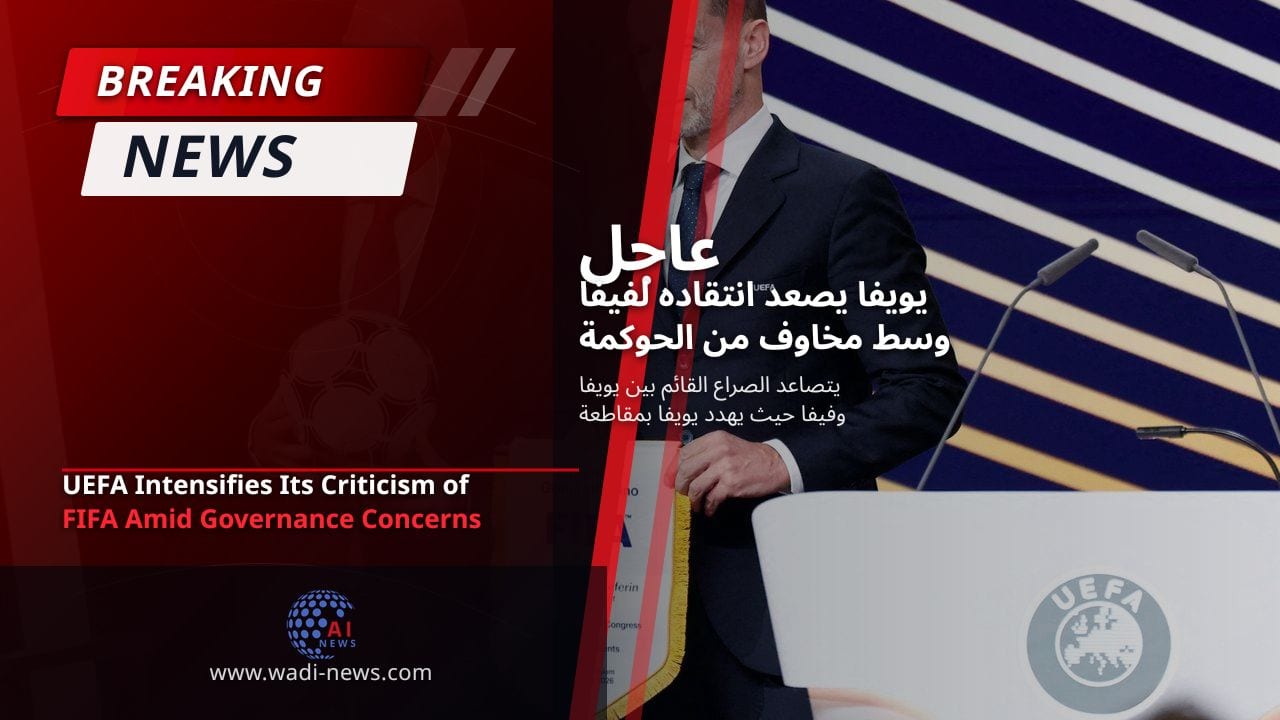
The tensions between UEFA and FIFA have reached a new peak as UEFA has publicly threatened to withdraw from international competitions. This escalation comes in response to concerns regarding governance, transparency, and trust in FIFA's leadership under Gianni Infantino. The European football governing body has expressed its dissatisfaction with recent decisions made by FIFA, which they believe could undermine the integrity of the sport and the competitions they oversee.
Gianni Infantino, the president of FIFA, has faced mounting criticism from UEFA, especially after a controversial proposal that UEFA perceived as detrimental to the interests of European football. UEFA's threats of a boycott signal a serious rift that could have significant implications for the future of international football. The situation has raised questions about the governance structure of FIFA and whether it can maintain the support of its member associations, particularly in Europe.
In light of these developments, UEFA's leadership is calling for a more transparent and accountable approach to governance within FIFA. They believe that without significant reforms, the trust between the two organizations could deteriorate further. UEFA's position reflects a growing sentiment among European football stakeholders who are increasingly wary of FIFA's decision-making processes, especially those that seem to prioritize financial gains over the sport's integrity.
As the situation unfolds, it remains to be seen how FIFA will respond to UEFA's threats and whether further negotiations can lead to a resolution. The outcome of this conflict could reshape the landscape of international football, influencing everything from tournament structures to financial distributions. Both UEFA and FIFA must find common ground to avoid a prolonged standoff that could harm the sport globally.
Background of the Conflict

The friction between UEFA and FIFA is not a new phenomenon. Over the years, various disagreements have surfaced, primarily revolving around financial distributions and governance issues. UEFA has often criticized FIFA for its lack of transparency, particularly regarding the allocation of World Cup revenues and the decision-making processes that influence the sport on a global scale. This latest confrontation highlights the ongoing struggle for power and influence between European football and the international governing body, which has implications for the future of football governance worldwide.