
Economy
FIFA President Stands Firm on Investment Strategy Despite Growing Opposition
Gianni Infantino reassures member associations about the proposed commercial initiative as various football confederations express their discontent.
Jul 30, 2026, 1:35 PM | 1-2 min read | By Wadi News Editorial Team
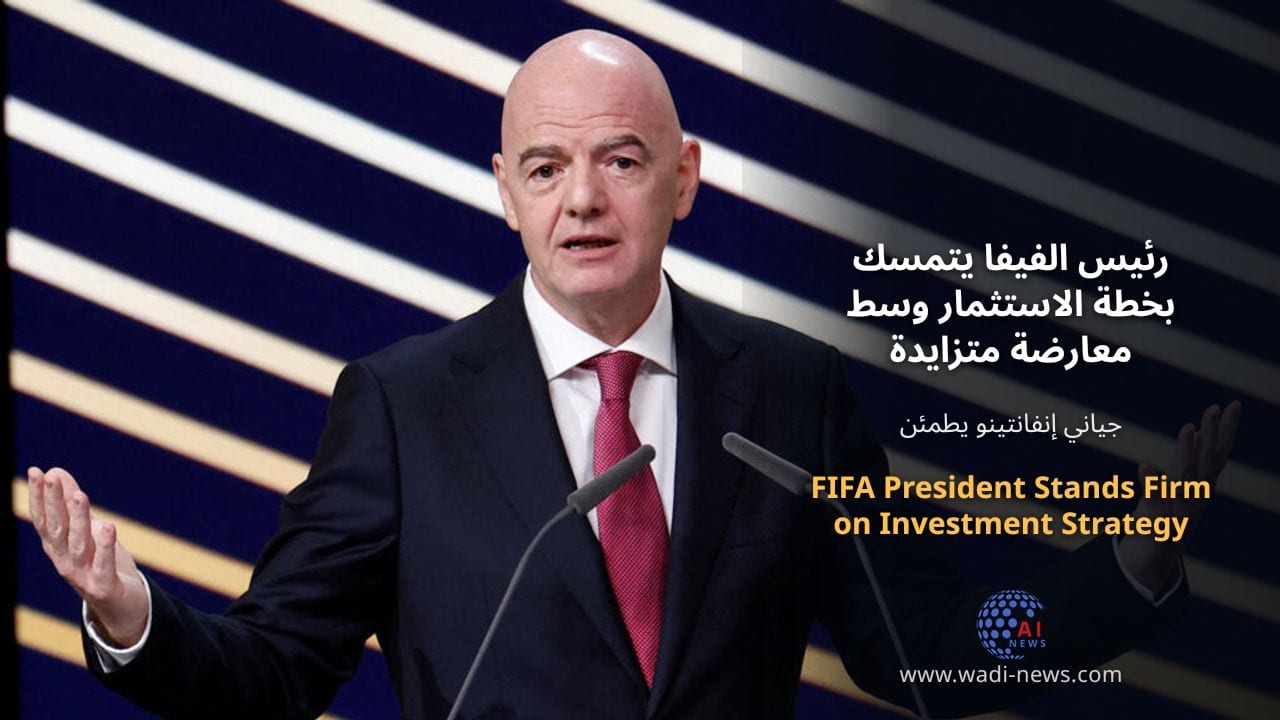
In a recent statement, FIFA President Gianni Infantino defended the organization's investment plan amidst rising criticism from multiple football governing bodies. Infantino emphasized that no member associations would be coerced into supporting the proposed commercial spin-off, which has sparked considerable debate among stakeholders in the football community. The backlash has notably come from influential organizations such as UEFA, CONCACAF, and the Asian Football Confederation, as well as various European officials, all voicing concerns over the implications of this initiative.
The proposed commercial initiative is seen by many as a controversial move that could reshape the financial landscape of international football. Critics argue that the plan could prioritize profit over the sport itself, potentially leading to disparities among member associations. Infantino, however, remains steadfast in his belief that the investment strategy will ultimately benefit the global football ecosystem, providing necessary funding to improve infrastructure and support grassroots initiatives.
Infantino's remarks come at a time when the relationship between FIFA and regional football federations is under scrutiny. The FIFA President acknowledged the concerns raised but reiterated that the organization is committed to transparency and collaboration with its members. He stated that discussions regarding the investment plan would continue, ensuring that all voices are heard in the decision-making process.
As the situation develops, it remains to be seen how member associations will respond to the proposed plan and whether further negotiations will take place to address the concerns raised by the critics. The outcome could have significant implications for the future of football governance and funding across the globe, highlighting the delicate balance between commercial interests and the integrity of the sport.