
Politics
Washington's Limited and Costly Options Against Iran
The Economist highlights the challenges and costs faced by the U.S. in considering a large-scale military action against Iran.
Jul 28, 2026, 2:55 AM | 1-2 min read | By Wadi News Editorial Team
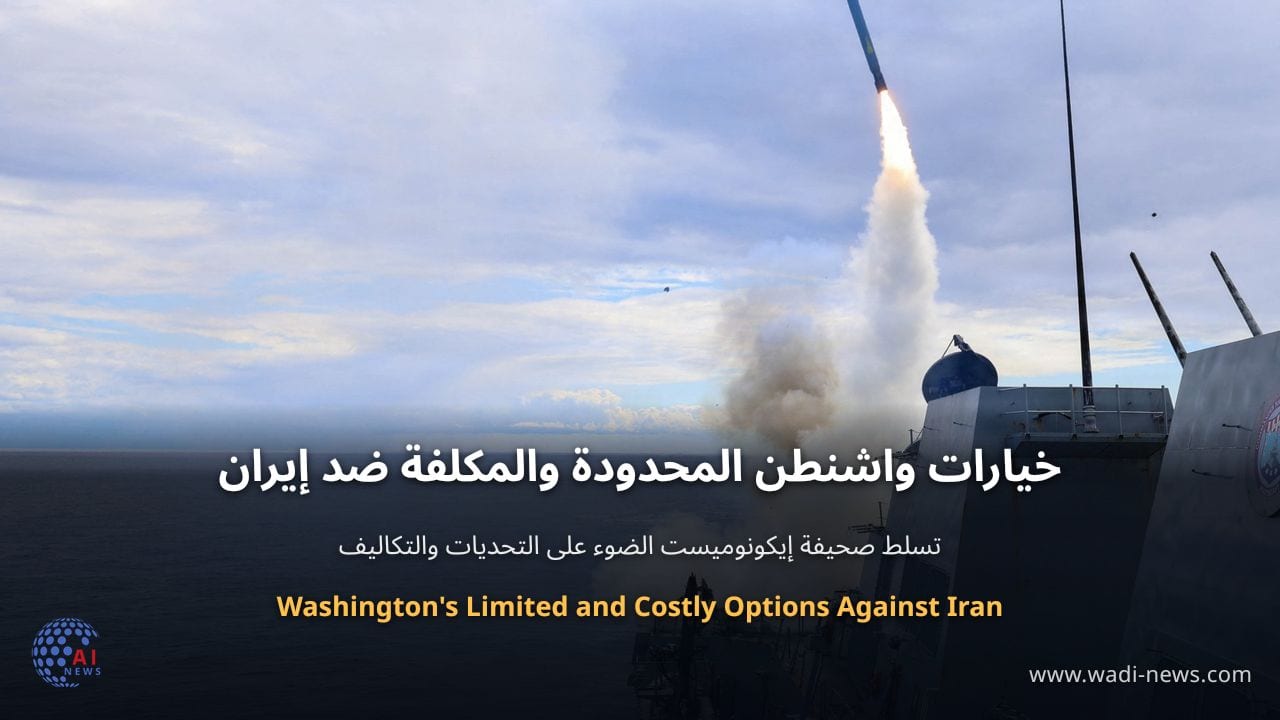
The recent analysis by The Economist sheds light on the complexities surrounding the United States' military options regarding Iran. According to the report, any potential large-scale attack would not only be costly but also limited in effectiveness. This raises significant questions about the overall strategy of the U.S. in the Middle East, particularly in light of rising tensions in the region. The report emphasizes that while military action may seem like a viable option, the repercussions could be far-reaching and detrimental, affecting not only the U.S. but also its allies and global stability.
In examining the current geopolitical landscape, The Economist notes that the U.S. has been weighing its options carefully. The potential for retaliation from Iran could lead to a broader conflict, making the decision to engage militarily a precarious one. Furthermore, the economic implications of such an action cannot be overlooked; military engagements often strain national budgets and divert resources from domestic needs. As the U.S. grapples with these heavy considerations, the call for a diplomatic approach becomes increasingly urgent.
Moreover, the repercussions of military action extend beyond immediate combat scenarios. The report discusses the potential impact on maritime navigation, highlighting how military confrontations could disrupt essential shipping routes in the region. This concern is particularly relevant given the strategic importance of the Strait of Hormuz, through which a significant portion of the world's oil passes. Thus, any military engagement carries not only the risk of conflict but also the possibility of economic fallout on a global scale.
In conclusion, The Economist's findings suggest that while the U.S. may consider military options against Iran, the reality is fraught with challenges. The limited effectiveness and high costs associated with such actions warrant a reevaluation of U.S. strategies in the region. As diplomatic solutions are sought, the importance of maintaining open lines of communication with Iran and other regional players cannot be overstated. The future of U.S.-Iran relations hangs in the balance, and the choices made today will resonate for years to come.