
Politics
Israel Approves Entry of International Forces into Gaza
The Israeli cabinet has authorized the deployment of international stabilization forces in the Gaza Strip, contingent upon full coordination with the Israeli military.
Jul 27, 2026, 3:35 AM | 3 min read | By Wadi News Editorial Team
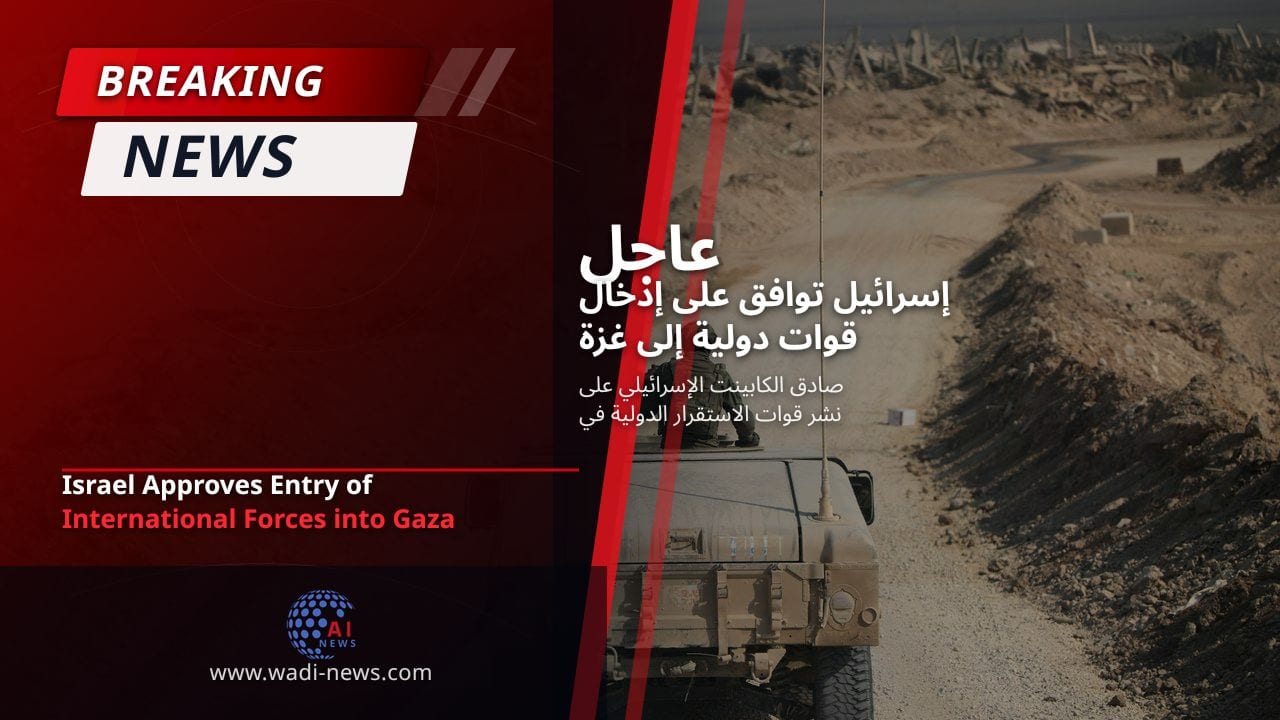
In a significant move, the Israeli cabinet has given its approval for the entry of international stabilization forces into the Gaza Strip. This decision comes amid ongoing tensions in the region, as officials emphasize that the deployment of these forces will be subject to complete coordination with the Israeli military. The introduction of international troops is seen as a potential step towards stabilizing the situation in Gaza, which has faced numerous challenges in recent years.
The discussions surrounding the deployment have sparked a variety of reactions both locally and internationally. Supporters of the move argue that the presence of international forces could help in maintaining order and facilitating humanitarian efforts in the area. Critics, however, express concerns about the implications of foreign troops operating in a highly sensitive conflict zone and the potential for increased tensions.
Israeli officials have highlighted that any operational plans for the international forces will be closely monitored and will require ongoing dialogue with the Israeli Defense Forces. This condition is crucial as it aims to ensure that the deployment does not compromise Israel's security interests while still addressing the urgent needs of the Gazan population.
As international observers await further details on the implementation of this plan, the situation in Gaza remains precarious. The entry of international forces could mark a new chapter in the ongoing efforts to bring stability to the region, but it also raises important questions about sovereignty, the role of foreign entities in local conflicts, and the future of Israeli-Palestinian relations.
Background on Gaza

The Gaza Strip has been a focal point of conflict for decades, marked by periodic escalations and humanitarian crises. The region is home to approximately two million residents, many of whom rely on international aid due to the ongoing blockade and economic challenges. The introduction of international forces is hoped to alleviate some of these pressures and create a more stable environment for the local population.