
Tech
Syria Clarifies Regulations for Implementing Cybercrime Law
The Syrian Ministry of Justice has introduced new guidelines aimed at reducing detentions related to cybercrimes, while Amnesty International has called for the suspension of the law to protect freedom of expression.
Jul 26, 2026, 6:41 AM | 1-2 min read | By Wadi News Editorial Team
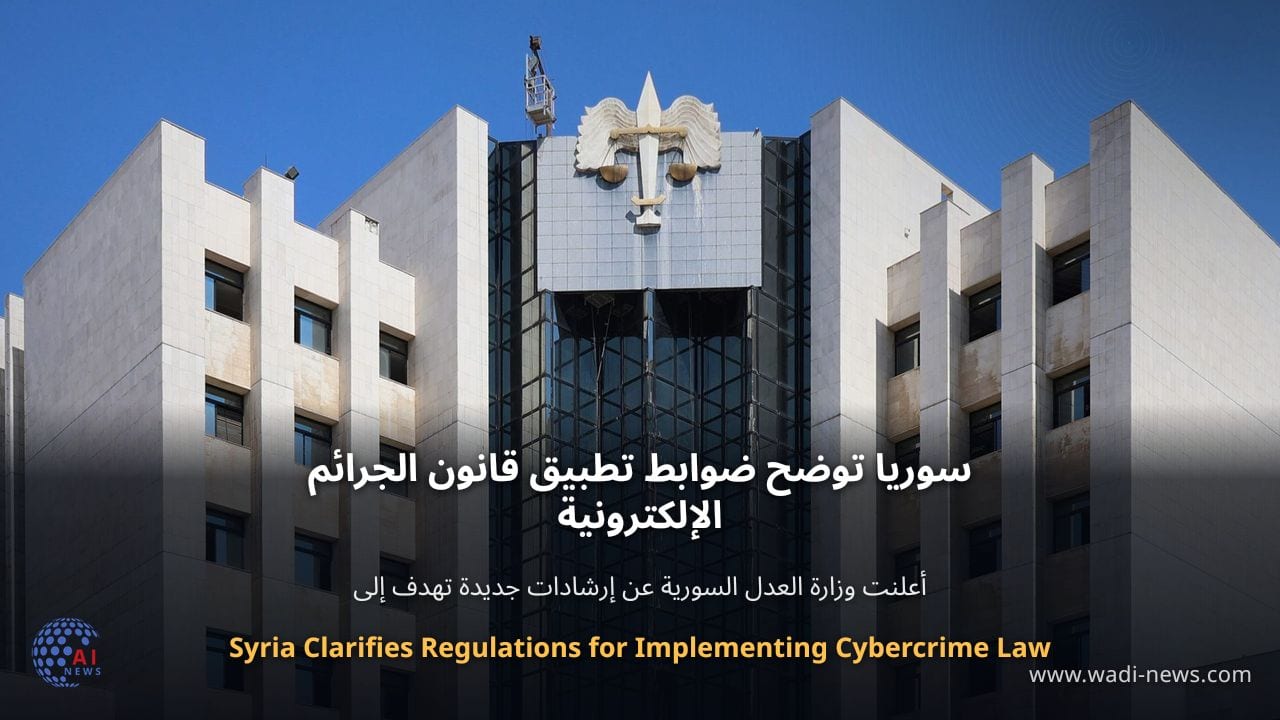
In a recent announcement, the Syrian Ministry of Justice has laid out new regulations concerning the enforcement of the cybercrime law, which has sparked considerable debate over its implications for civil liberties. These guidelines aim to mitigate the number of individuals detained under this law, which has been criticized for potentially infringing on freedom of expression. The Ministry's move comes in response to rising concerns from various human rights organizations, including Amnesty International, which has vocally opposed the law's provisions.
The Ministry's guidelines specify certain criteria that must be met before an arrest can be made under the cybercrime law. This includes a requirement for clear evidence of wrongdoing, as well as an emphasis on the necessity of protecting individuals' rights to free speech. By establishing these criteria, the Ministry hopes to strike a balance between enforcing the law and respecting fundamental human rights. However, critics argue that the law still poses significant risks to freedom of expression, and they are calling for a comprehensive review of its provisions.
Amnesty International has been at the forefront of the campaign against the cybercrime law, urging the Syrian government to suspend its implementation until adequate safeguards for freedom of expression are in place. The organization argues that the law could be used to silence dissent and stifle public discourse, particularly in a climate where political opposition is already heavily suppressed. Their call for suspension highlights the ongoing tension between state security measures and the protection of individual rights in Syria.
As the situation unfolds, it remains to be seen how these new guidelines will affect the enforcement of the cybercrime law and whether they will lead to a reduction in arbitrary detentions. The international community continues to watch closely, as the balance between security and freedom remains a contentious issue in the region. The Ministry of Justice's efforts to clarify the law's application may be a step towards addressing some of these concerns, but significant challenges remain in ensuring that human rights are upheld in practice.