
Politics
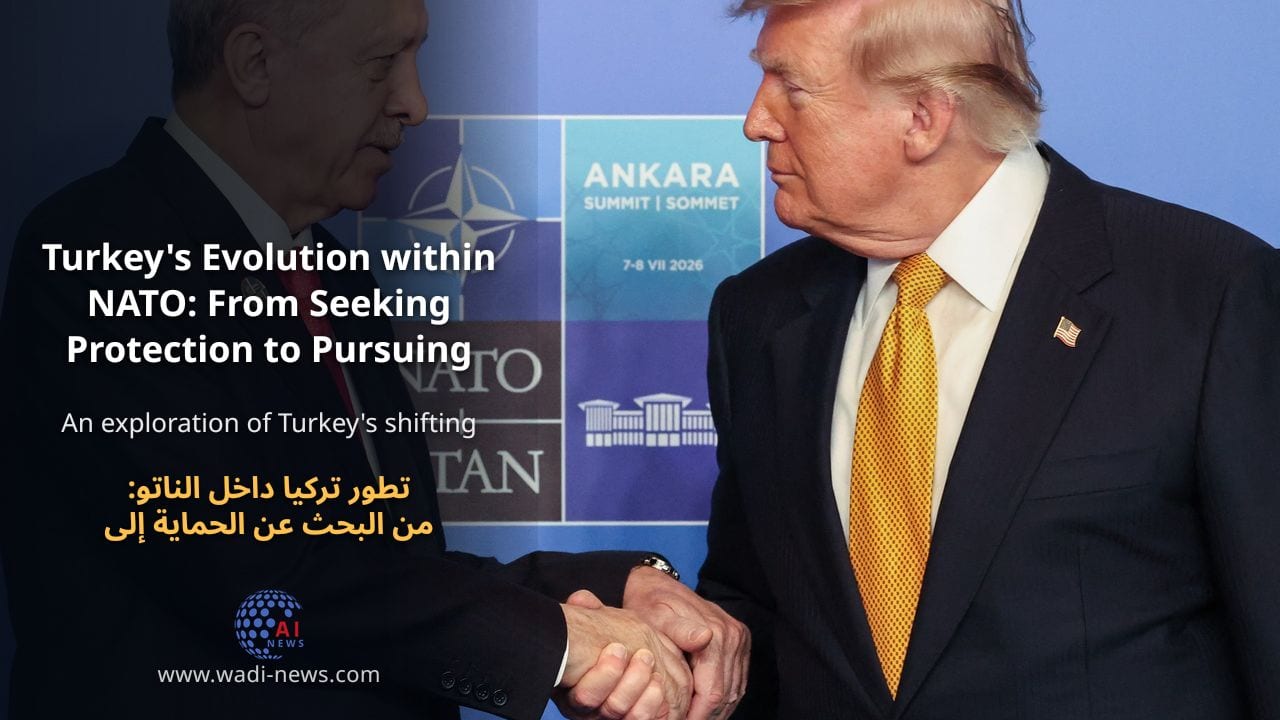
Turkey's Evolution within NATO: From Seeking Protection to Pursuing Sovereignty
An exploration of Turkey's shifting role in NATO over the past seven decades, highlighting its journey from a nation seeking protection to one that uses its membership for influence.
Jul 25, 2026, 12:01 AM | 1-2 min read | By Wadi News Editorial Team
Turkey's relationship with NATO has undergone significant transformations since it joined the alliance in the early 1950s. Initially, Turkey sought NATO membership primarily as a safeguard against the looming threat of the Soviet Union. This strategic move was crucial for the country, as it aimed to bolster its security in a geopolitically tense environment. The early years of Turkey's NATO membership were characterized by a close alignment with Western powers, which reinforced its status as a critical player in the alliance.
Over the decades, however, Turkey's role within NATO has evolved. Under the leadership of President Recep Tayyip Erdoğan, Turkey has shifted from being a passive participant to an active player that leverages its NATO membership to exert influence on both regional and global stages. This change reflects a broader trend where Turkey has sought to redefine its foreign policy, stepping away from traditional alignments and asserting its sovereignty. Erdoğan's government has often used its strategic position within NATO to negotiate favorable terms and assert its interests, particularly in the context of regional conflicts.
The complexities of Turkey's relationship with NATO became particularly evident during various crises, including the Syrian civil war and tensions with Russia. Turkey's military interventions in Syria and its procurement of advanced defense systems from Russia have raised questions about its commitment to NATO's collective defense principles. These actions have not only strained relations with other NATO members but have also led to a reevaluation of Turkey's role within the alliance.
As Turkey moves forward, the challenge will be balancing its national interests with its commitments to NATO. The ongoing geopolitical shifts and Turkey's assertive foreign policy will likely continue to shape its relationship with the alliance. Ultimately, Turkey's journey from seeking protection to pursuing sovereignty within NATO encapsulates a broader narrative of change in international relations, highlighting the complexities and evolving dynamics of global power structures.