
Politics
Bahceli Advocates for Financial Support for New Political Party
Devlet Bahceli, leader of the MHP, argues that a newly formed party by a group led by Ozgur Ozel deserves financial assistance from the treasury based on the number of representatives.
Jul 23, 2026, 11:11 PM | 1-2 min read | By Wadi News Editorial Team
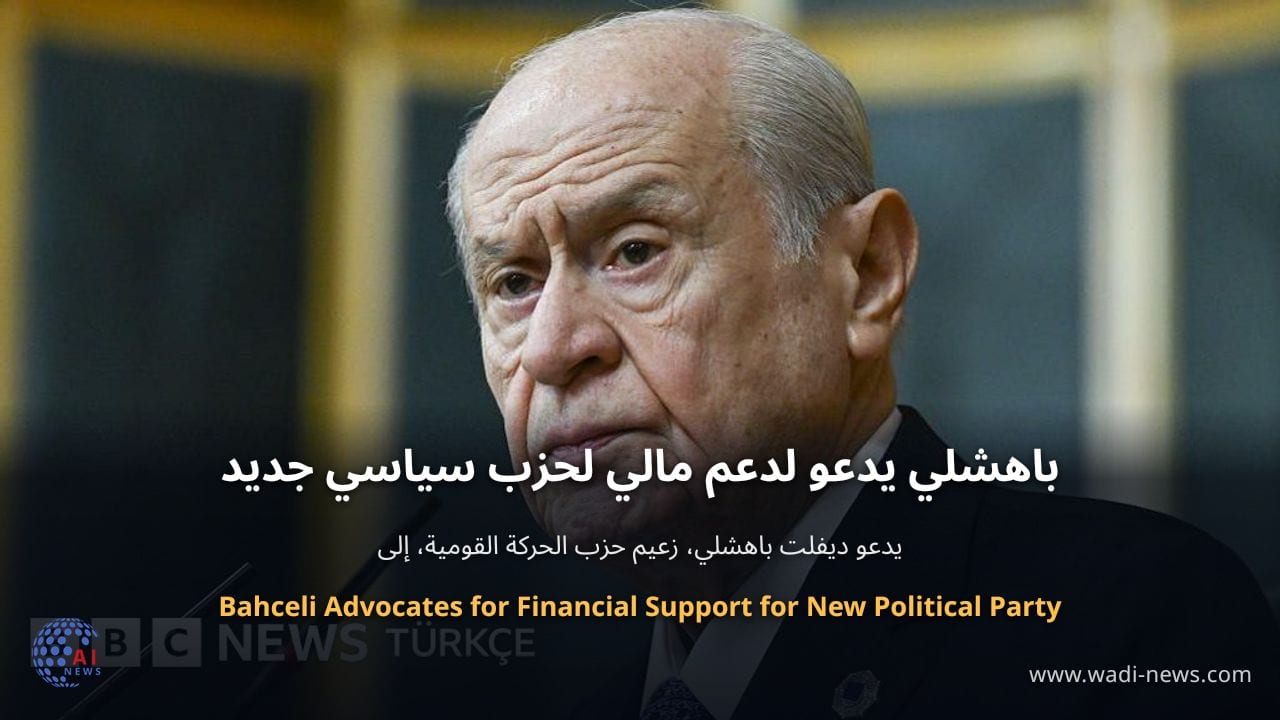
In a recent statement, Devlet Bahceli, the leader of Turkey's Nationalist Movement Party (MHP), expressed support for a new political party that is being formed by a faction led by Ozgur Ozel, who is breaking away from the main opposition party, the Republican People's Party (CHP). Bahceli emphasized the importance of providing financial assistance from the treasury to this new entity, arguing that it is ethical to allocate funds in proportion to the number of representatives that the party will have in parliament. This statement comes amid ongoing discussions about the political landscape in Turkey, where new parties are emerging as alternatives to established ones.
Bahceli's remarks highlight a significant shift in the political dynamics in Turkey, where the formation of new parties can potentially alter the balance of power in the parliament. He pointed out that as new political movements arise, it is crucial for them to have the necessary financial support to ensure their viability and effectiveness. By suggesting that treasury funds should be distributed based on the number of elected representatives, Bahceli is advocating for a fair approach to political financing that could help nurture emerging political voices.
The discussion surrounding financial assistance for new political parties is not new in Turkey. Over the years, various political leaders have debated the allocation of treasury funds to support democratic practices. Bahceli's call for financial aid reflects a broader conversation about the role of government support in fostering a competitive political environment. As Turkey prepares for future elections, the implications of such financial policies could shape the strategies of both new and existing parties.
In conclusion, Bahceli's endorsement of treasury support for the new party led by Ozel marks a pivotal moment in Turkish politics. As the country navigates its complex political landscape, the financial backing of new parties may play a crucial role in promoting diversity and representation in the parliament. The coming months will be critical in determining how these developments unfold and their impact on Turkey's democratic processes.