
Politics
Tokyo's Dress Code Change Sparks Controversy Among Women
The Tokyo metropolitan administration encourages a relaxed dress code for men, allowing shorts and t-shirts at work, but this has led to criticism from women who feel it is unfair.
Jul 22, 2026, 11:51 PM | 3 min read | By Wadi News Editorial Team
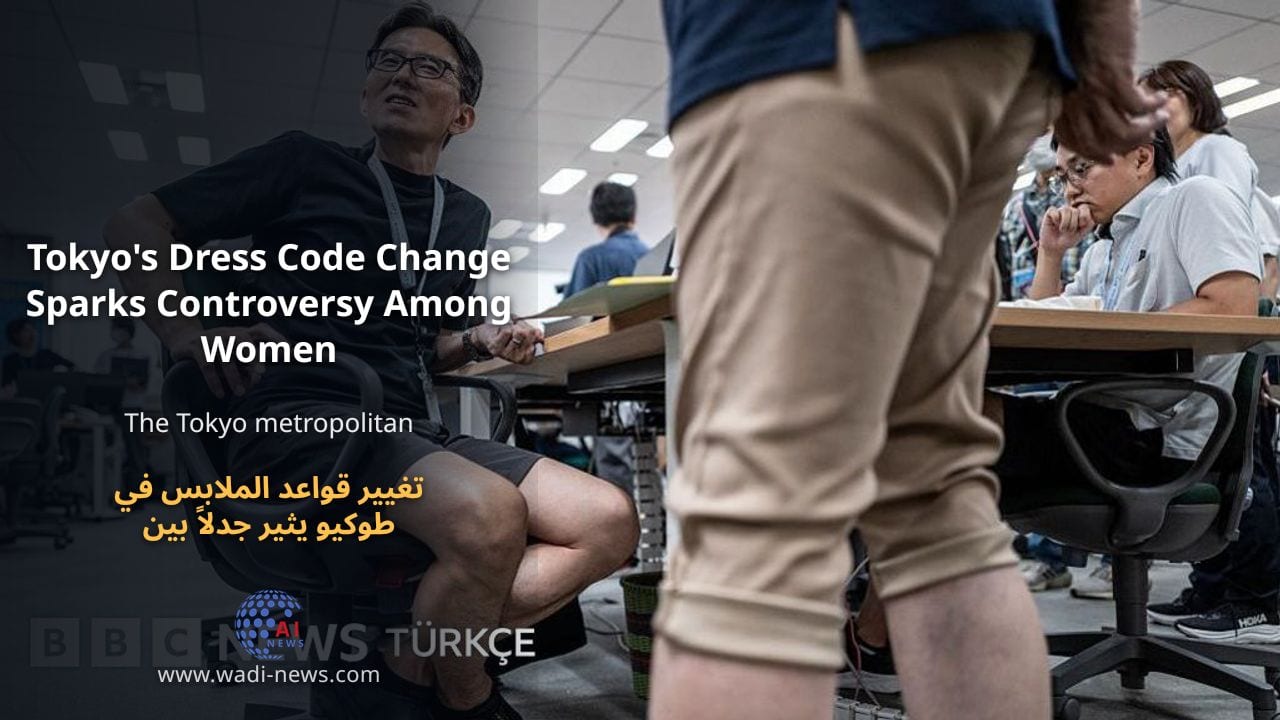
In a recent initiative, the Tokyo metropolitan government has introduced a more relaxed dress code aimed at promoting comfort in the workplace. Men are now encouraged to wear shorts, t-shirts, and sneakers instead of the traditional suit and tie. This move is part of a broader strategy to adapt to changing social norms and enhance employee comfort during hot summer months. However, this policy has sparked a significant backlash among women, who argue that it perpetuates gender inequality in the workplace.
Critics point out that while men are permitted to dress more casually, women are still expected to adhere to stricter professional dress codes that often require skirts or dresses. This discrepancy has led to discussions about the implications of such policies on gender equality. Many women feel that the relaxed dress code for men not only highlights the disparity in expectations but also sends a message that their comfort is secondary.
Advocates for change are calling for a more inclusive approach to workplace attire that treats all employees equally, regardless of gender. They argue that a uniform dress code should apply to everyone, allowing both men and women to choose attire that is comfortable and appropriate for their roles. This perspective emphasizes the need for a reevaluation of workplace norms to foster an environment that values equality and respect.
As the debate continues, it remains to be seen how the Tokyo government will respond to these concerns. The outcome could set a precedent for other cities grappling with similar issues. Ultimately, the conversation around workplace attire is not just about clothing; it reflects deeper societal attitudes towards gender roles and equality in professional settings.
Reactions from the Public

The public reaction to the new dress code has been mixed. Some men are thrilled about the opportunity to wear more comfortable clothing to work, viewing it as a positive change that reflects modern workplace culture. Conversely, many women have taken to social media to voice their frustrations, sharing personal stories of how the dress code has affected their professional experiences. The online discourse has highlighted the need for a more equitable approach to workplace attire, sparking further discussions about the implications of gendered dress codes in both public and private sectors.