
Economy
Gulf Oil Exports Surge Ahead of Renewed Conflict
Gulf nations have increased their oil exports significantly in early July, but escalating tensions between the U.S. and Iran may hinder future shipments.
Jul 20, 2026, 12:31 AM | 1-2 min read | By Wadi News Editorial Team
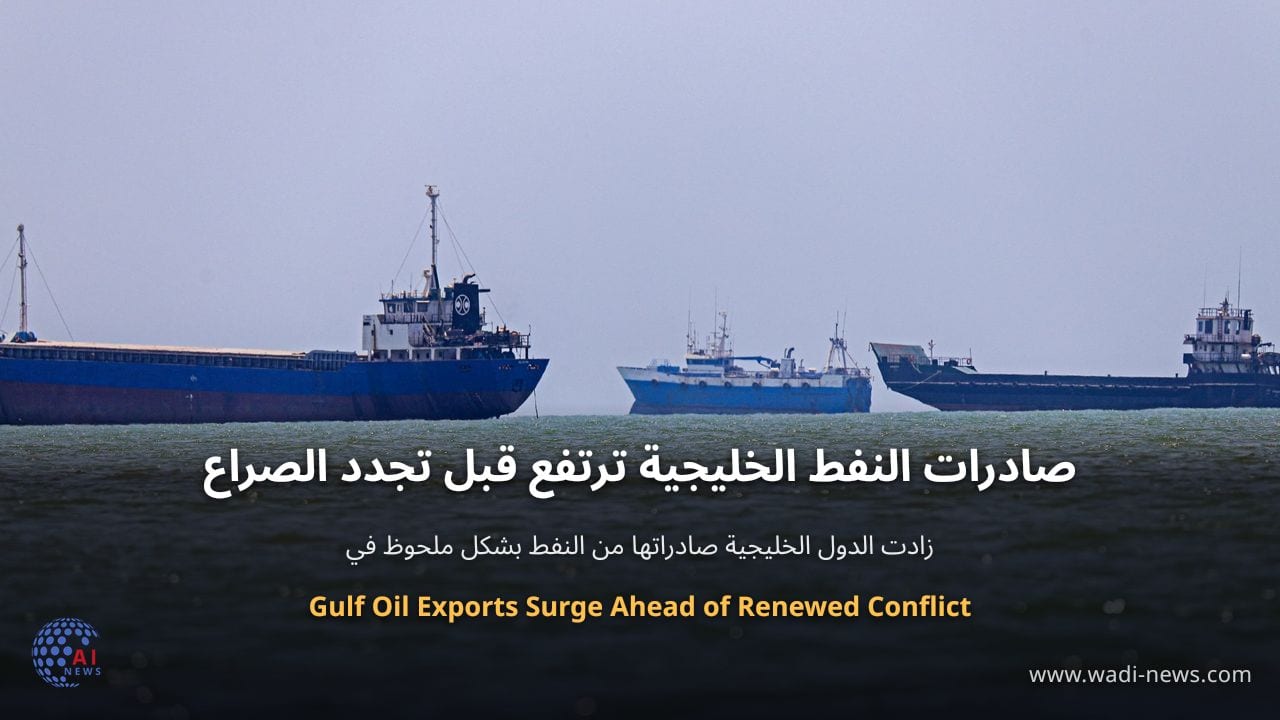
In a notable development, Gulf countries have ramped up their crude oil and derivative exports by 16% in the first half of July. This increase comes at a time when the regional oil market is bracing for potential disruptions due to escalating military tensions between the United States and Iran. Analysts suggest that while the current surge in exports is promising, the geopolitical landscape remains precarious, which could affect the sustainability of these export levels.
The rise in oil shipments from the Gulf states is largely attributed to increased global demand as economies begin to recover from the pandemic's effects. Major oil producers in the region are taking advantage of favorable market conditions to enhance their output and fulfill international contracts. However, with the looming threat of renewed conflict, companies and investors are urged to remain cautious.
As the situation unfolds, there are growing concerns regarding the stability of oil supply chains. Experts warn that a significant escalation in hostilities could lead to supply disruptions, which may drive prices up and create uncertainty in the market. The potential for reduced reserves adds another layer of complexity to the already strained supply-demand dynamics.
In conclusion, while the Gulf's oil export growth is a positive indicator of economic resilience, the shadow of geopolitical conflict poses a substantial risk. Stakeholders are advised to monitor the situation closely as developments in U.S.-Iran relations will likely have a direct impact on the oil market in the coming weeks.