
Politics
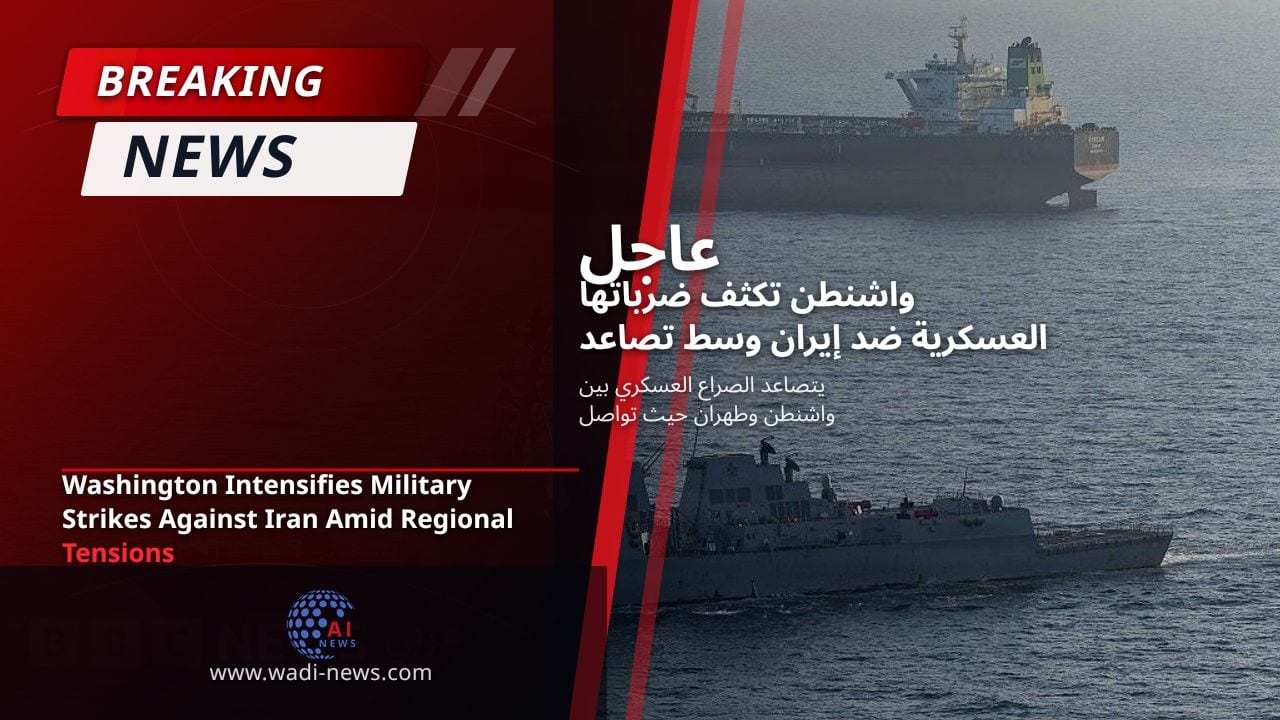
Washington Intensifies Military Strikes Against Iran Amid Regional Tensions
The military conflict between Washington and Tehran escalates as the US continues its airstrikes for the seventh consecutive night, targeting Iranian military infrastructure, while Iran claims to have destroyed a key intelligence center in Bahrain.
Jul 18, 2026, 8:59 AM | 1-2 min read | By Wadi News Editorial Team
In a significant escalation of military actions, the United States has continued its airstrikes on Iran for the seventh consecutive night. These strikes are primarily aimed at degrading Iran's military capabilities and infrastructure. The ongoing military pressure from Washington is part of a broader strategy to counter Iranian influence in the region. Reports indicate that the strikes have targeted various military installations across Iran, marking a significant increase in hostilities between the two nations.
In response to the US military actions, Iran has claimed responsibility for destroying a major intelligence center located in Bahrain. This assertion highlights Tehran's determination to retaliate against perceived threats from the US and its allies. Furthermore, Iranian officials have also announced their involvement in targeting an energy facility in Kuwait, indicating a possible expansion of the conflict beyond Iran's borders. Such actions could lead to further regional instability, as the situation continues to evolve.
The situation remains tense, with both nations engaged in a cycle of retaliation. US officials have stated that the airstrikes are necessary to protect American interests and allies in the region. Meanwhile, Iran's leadership asserts that it will continue to defend its sovereignty and respond to any threats with force. This ongoing conflict has raised concerns among neighboring countries and international observers about the potential for a broader military confrontation in the Middle East.
As the situation unfolds, the international community watches closely, hoping for a de-escalation of tensions. Diplomatic efforts may be required to address the underlying issues that have led to this military confrontation. The potential for dialogue remains uncertain, but both sides must consider the implications of their actions on regional and global stability.