
ADVERTISEMENT
Economy
Trump's Proposal for Toll Collection on Ships in Hormuz
President Donald Trump has declared the United States as the guardian of the Strait of Hormuz, suggesting potential tolls on ships passing through the area. This raises legal questions regarding the authority to impose such fees.
Jul 14, 2026, 8:16 PM | 1-2 min read | By Wadi News Editorial Team
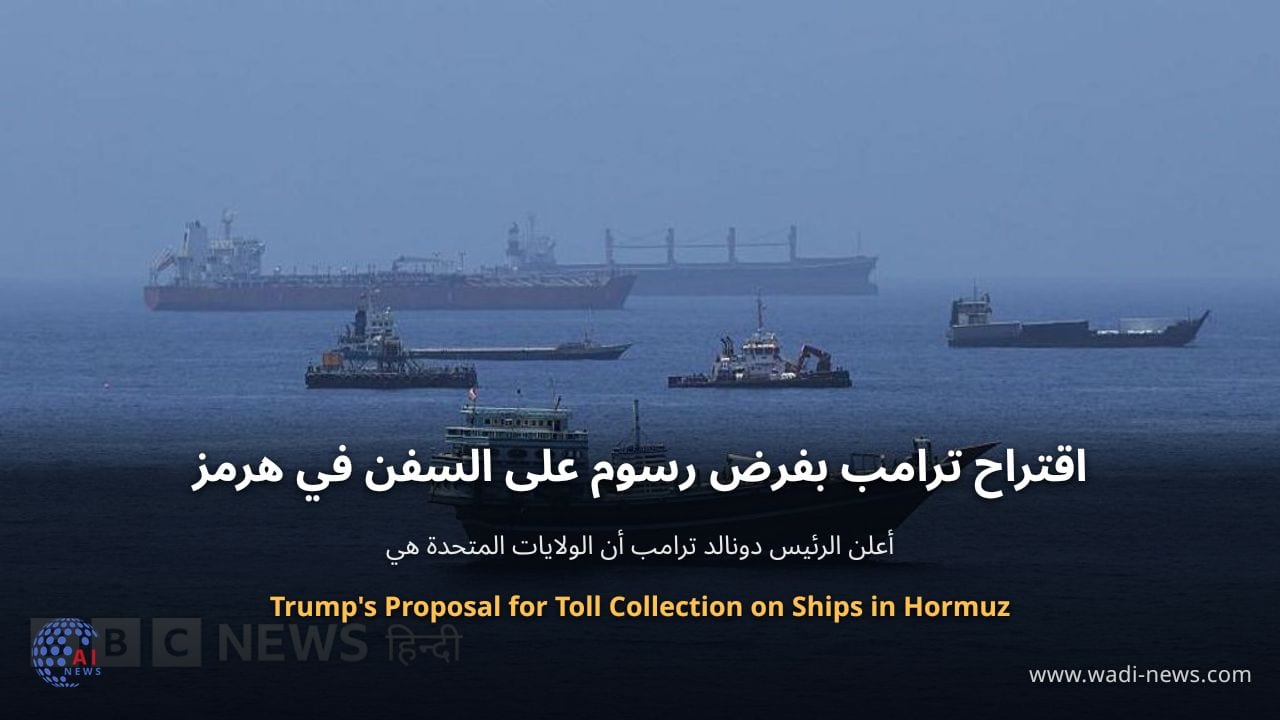
In a recent statement, President Donald Trump characterized the United States as the protector of the Strait of Hormuz, a crucial passage for global oil transport. This assertion comes amidst rising tensions in the region and suggests that the U.S. may seek to impose tolls on vessels navigating this vital waterway. Trump's comments have sparked a debate regarding the legality and implications of such a move.
The Strait of Hormuz is a strategic chokepoint through which a significant portion of the world's oil supply is transported. Trump's proposal implies that the U.S. could levy fees on ships, potentially leading to a new economic dynamic in the region. However, legal experts are questioning whether the president has the authority to enforce such tolls, as international maritime law generally prohibits unilateral tolls in international waters.
Critics argue that imposing tolls could escalate tensions with other nations that utilize the strait for shipping. Furthermore, it raises concerns about the potential impact on global oil prices and trade routes. The reaction from international leaders and shipping companies will be crucial in determining the feasibility of Trump's proposal.
As discussions continue, the implications of this proposal could have far-reaching effects on U.S. relations with other countries that rely on the Strait of Hormuz for their energy needs. The situation is evolving, and stakeholders in the global economy are closely monitoring developments. The balance between maintaining security in the region and ensuring free passage for vessels remains a contentious issue.