
ADVERTISEMENT
Politics
Syria Offers Trump a New Route to Bypass the Strait of Hormuz
Utilizing a route through Syria could allow countries to circumvent maritime trade through the Strait of Hormuz, reducing Iran's current influence over oil shipments.
Jul 12, 2026, 12:47 AM | 3 min read | By Wadi News Editorial Team
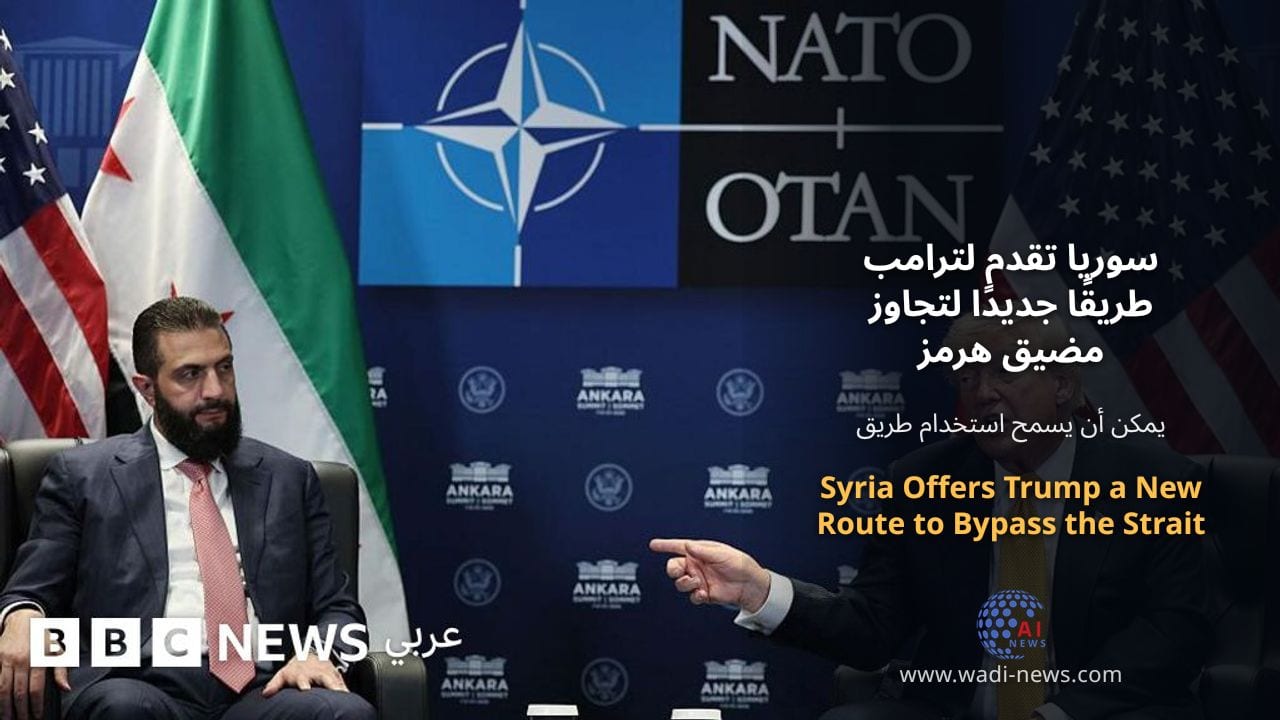
The ongoing geopolitical tensions in the Middle East have prompted countries to seek alternative routes for their maritime trade. A recent analysis suggests that utilizing a route through Syria could potentially enable nations to bypass the critical Strait of Hormuz. This move could significantly diminish Iran's influence, which has been marked by its capacity to threaten commercial shipping in this vital corridor. As oil shipments valued in billions of dollars traverse these waters, the stakes are incredibly high for global economies.
The Strait of Hormuz has long been a focal point of international trade, with approximately one-fifth of the world's oil supply passing through it. Iran's strategic positioning has allowed it to exert considerable control over this passage, often leading to heightened tensions and military confrontations. The proposed Syrian route offers a potential solution to these challenges, allowing countries to transport goods without the looming threat of Iranian aggression.
Moreover, the implications of this new route extend beyond just economic considerations. By reducing reliance on the Strait of Hormuz, nations could enhance their energy security and lessen the vulnerability of their shipping lanes. This strategic shift could also alter the balance of power in the region, as Iran's leverage diminishes in light of alternative trade routes becoming available.
In conclusion, while the geopolitical landscape remains fraught with uncertainty, the potential opening of a Syrian route represents a significant development in global maritime trade. It not only provides an avenue for countries to secure their oil shipments but also signifies a broader shift in how nations may approach their economic interactions in the face of regional instability.
The Strategic Importance of the Strait of Hormuz

The Strait of Hormuz is one of the world's most vital waterways, serving as a key transit point for oil shipments from the Persian Gulf to global markets. Its geographical significance cannot be overstated, as it connects the Arabian Sea with the Gulf of Oman. The strait is approximately 21 miles wide at its narrowest point and is surrounded by Iran to the north and Oman to the south. This narrow passage is crucial for energy security, as any disruption can have immediate repercussions on oil prices and global supply chains.