
ADVERTISEMENT
Politics
Russia Closes Waterway Following Ukrainian Attack on Naval Vessels
The closure of a crucial waterway by Russia comes in response to Ukrainian strikes on its naval vessels in the Sea of Azov, raising concerns about potential global wheat price increases.
Jul 12, 2026, 10:02 AM | 1-2 min read | By Wadi News Editorial Team
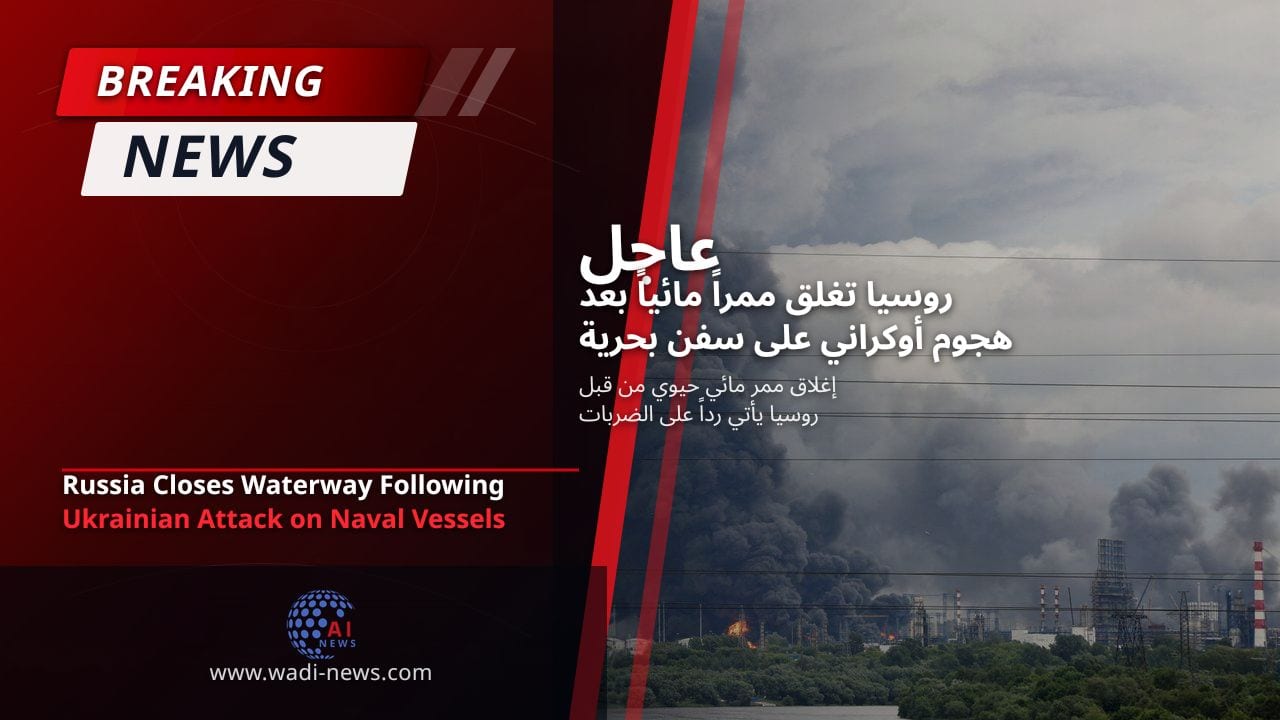
In a significant escalation of tensions, Russia has announced the closure of a vital waterway after Ukrainian forces targeted its naval ships in the Sea of Azov. This action is seen as a direct response to the recent attacks, which have raised alarms about the stability of maritime operations in the region. The closure affects a canal that connects the Sea of Azov to the Don River, an essential route for shipping and trade. As a result, experts predict that this move could lead to a surge in global wheat prices, as the disruption of shipping routes often has far-reaching economic implications.
The Ukrainian strikes on Russian vessels mark a notable shift in the ongoing conflict, showcasing Ukraine's capability to conduct operations that directly challenge Russian naval presence. These developments come at a time when the global economy is still grappling with the repercussions of previous conflicts and supply chain disruptions. With the closure of the waterway, the implications for agricultural exports, particularly wheat, are profound. Russia is one of the largest wheat exporters in the world, and any disruption in its shipping operations could lead to increased prices on the international market.
Furthermore, the geopolitical ramifications of this closure extend beyond the immediate economic concerns. Analysts suggest that this action may provoke further military responses from Russia, potentially escalating the conflict. The international community is closely monitoring the situation, as the balance of power in the region remains precarious. Countries heavily reliant on wheat imports from Russia may soon find themselves facing food security challenges if the situation does not stabilize quickly.
In conclusion, the closure of the waterway by Russia is a significant development in the ongoing conflict with Ukraine. It not only highlights the heightened military tensions but also raises critical economic concerns that could affect global markets. As the situation unfolds, stakeholders around the world will need to prepare for potential increases in agricultural prices and the broader implications for food security.