
ADVERTISEMENT
Tech
NASA's New Horizons Spacecraft Awakens from Long Slumber
After the longest hibernation period in its history, NASA's New Horizons spacecraft has resumed sending scientific data collected from the Kuiper Belt.
Jul 10, 2026, 12:08 PM | 1-2 min read | By Wadi News Editorial Team
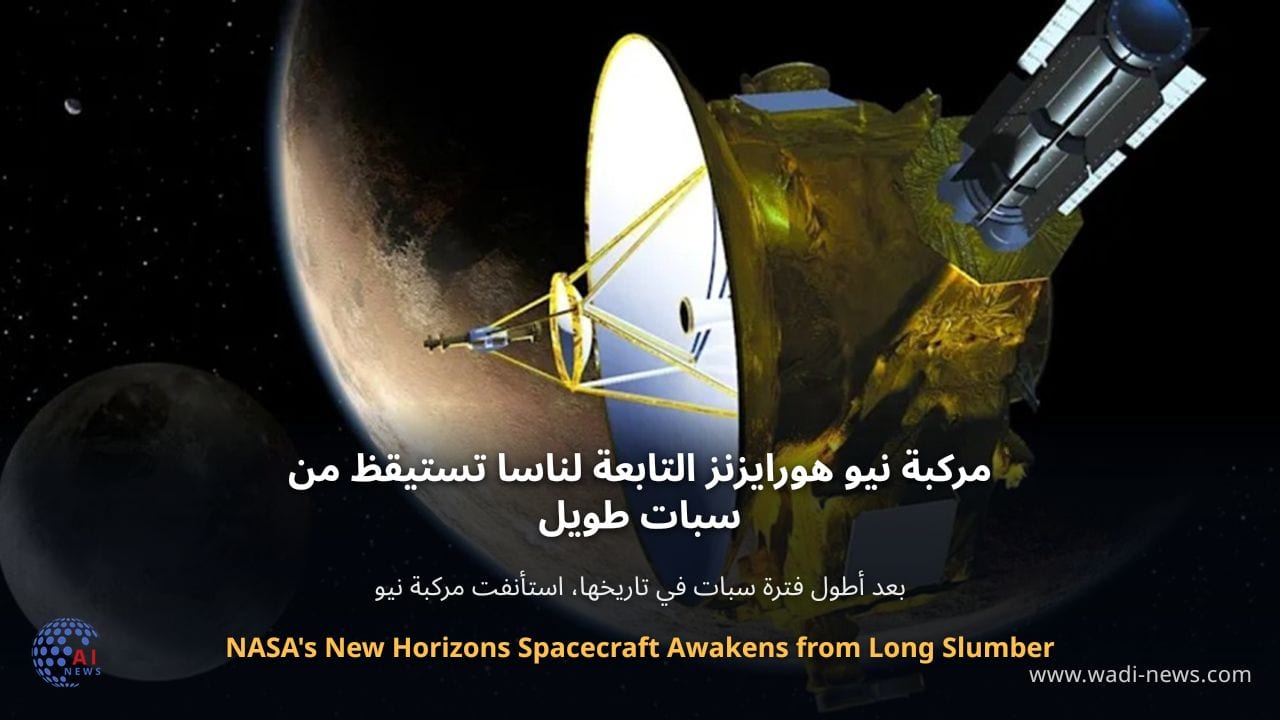
NASA's New Horizons spacecraft has reawakened after an unprecedented hibernation period, marking a significant milestone in its mission to explore the outer reaches of our solar system. The spacecraft, which has been in a deep sleep mode, is now transmitting scientific data it collected from the Kuiper Belt, an area rich in icy bodies and remnants from the early solar system. This reactivation is pivotal as it allows scientists to analyze new findings that could enhance our understanding of the solar system's formation and evolution.
During its hibernation, which lasted longer than any previous hibernation periods for the spacecraft, New Horizons was positioned at a safe distance, conserving energy and maintaining its instruments. The spacecraft entered hibernation in early 2021 and has since been eagerly anticipated to resume its operations. Upon waking, the team at NASA's mission control was thrilled to receive the first signals, confirming that all systems were functioning properly.
The data being sent back includes valuable information about the Kuiper Belt, a region that extends beyond the orbit of Neptune and is home to many dwarf planets and other celestial objects. New Horizons previously made headlines in 2015 when it conducted a historic flyby of Pluto, providing unprecedented images and data about the dwarf planet and its moons. The current data collection efforts are expected to offer further insights into the composition and characteristics of objects in the Kuiper Belt, contributing to the broader field of planetary science.
As New Horizons continues its journey, scientists are enthusiastic about the potential discoveries that lie ahead. The spacecraft is expected to encounter more objects in the Kuiper Belt and possibly beyond, making its ongoing mission one of the most exciting explorations in modern astronomy. The findings from this mission are anticipated to shed light on the origins of our solar system and the processes that govern planetary formation.