
ADVERTISEMENT
Tech
Chinese Spacecraft Unveils Secrets of Earth's Rare Companion
The Chinese spacecraft Tianwen-2 captures its first close-up image of the rare asteroid Kamo Owaia, paving the way for a detailed study of its composition and origin.
Jul 9, 2026, 6:07 AM | 1-2 min read | By Wadi News Editorial Team
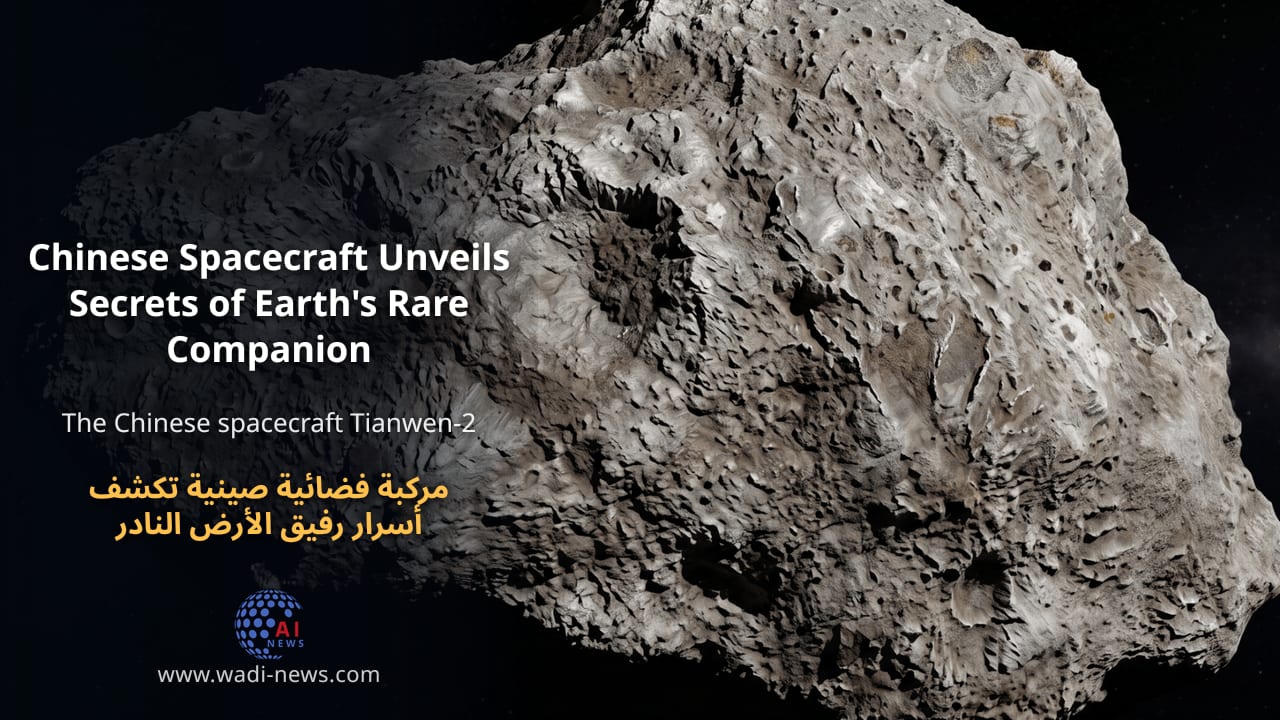
In an exciting development for space exploration, the Chinese spacecraft Tianwen-2 has successfully captured its first close-up image of the asteroid Kamo Owaia. This asteroid is categorized as a rare quasi-satellite of Earth, which means it has a unique orbital relationship with our planet. The image marks a significant milestone in the mission, as it allows scientists to begin a comprehensive analysis of the asteroid's structure and composition. Understanding Kamo Owaia could provide insights into its origins and the dynamics of its orbit around Earth.
The Tianwen-2 mission aims to gather samples from Kamo Owaia to further investigate its geological features and chemical makeup. By studying these samples, researchers hope to uncover valuable information about the history of this celestial body and its interaction with Earth. The mission is part of China's broader efforts to expand its capabilities in space exploration and to contribute to global scientific knowledge.
As the spacecraft continues its journey, it will utilize advanced imaging technology to capture more detailed photographs and data about Kamo Owaia. This information will be crucial for planning future missions and understanding the potential resources that such asteroids may offer. The analysis of these data will also help scientists refine theories regarding the formation of the solar system and the processes that govern the movement of celestial bodies.
In conclusion, the successful imaging of Kamo Owaia by the Tianwen-2 spacecraft represents a significant step forward in our understanding of near-Earth objects. The mission not only enhances China's position in the field of space exploration but also provides an opportunity for international collaboration in studying these fascinating celestial phenomena.