
ADVERTISEMENT
Politics
Far-Right AfD Reiterates Its Goal to Lead Germany
The far-right AfD party has solidified its leadership and aims to govern Germany following positive polling results.
Jul 6, 2026, 7:14 PM | 1-2 min read | By Wadi News Editorial Team
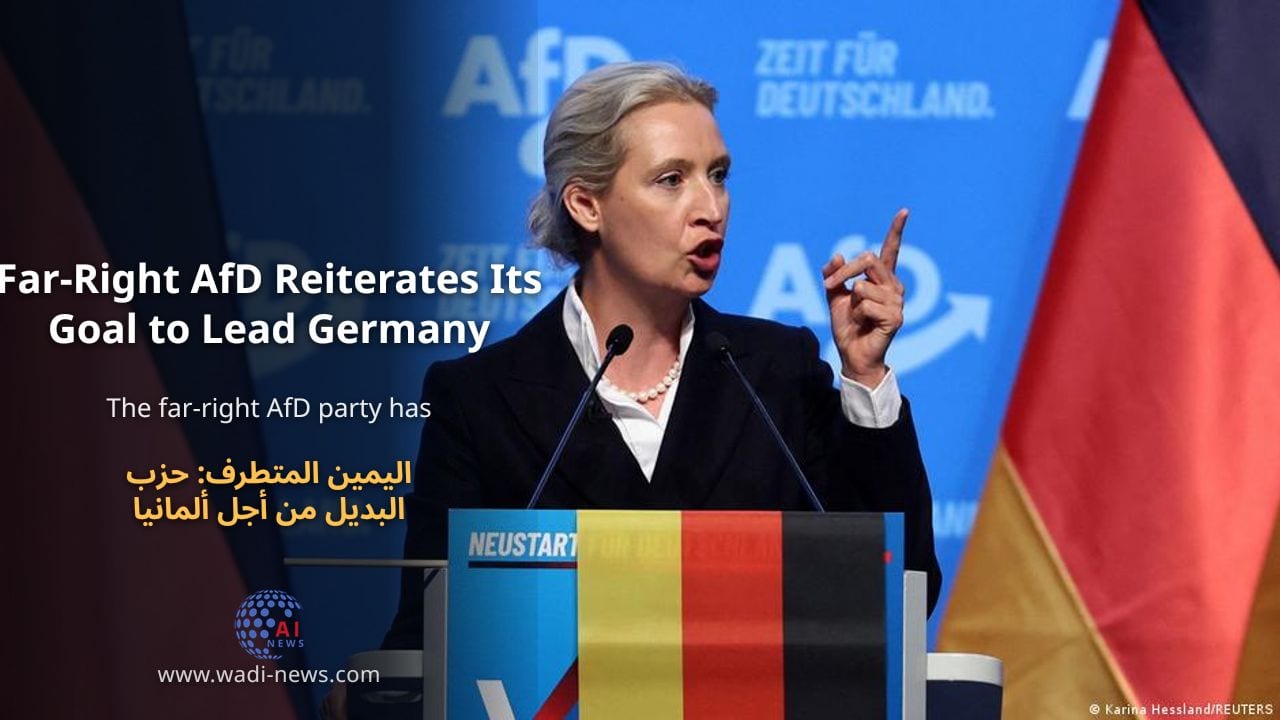
The Alternative for Germany (AfD), known for its far-right stance, has once again declared its ambition to govern the nation. This announcement came during the party's national convention held in Erfurt, the capital of Thuringia, where party leaders emphasized their readiness to take on a governing role in the future. Co-leader Alice Weidel articulated a vision of governance that aligns with the party's hardline policies, asserting that the AfD is prepared to lead the country amidst a backdrop of increasing support in recent polls.
Despite facing scrutiny from Germany's domestic intelligence agencies regarding its far-right ideologies, the AfD has managed to strengthen its leadership structure. This consolidation of power is seen as a strategic move to position the party favorably ahead of upcoming elections. Weidel's confidence reflects the party's recent polling gains, which suggest a growing base of support among the electorate, a development that could significantly impact Germany's political landscape.
During the convention, various party members echoed Weidel's sentiments, expressing optimism about the AfD's potential to influence national policies. The discussions highlighted the party's commitment to its core values and its readiness to implement them if given the chance to govern. This ambition to lead is not just about gaining power but also about reshaping the political discourse in Germany to align with their vision.
As the political climate in Germany evolves, the AfD's assertive stance raises questions about the future direction of the country's governance. With the party's determination to ascend to power, observers are keenly watching how this will affect coalition dynamics and the response from other political entities. The AfD's reaffirmation of its goals underscores a pivotal moment in German politics, where far-right ideologies are gaining traction and challenging traditional party structures.