
ADVERTISEMENT
Tech
How the Far-Right German Party Utilizes AI to Demonize Immigrants
An investigation reveals that the Alternative for Germany party is leveraging artificial intelligence to create propaganda that promotes its anti-immigration agenda.
Jul 4, 2026, 9:34 AM | 1-2 min read | By Wadi News Editorial Team
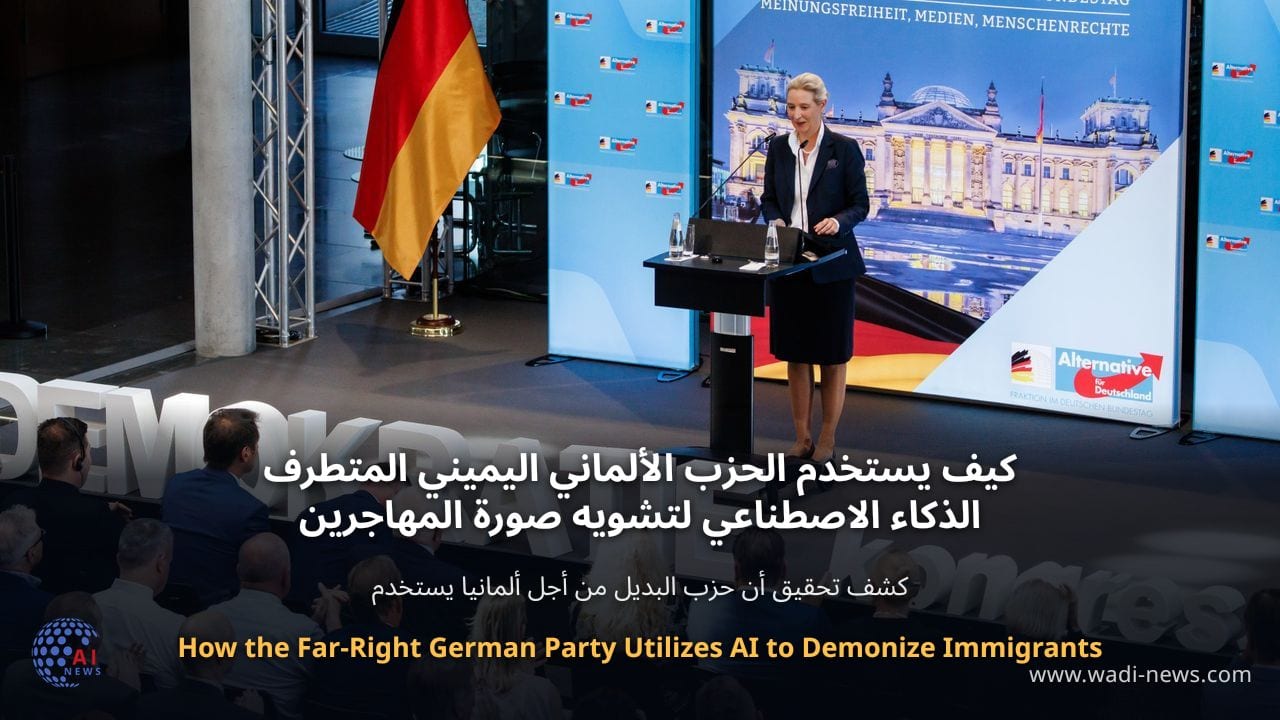
A recent investigative report has uncovered the alarming ways in which the far-right Alternative for Germany (AfD) party is employing artificial intelligence technology to produce ready-to-publish propaganda materials. This development raises significant concerns about the manipulation of public opinion and the spread of anti-immigration sentiments in Germany. The report highlights how the AfD has developed tools that not only generate content but also tailor messages to resonate with specific audiences, effectively amplifying their anti-immigrant rhetoric.
The use of AI in political messaging is not new, but the AfD’s approach is particularly troubling due to its explicit focus on demonizing immigrants. The party's strategy includes crafting narratives that portray migrants as threats to social cohesion and economic stability. By utilizing sophisticated algorithms, the AfD is able to analyze public sentiment and adjust its messaging in real-time, making their propaganda efforts more effective and pervasive.
This situation poses ethical questions regarding the role of technology in politics. As the line between genuine discourse and manufactured propaganda blurs, the potential for misinformation grows. The AfD's use of AI represents a broader trend where political entities exploit technological advancements to further their agendas, often at the expense of truth and accountability. It also highlights the urgent need for regulatory frameworks to govern the use of AI in political contexts.
In conclusion, the investigation into the AfD's use of artificial intelligence underscores the critical intersection of technology and politics. As the party continues to leverage these tools to promote its anti-immigrant narrative, it challenges the foundation of democratic discourse and raises alarms about the future of political communication in Germany and beyond.