
ADVERTISEMENT
Tech
German Electrolyzers Struggle in the Green Hydrogen Market
Despite increasing demand for green hydrogen, German electrolyzers face significant challenges in the market. The domestic market is weakening, and competition from China is intensifying.
Jul 4, 2026, 7:54 AM | 1-2 min read | By Wadi News Editorial Team
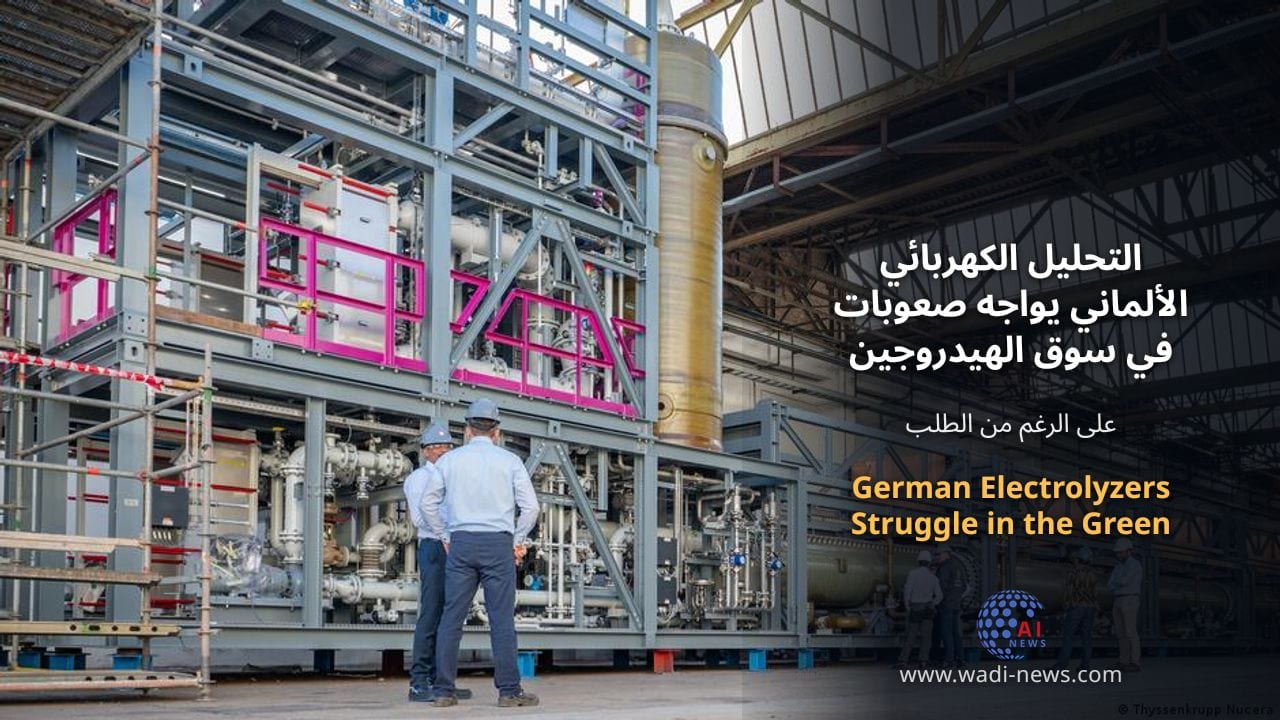
The production of green hydrogen, a key component in the transition to sustainable energy, is currently facing hurdles in Germany. Despite a growing global demand for hydrogen as a clean energy source, the local market for electrolyzers, which are essential for the production of hydrogen, is struggling. The stagnation in hydrogen production in Germany raises concerns about the country's ability to remain competitive in this rapidly evolving market.
Electrolysis, the process used to separate water into hydrogen and oxygen, requires significant energy input. This process occurs within cells that contain both a cathode and an anode. German manufacturers have long prided themselves on their technological advancements in this field, but the rising demand has not translated into a proportional increase in production capabilities. Instead, they are facing increasing pressure from international competitors, particularly from China, which is rapidly scaling up its own production.
The challenges in the German hydrogen market are multifaceted. The domestic demand for hydrogen is not growing as quickly as expected, leading to an oversupply of electrolyzers. Many companies are now struggling to find buyers for their products, resulting in financial strain. Furthermore, the geopolitical landscape and economic conditions are also affecting the market, with fluctuating energy prices and supply chain issues complicating production efforts.
In conclusion, while the potential for green hydrogen remains vast, German electrolyzers must navigate a complex and competitive landscape. The combination of stagnant domestic demand and rising international competition poses a serious threat to their market position. To ensure their future success, it will be crucial for these manufacturers to innovate and adapt to the changing dynamics of the global hydrogen market.