
ADVERTISEMENT
Tech
Exploring Titan: A New Frontier for Human Space Travel
A recent American scientific summit has sparked discussions on the potential of sending humans to Saturn's moon Titan, highlighting the technological challenges and scientific opportunities.
Jul 4, 2026, 12:39 AM | 3 min read | By Wadi News Editorial Team
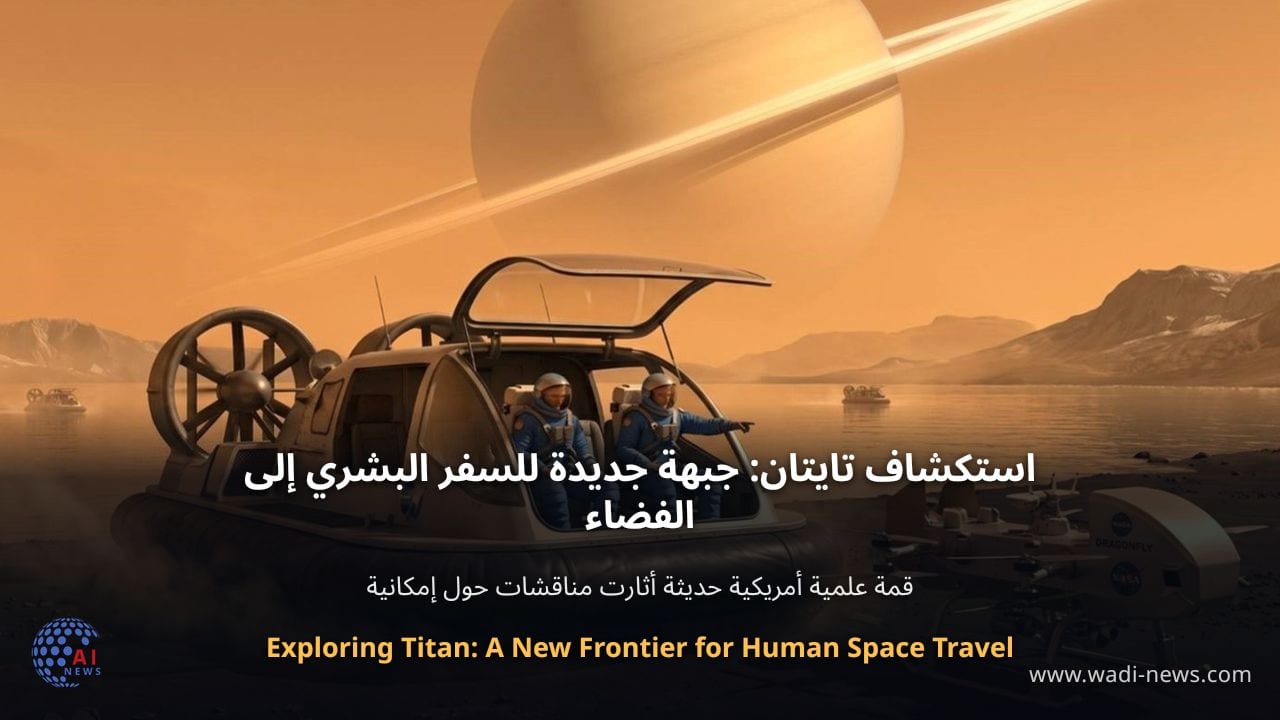
In a groundbreaking summit held recently in the United States, scientists and experts gathered to deliberate on the ambitious possibility of sending humans to Titan, one of Saturn's moons. This celestial body has long fascinated astronomers and astrobiologists due to its unique atmospheric conditions and potential for harboring life. The summit focused on the various technological hurdles that need to be overcome to make such a mission feasible, as well as the scientific benefits that could arise from exploring Titan's surface and atmosphere.
The discussions revealed that Titan's thick atmosphere and surface lakes of methane present both challenges and opportunities for future explorers. Some scientists argued that understanding Titan could provide insights into the origins of life and the conditions that might support it elsewhere in the universe. By analyzing its chemical composition and geological features, researchers hope to unlock the mysteries of this distant world.
Moreover, the summit addressed the resources available on Titan, which could serve as a base for further exploration of the solar system. The potential for utilizing local materials for fuel and life support systems was a key topic, suggesting that Titan might not only be a destination but also a launch point for missions deeper into space.
As the summit concluded, participants expressed a sense of optimism about the future of human space travel to Titan. While significant research and development are still needed, the prospect of exploring this intriguing moon invigorates the scientific community and paves the way for future missions that could redefine our understanding of life beyond Earth.
The Scientific Significance of Titan

Titan is unique among celestial bodies in our solar system, possessing a dense atmosphere primarily composed of nitrogen, with clouds and rain made of methane. This makes it the only other body in the solar system known to have stable liquids on its surface. Scientists believe that studying Titan's atmosphere and surface can provide valuable insights into the processes that might lead to the emergence of life. Furthermore, Titan's organic chemistry is of great interest, as it may resemble the prebiotic conditions of early Earth, offering clues to the origins of life itself.