
ADVERTISEMENT
Economy
Trump's Decision Not to Renew USMCA: Implications for North American Trade
The U.S. has opted not to renew the USMCA, a significant trade agreement with Canada and Mexico, raising concerns about future economic relations in North America.
Jul 3, 2026, 1:14 PM | 1-2 min read | By Wadi News Editorial Team
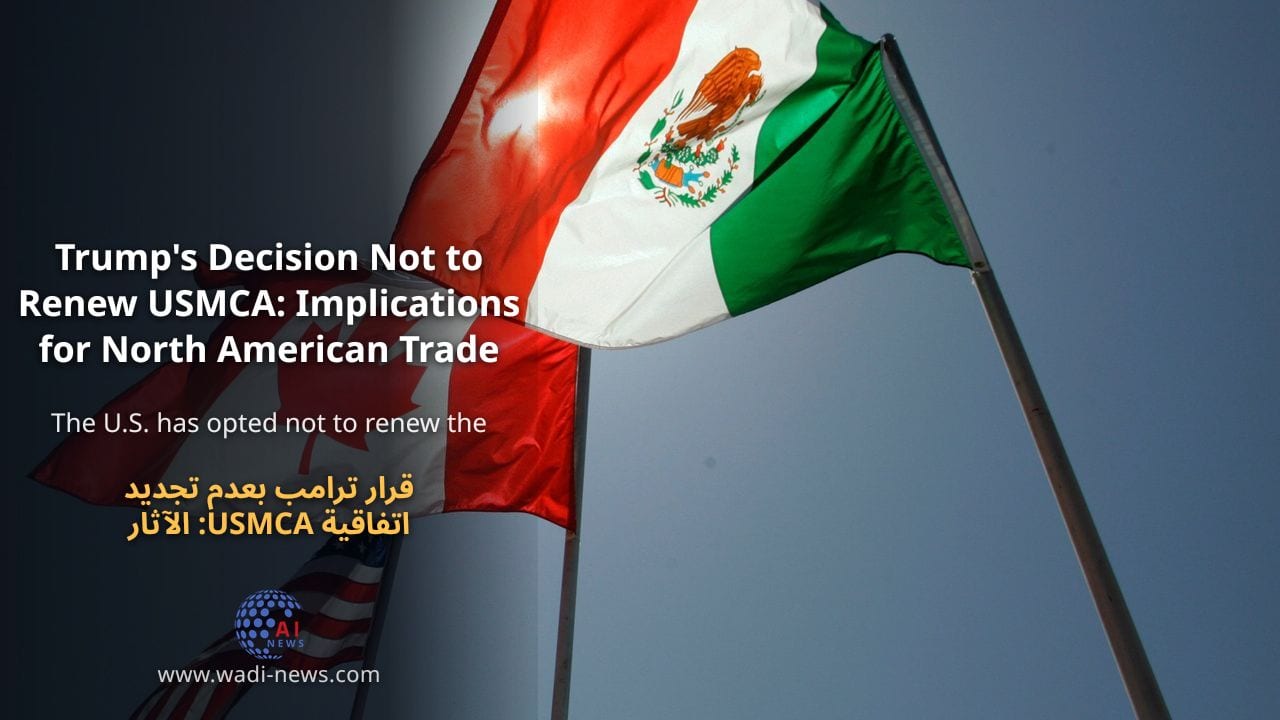
In a surprising move, the United States has declared that it will not renew the United States-Mexico-Canada Agreement (USMCA), a trade pact that facilitates $1.6 trillion in commerce between the three nations. This announcement comes just a day before the agreement was set to automatically renew, marking a significant shift in the trade landscape of North America. The decision, articulated by the U.S. trade ambassador, indicates that the current form of the agreement is deemed unsatisfactory, prompting this unexpected stance.
The implications of this decision are vast, affecting not only trade but also the economic stability of the region. With the USMCA in place, trade tariffs were lowered, and economic ties strengthened. The absence of a renewed agreement could lead to increased tariffs and trade barriers, which would ultimately impact consumers and businesses reliant on cross-border trade. Experts are now weighing the potential fallout from this decision, which could reverberate through various sectors, from agriculture to manufacturing.
Moreover, the refusal to renew the USMCA raises questions about the future of trilateral cooperation among the U.S., Canada, and Mexico. As these countries navigate their economic relationships, the lack of a solid trade framework could lead to uncertainty and tension. Stakeholders are concerned that this could result in retaliatory measures or further complications in negotiations, complicating efforts to foster a collaborative economic environment.
In conclusion, Trump's decision not to renew the USMCA may have significant ramifications for North American trade. As the economic landscape continues to evolve, stakeholders in all three countries will need to adapt to the new realities of trade relations. The coming months will be critical in determining how these changes will shape the future of commerce in the region.