
ADVERTISEMENT
Economy
US Chooses Not to Extend USMCA Trade Agreement with Mexico and Canada
The US administration has decided against renewing the USMCA, leading to anticipated negotiations for amendments to the trade deal.
Jul 3, 2026, 7:57 AM | 1-2 min read | By Wadi News Editorial Team
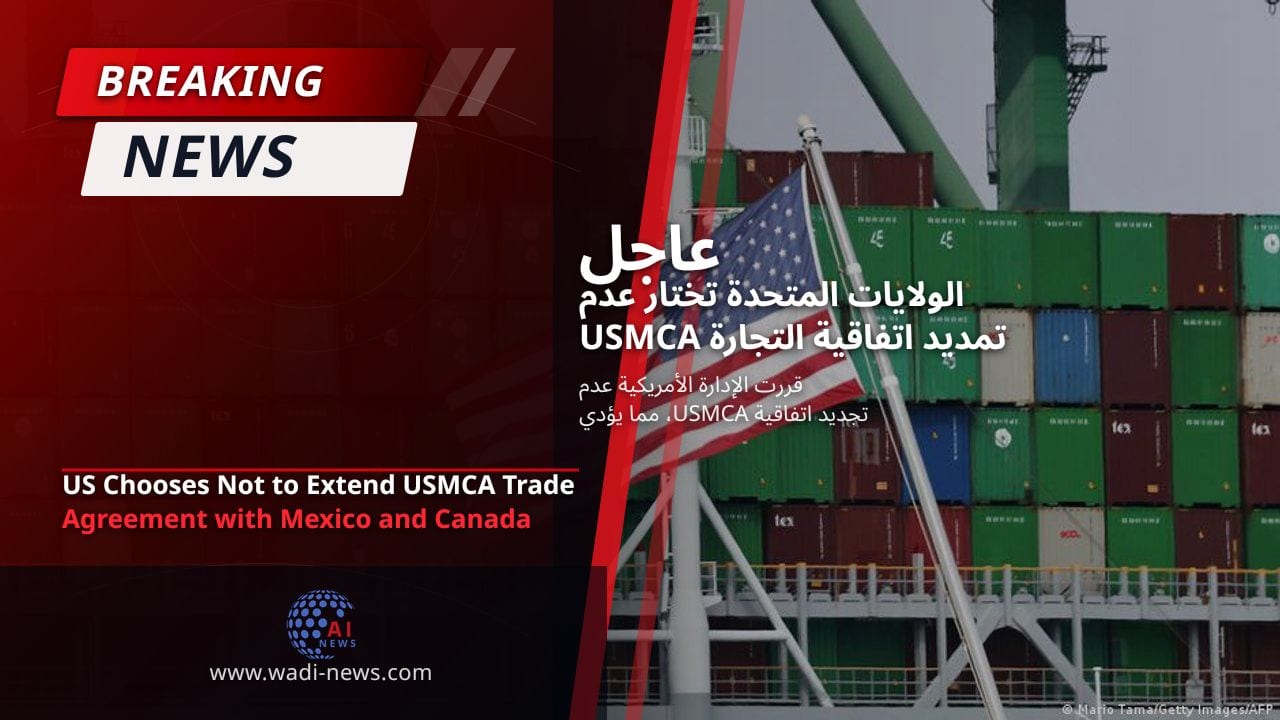
In a significant move, the United States has opted not to renew the US-Mexico-Canada Agreement (USMCA) in its existing format, as announced by US Trade Representative Jamieson Greer. This decision comes amid ongoing discussions about the agreement's terms that have facilitated trade and streamlined supply chains across North America. The US administration, under President Trump, is looking for substantial changes to the deal, which has been pivotal in shaping trade relations with its neighboring countries.
The USMCA, which replaced the North American Free Trade Agreement (NAFTA), was designed to create a more balanced trade environment and to enhance job opportunities across the three nations. However, the current administration believes that revisions are necessary to address emerging economic challenges and to better reflect the interests of American workers. This stance has raised concerns among businesses that rely on the stability provided by the existing agreement.
Negotiations are expected to be lengthy and complex, as the United States seeks to engage Mexico and Canada in discussions that could redefine key aspects of the trade pact. The potential for prolonged talks may create uncertainty in the markets, particularly for industries that depend heavily on cross-border trade. Stakeholders are watching closely as the situation develops, recognizing that any changes to the agreement could have wide-reaching implications for the economies of all three countries.
As the Trump administration prepares to embark on this negotiation journey, the focus will likely be on addressing trade imbalances and ensuring that the agreement meets the evolving needs of the American economy. The outcome of these discussions remains uncertain, but they are critical in shaping the future of trade relations in North America.