
ADVERTISEMENT
Politics
Supreme Court Ruling Enhances Influence of Wealthy Donors in Political Landscape
The US Supreme Court's recent decision to remove spending limits for political parties in candidate coordination raises concerns about increased corruption and influence from wealthy donors.
Jul 3, 2026, 7:55 AM | 3 min read | By Wadi News Editorial Team
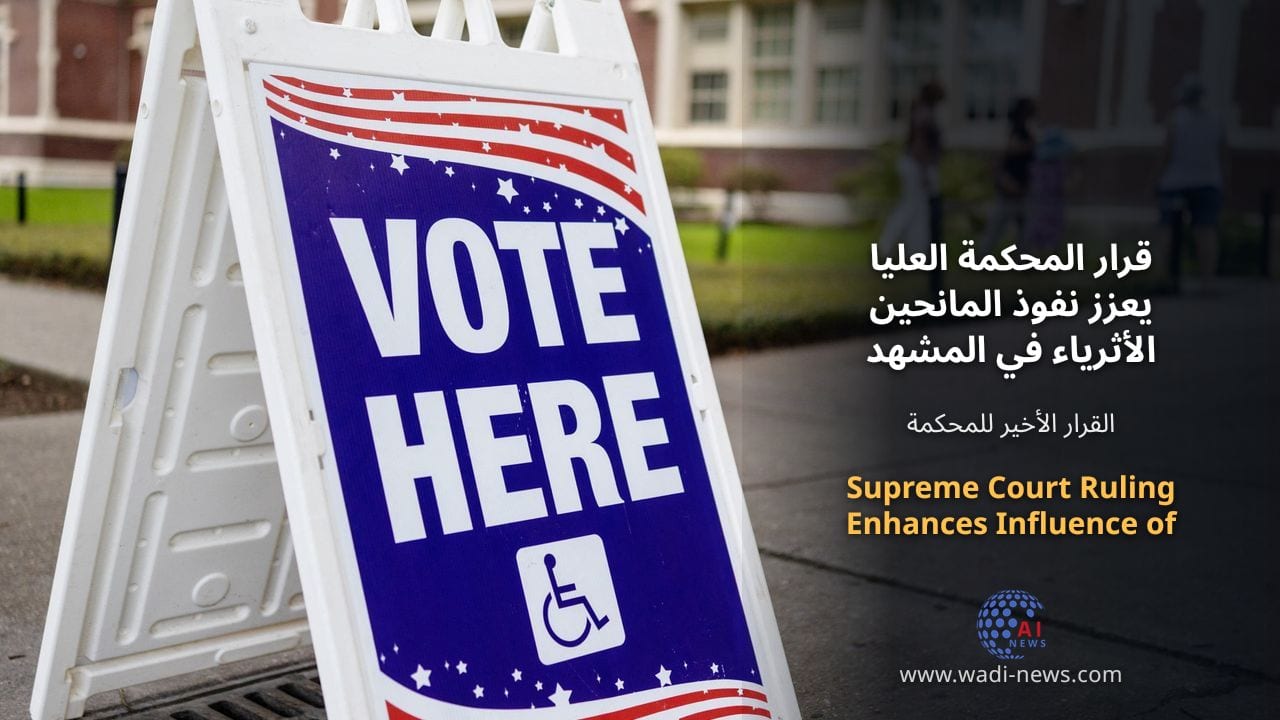
In a landmark decision, the United States Supreme Court has ruled to eliminate restrictions on the amount of money that political parties can spend in coordination with candidates. This significant ruling is expected to reshape the dynamics of political fundraising, allowing parties to engage in more extensive financial activities to support their chosen candidates. Critics of the ruling argue that it opens the door to greater corruption, enabling wealthy donors to exert even more influence over the political process. By lifting these spending limits, the Court has effectively amplified the voice of special interest groups, raising alarms about the potential for undue influence in elections.
The implications of this ruling are profound, as it allows for an unprecedented level of financial collaboration between political parties and candidates. This change could lead to a scenario where the interests of affluent donors overshadow the voices of average voters, creating an imbalance in political representation. Many fear that this decision will further entrench the power of money in politics, making it increasingly difficult for candidates without substantial financial backing to compete effectively. The ruling has sparked a wave of criticism from various political analysts and advocacy groups, who warn that it could undermine the integrity of the electoral process.
Supporters of the decision argue that it promotes freedom of speech and association, claiming that political parties should have the liberty to raise and spend money as they see fit. They believe that this flexibility can lead to a more vibrant political discourse and greater engagement from parties in the electoral process. However, the counterargument emphasizes that the potential for corruption and the distortion of democratic principles far outweighs these benefits. As the political landscape continues to evolve, the long-term consequences of this ruling remain to be seen.
In conclusion, the Supreme Court's decision to lift spending limits for political parties in coordination with candidates marks a pivotal moment in American politics. While it may enhance fundraising capabilities, the risks associated with increased influence from wealthy donors cannot be overlooked. As the nation grapples with the implications of this ruling, the debate over the role of money in politics is likely to intensify, prompting calls for reforms to ensure a fair and equitable electoral system.
Reactions from Political Analysts

Political analysts have expressed a range of opinions regarding the Supreme Court's ruling. Some believe that this decision will lead to a more robust political environment, where parties can compete more freely for resources. Others, however, caution that the ruling may exacerbate existing inequalities in political representation, as only those with substantial financial means will be able to influence the political narrative. This divide in opinions illustrates the complexity of the issues surrounding campaign finance and the role of money in politics.