
ADVERTISEMENT
Economy
German Startups Join Global Race for Nuclear Fusion Technology
As global energy demands rise, German startups are entering the competition to develop commercially viable nuclear fusion reactors, facing off against international firms.
Jul 2, 2026, 4:56 AM | 1-2 min read | By Wadi News Editorial Team
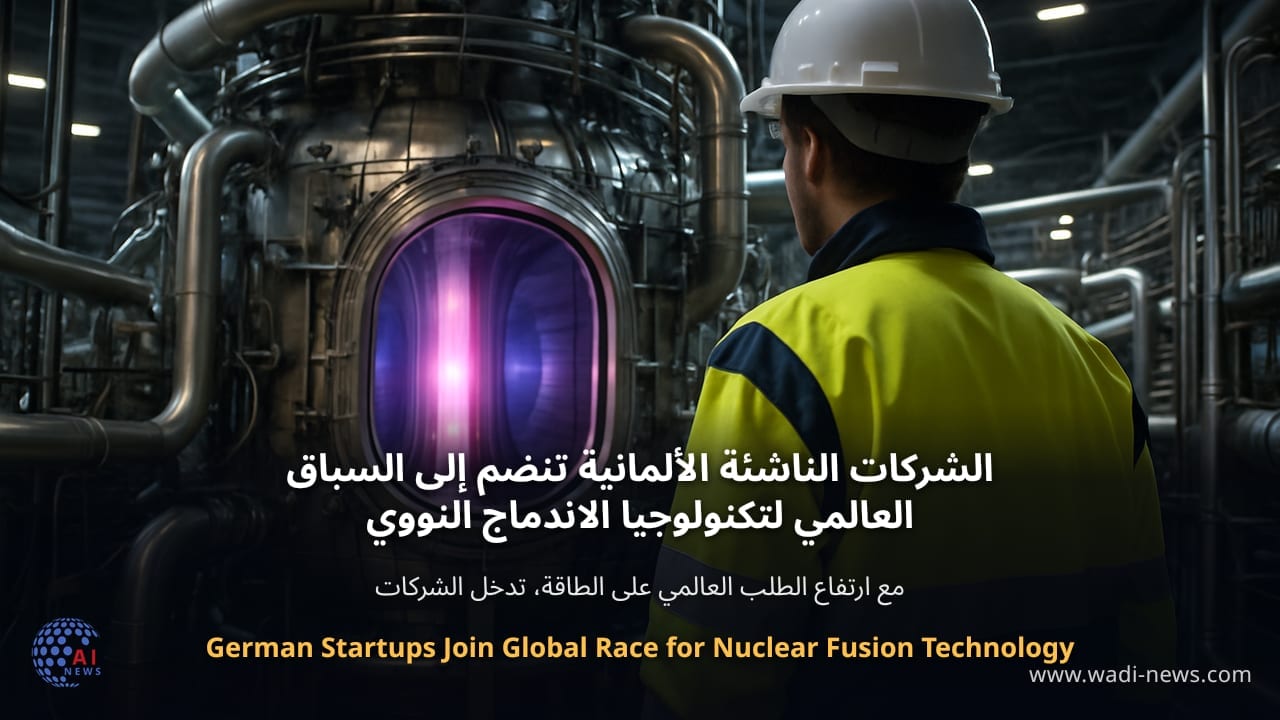
The increasing demand for energy worldwide is driven by several factors, including the ongoing electrification of economies. In particular, the rise of data centers, which are vital for powering artificial intelligence, has intensified this need. Nuclear fusion presents a promising solution, with the International Energy Agency projecting that the fusion energy sector could be valued at over $350 billion by 2050. This innovative process involves fusing light atomic nuclei to create new elements, releasing energy as heat, which can then be converted into electricity. Unlike traditional nuclear fission, nuclear fusion poses minimal risk of accidents and produces no long-lived radioactive waste.
In Germany, several startups are making strides in the nuclear fusion race. Among them are Focused Energy, Marvel Fusion, Proxima Fusion, and Gauss Fusion. While historically, nuclear fusion efforts have concentrated on large government-funded projects like the International Thermonuclear Experimental Reactor (ITER) in France—where 35 nations collaborate—the slow progress and rising costs have opened the door for private companies to explore this technology. According to recent reports, around 77 firms are now actively working on commercializing nuclear fusion, with German startups looking to capitalize on this emerging market.
Investment in nuclear fusion research has seen a significant increase, reflecting growing optimism in the field. By the end of 2025, nearly €13 billion had been invested by private sources, marking a 30% rise since mid-2025. However, most funding flows to companies in the U.S. and China, raising concerns about Europe’s competitive position. In the U.S., major tech companies have substantially backed fusion initiatives, creating a robust ecosystem that German startups must compete against.
Despite the challenges, experts like Professor Markus Roth from TU Darmstadt express confidence in Germany's potential in this sector. Roth emphasizes the importance of the existing research infrastructure and collaborative spirit among German firms. With a focus on laser-based fusion technology, companies like Focused Energy are making notable advancements. The German government has also pledged substantial public investment, identifying nuclear fusion as a critical technology for the nation’s future. As the race continues, German startups are determined to secure their place in the global energy landscape, with the first commercial fusion reactors expected in the early 2040s.