
ADVERTISEMENT
Economy
Cuban Minister Reports Stalemate in US Negotiations
Cuban Foreign Minister Bruno Rodriguez highlights a lack of progress in negotiations with the United States, attributing the stalemate to ongoing threats and sanctions.
Jul 1, 2026, 11:56 PM | 1-2 min read | By Wadi News Editorial Team
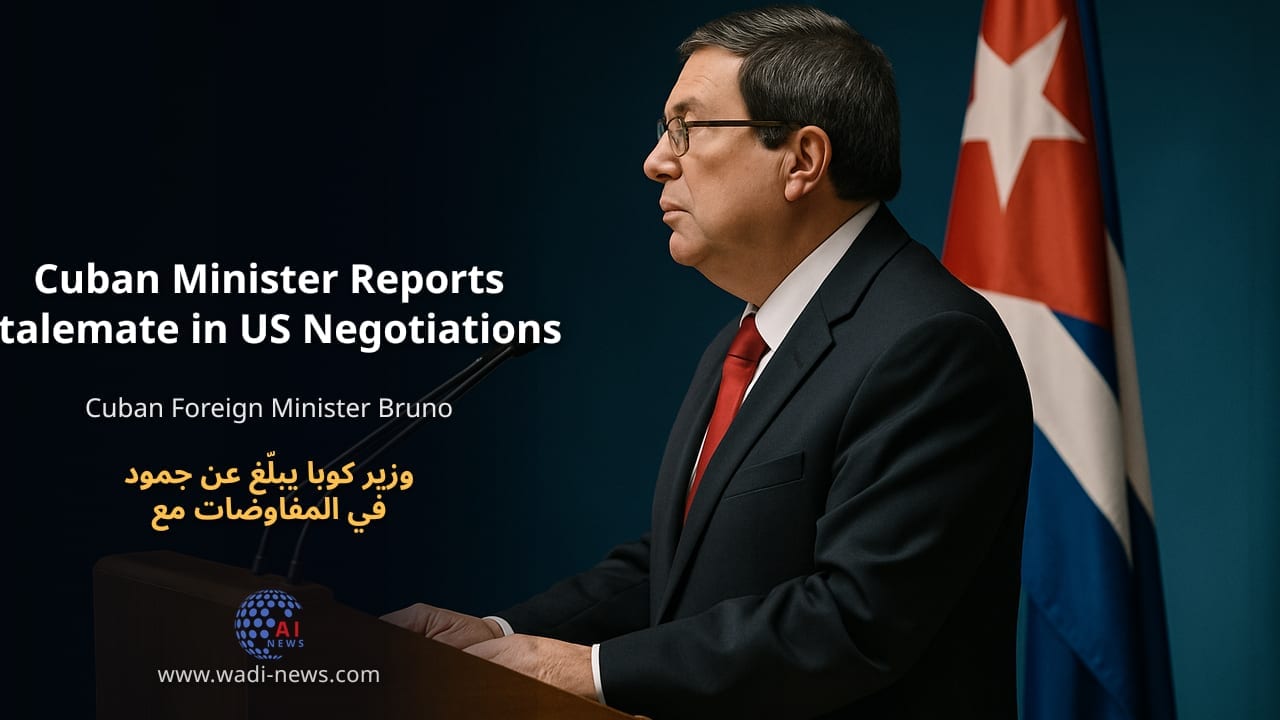
Cuban Foreign Minister Bruno Rodriguez has expressed deep concern regarding the current state of negotiations with the United States, stating that they have reached an impasse. During a press conference held on Tuesday, Rodriguez emphasized that no significant advancements have been made towards alleviating the stringent sanctions imposed on Cuba by the US government. He described the discussions as being devoid of any constructive outcomes, which he attributes to the increasing pressure from the US administration led by President Donald Trump.
Rodriguez remarked, 'The discussions between the Cuban and US governments are showing no progress.' He criticized the US for maintaining a dual approach: while the delegations have generally been respectful, they are accompanied by a barrage of threats and coercive measures aimed at undermining Cuba’s sovereignty. This persistent pressure has only served to complicate the diplomatic landscape, making it increasingly difficult for meaningful dialogue to take place.
The historical context of these negotiations is rooted in decades of strained relations, primarily due to the US trade embargo established in the 1960s. Rodriguez pointed out that the current administration has intensified its stance, with Trump signaling a desire for regime change in Cuba. The foreign minister highlighted recent actions by the US, including the severing of Cuba's oil supply and threats of military intervention, as detrimental to the efforts aimed at fostering a peaceful resolution.
In light of these challenges, Rodriguez reiterated Cuba's commitment to remain open to dialogue, despite the apparent deadlock. He called for a United Nations debate on US sanctions scheduled for July 7, citing urgent concerns over escalating tensions. Rodriguez accused the US of attempting to obstruct this important discussion, which typically garners overwhelming support for resolutions advocating the end of the embargo. He condemned the US government for pressuring UN member states to abstain from participating in the debate, asserting that such actions only exacerbate the ongoing humanitarian crisis on the island.
The Cuban government has taken steps to address human rights concerns in response to international pressure, including the recent pardoning of over 2,000 prisoners. However, critics argue that these gestures do not extend to political dissidents. Additionally, Cuba has initiated economic reforms aimed at increasing private enterprise and foreign investment, though it remains steadfast in its political ideology, stating that its model is non-negotiable. Rodriguez's statements underscored the urgent need for the US to reconsider its policies, as the humanitarian situation in Cuba continues to deteriorate under the weight of sanctions and economic hardships.