
ADVERTISEMENT
Fun
The Graphic Image that Ignited the American Revolution
A powerful engraving of the Boston Massacre by Paul Revere played a crucial role in rallying American colonists against British rule, marking a significant moment in the path to independence.
Jul 1, 2026, 10:26 PM | 1-2 min read | By Wadi News Editorial Team
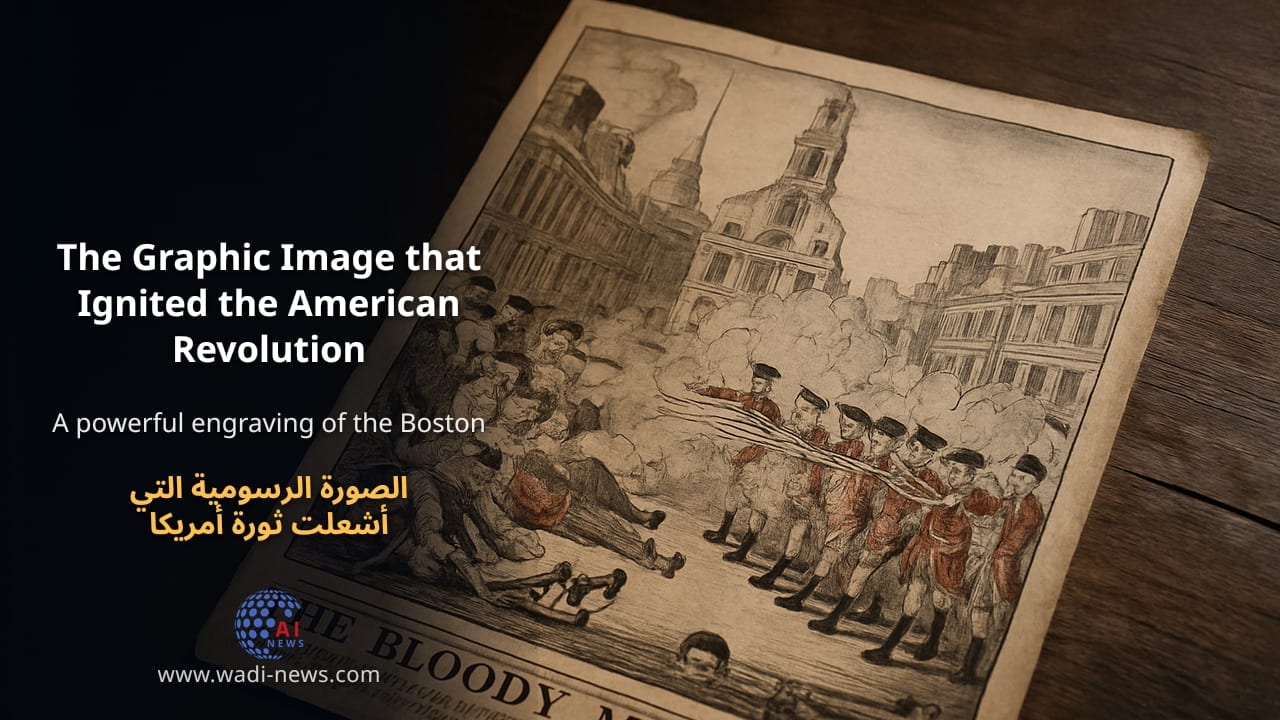
On March 5, 1770, a tragic event unfolded in Boston, Massachusetts, where tensions between British soldiers and American colonists erupted into violence. This confrontation, known as the Boston Massacre, resulted in the deaths of five colonists, an event that would become a pivotal moment in the growing discontent against British authority. The aftermath of this incident saw the emergence of a powerful piece of propaganda crafted by Paul Revere, a prominent silversmith and member of the Sons of Liberty.
Revere's engraving, titled 'The Bloody Massacre perpetrated in King Street, Boston on March 5, 1770', depicted the harrowing scene of unarmed colonists being fired upon by British soldiers, a portrayal that was both graphic and evocative. The image was strategically designed to elicit outrage and rally support for the independence movement. By illustrating the British as ruthless aggressors and the colonists as innocent victims, Revere's work served not only as a visual representation of the massacre but also as a rallying cry for revolution.
The engraving quickly circulated through Boston and beyond, appearing in newspapers and pamphlets, feeding the flames of anti-British sentiment. As more individuals viewed Revere's work, the call for resistance against British rule intensified. The image managed to resonate with a populace already frustrated by heavy taxation and a military presence that felt increasingly oppressive. Historians note that this engraving played a fundamental role in shaping colonial attitudes and fostering a unified desire for independence.
As we approach the 250th anniversary of the Boston Massacre, it is important to reflect on the lasting impact of Revere's engraving. The image is not only a historical artifact but also a reminder of how art and propaganda can influence public perception and mobilize collective action. The legacy of this engraving continues to inspire discussions about authority, protest, and the quest for justice in contemporary society.