
ADVERTISEMENT
Politics
Iran's Axis of Resistance: Adapting in a Post-War Landscape
The recent memorandum of understanding between the United States and Iran has shifted the regional power dynamics. As Iran's proxy forces reassess their strategies, questions arise about the future of its deterrence capabilities and the resilience of its allied network.
Jul 1, 2026, 8:56 PM | 1-2 min read | By Wadi News Editorial Team
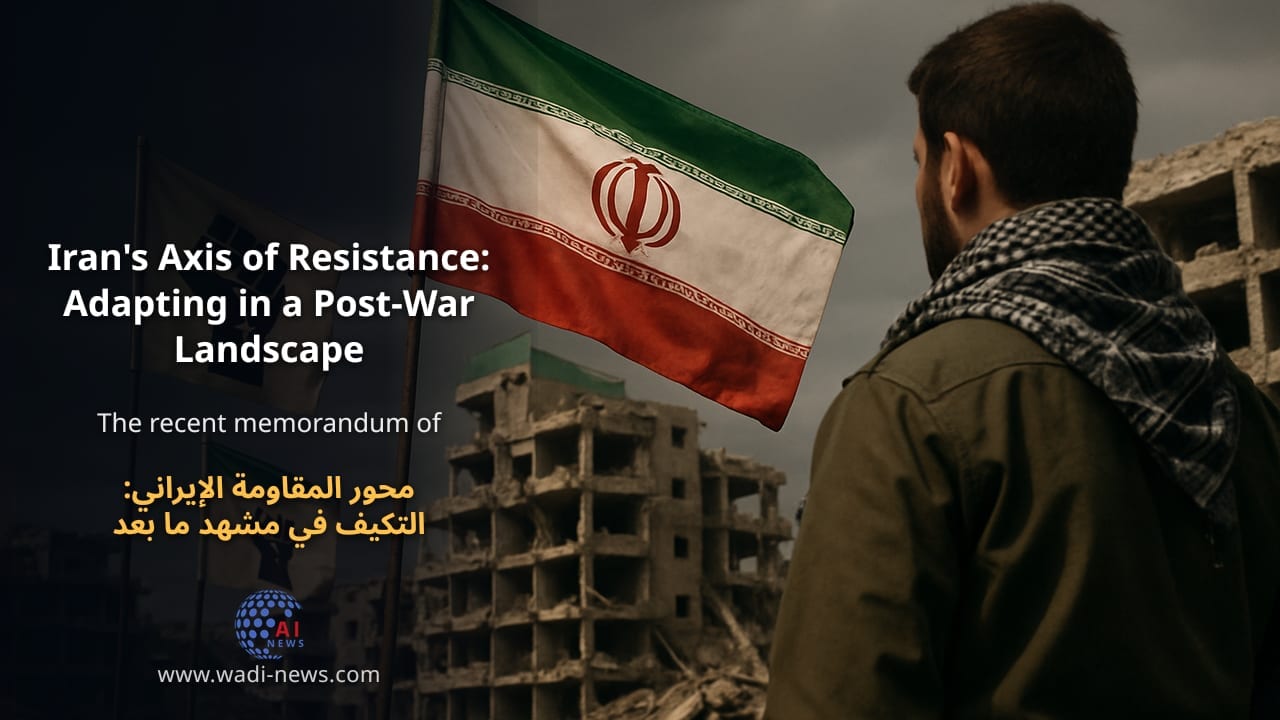
In a significant development for Middle Eastern geopolitics, Iran's recent agreement with the United States has marked a halt to over three months of direct conflict. This memorandum of understanding (MOU) not only lifts the US naval blockade but also establishes a substantial reconstruction fund for Iran, signaling a potential transformation in the balance of power across the region. Experts are now analyzing the implications of this agreement on Iran's longstanding strategy and its network of allied forces, collectively referred to as the 'axis of resistance.' As the dust settles after the intense conflict, critical questions emerge regarding whether Iran’s deterrence has been fundamentally weakened or if its proxy network is evolving into a more adaptable and resilient entity.
Historically, Iran has relied heavily on its regional allies, including Hezbollah and various militia groups in Iraq and Yemen, as part of its defensive strategy aimed at keeping conflicts away from its own borders. However, during the recent hostilities, Iran appeared to prioritize its own military capabilities, utilizing its missile and drone technology rather than deploying its allies to the frontline. This shift in tactics raises important discussions among analysts about the future viability of the axis of resistance. Some argue that the war has revealed the vulnerabilities of Iran’s strategy, while others suggest it may lead to a necessary adaptation that could enhance its long-term deterrence.
The current situation presents a unique challenge for Iran as it contemplates the path forward. With the agreement promising to unlock frozen assets and potentially allow for a reconstruction effort, the question arises: will Iran focus on domestic recovery, or will it seek to bolster its proxy forces? Experts like Nader Hashemi believe that the immediate priority will be on enhancing Iran’s own defense capabilities, particularly its missile and drone technologies. Conversely, others like Negar Mortazavi argue for a dual approach, where economic recovery and military readiness go hand in hand, ensuring that Iran remains a formidable player in the region. This balancing act will be crucial as the geopolitical landscape continues to evolve.
Moreover, the war has exposed the limitations of assuming that allied forces will automatically engage in conflict whenever Iran is threatened. Each member of the axis has its own local priorities and constraints, making the future of this coalition uncertain. The operational independence of these groups may allow Iran to distance itself from direct responsibility for their actions while still maintaining a strategic alignment against US and Israeli interests. As the situation develops, it appears that the axis is moving towards a more decentralized model, relying on asymmetric warfare capabilities rather than traditional military structures. This could lead to a leaner, more effective network that adapts to the changing dynamics of reg…