
ADVERTISEMENT
Politics
Fuel Crisis in Russia: Ukraine Increases Pressure on Putin
Ukraine's recent attacks on Russian energy infrastructure have led to a significant fuel crisis in Russia, prompting President Putin to acknowledge the shortages publicly for the first time.
Jul 1, 2026, 6:26 PM | 1-2 min read | By Wadi News Editorial Team
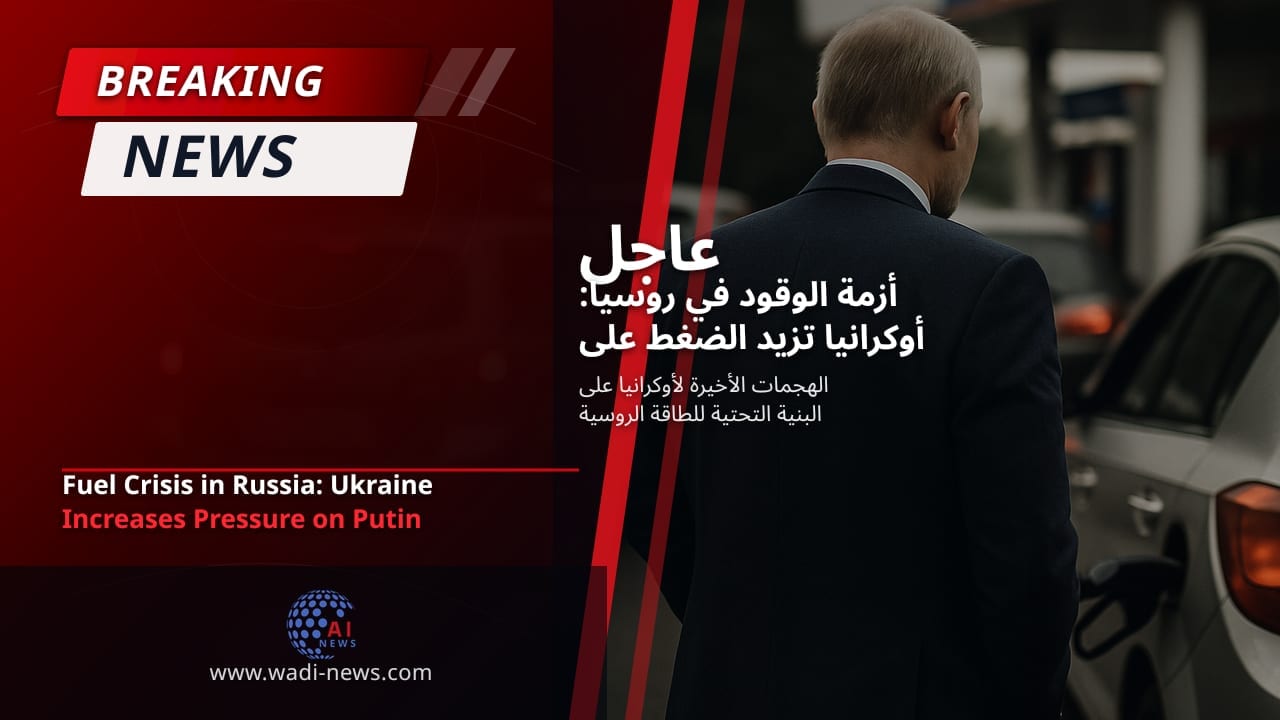
Over the past few months, Ukrainian forces have targeted energy infrastructure in various Russian regions, including the annexed Crimea. These attacks have disrupted supply routes and focused on critical oil refineries within Russia. In June alone, refineries in Moscow, Nizhnekamsk, Tyumen, and Volgograd were struck, contributing to a reported 25% decrease in gasoline production. Currently, Russia produces only 85,000 tons of gasoline daily, while the summer consumption rate is around 110,000 tons per day. Experts from the US think tank Energy Intelligence warn that Russia is facing one of its most severe fuel crises in history this summer.
On June 28, President Vladimir Putin publicly admitted to a "certain fuel shortage" for the first time. In a televised interview, he acknowledged damage to facilities but reassured that repairs would be completed quickly and that the problems were not critical. According to Margarita Zavadskaya, a political scientist at the Finnish Institute of International Affairs, this admission marks a significant moment, as it publicly identifies Ukrainian drone strikes as the cause of these issues. Estimates indicate that fuel sale restrictions are already in place in 40 Russian regions, with reports suggesting that as many as 78 regions are affected. Long lines at gas stations are becoming increasingly common in many cities.
Christina Harward, an expert at the Institute for the Study of War in Washington, D.C., noted that Ukraine had attempted to target refineries in 2025, but this year marks a shift in tactics. The Ukrainian forces have significantly increased both the quantity and quality of their drones, enhancing their range and strategically targeting Russian air defense systems. Concurrently, Ukrainian forces are also focusing on disrupting supply routes for the Russian army near the front lines. Harward emphasized that attacks within a radius of 20 to 200 kilometers behind the front lines signify a new phase in Ukraine's military strategy.
With a state of emergency declared in Crimea and Sevastopol on June 26, local authorities have responded to the fuel and food shortages caused by Ukrainian attacks. British historian Mark Galeotti has pointed out that Ukraine has identified Crimea as a critical vulnerability for Russia, making it difficult to maintain essential supplies such as fuel, energy, and water. The ongoing pressure on Crimea may compel Putin to engage in serious peace negotiations under Ukraine's terms. However, the potential for escalation remains a concern, as Galeotti notes that losing Crimea would be a significant blow to Putin's image. The situation raises the question of whether Ukraine's strategy to force Russia into negotiations will yield the desired outcomes, though experts caution that the Russian economy may not collapse imminently, and the war may continue to affect Russia's economic stability in the long term.