
ADVERTISEMENT
Politics
Supreme Court Issues Major Rulings Against Trump
The US Supreme Court delivered significant rulings affecting President Trump's authority, including a 3-1 defeat on key issues such as mail-in voting and the E. Jean Carroll case.
Jul 1, 2026, 10:56 AM | 1-2 min read | By Wadi News Editorial Team
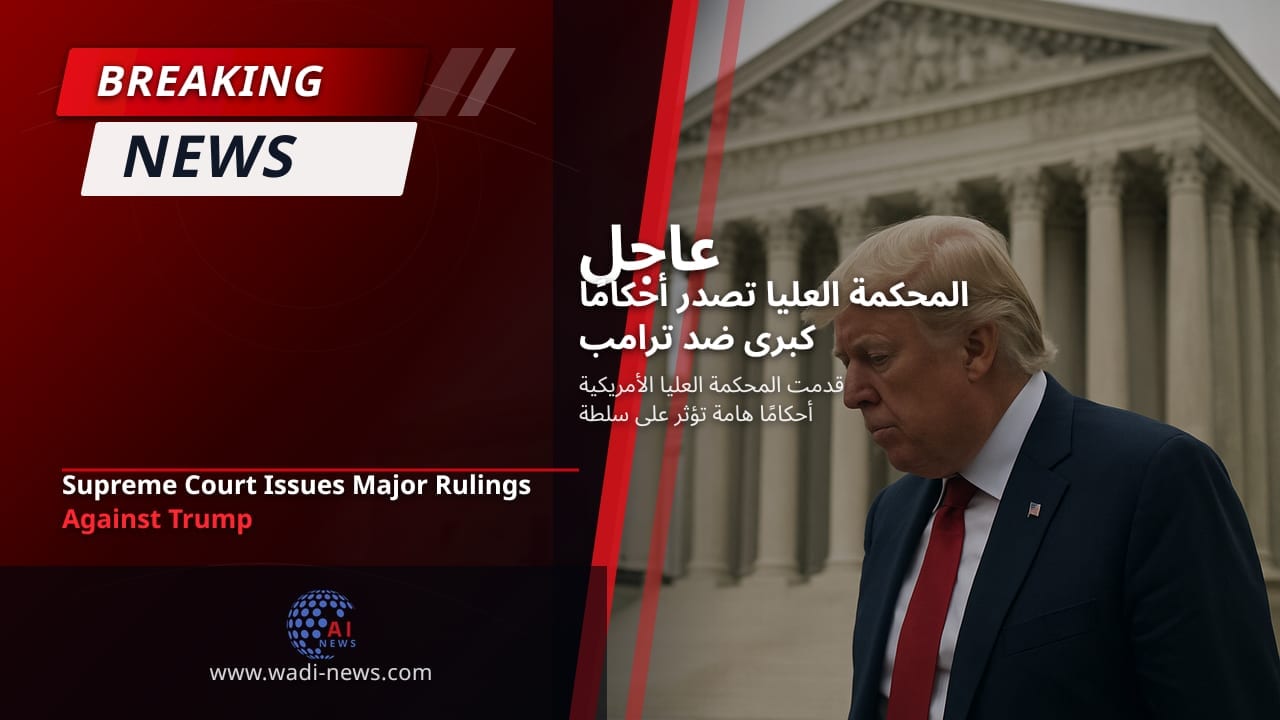
On June 30, 2026, the United States Supreme Court made headlines by announcing a series of rulings that have significant implications for President Donald Trump. Among these, three decisions went against him while one ruling favored his administration. The cases addressed critical issues regarding executive power, voting rights, and individual accountability.
The Supreme Court's decision to enhance Trump's ability to dismiss members of independent government agencies without justification has raised concerns among legal experts and political analysts alike. The court's ruling overturned nearly a century of precedents aimed at protecting agency officials from arbitrary dismissal by the president. Critics of the ruling, including Justice Sonia Sotomayor, expressed alarm over the potential for abuse of power, suggesting that this could lead to instability within the government. Trump's supporters, however, hailed the decision as a necessary expansion of presidential authority at a time when decisive leadership is crucial.
In a surprising twist, the court blocked Trump's attempt to fire Federal Reserve Governor Lisa Cook, emphasizing the importance of maintaining the independence of the central bank. This ruling marks a rare instance of the judiciary protecting the Federal Reserve from presidential influence. The court highlighted that the procedural protections afforded to Cook were not upheld, reinforcing the notion that monetary policy decisions should not be swayed by political agendas. Trump's justification for the dismissal, based on unproven allegations, was seen as an overreach of his authority.
Another significant ruling upheld the legality of counting mail-in ballots received after Election Day, provided they are postmarked by that date. This 5-4 decision countered Trump's long-standing opposition to mail-in voting, which he has claimed leads to electoral fraud. The ruling is a critical affirmation of voting rights, particularly in the context of upcoming elections where Democrats are expected to benefit from increased mail-in voting participation. Trump responded to the ruling by calling it a substantial loss for voter rights and urged Congress to adopt stricter voting regulations.
Lastly, the court upheld a lower court's ruling that found Trump liable for sexually abusing and defaming E. Jean Carroll, a case that has been a focal point of controversy for the former president. The jury's decision, which mandates Trump to pay $5 million, stands as a testament to the legal challenges he faces. Trump's attempts to dismiss the ruling as politically motivated have been met with skepticism, as legal experts assert that accountability is essential in such serious matters.
As the Supreme Court concludes its term, the implications of these rulings will likely resonate throughout the political landscape, particularly as the midterm elections draw near. The decisions reflect a critical moment for the balance of power in the U.S. government…