
ADVERTISEMENT
Politics
South Africa Faces Unrest as Anti-Migrant Protests Intensify
Protests erupt across South Africa as anti-immigrant groups demand the departure of undocumented migrants by a self-imposed deadline, raising tensions and prompting a significant security response.
Jul 1, 2026, 5:56 AM | 1-2 min read | By Wadi News Editorial Team
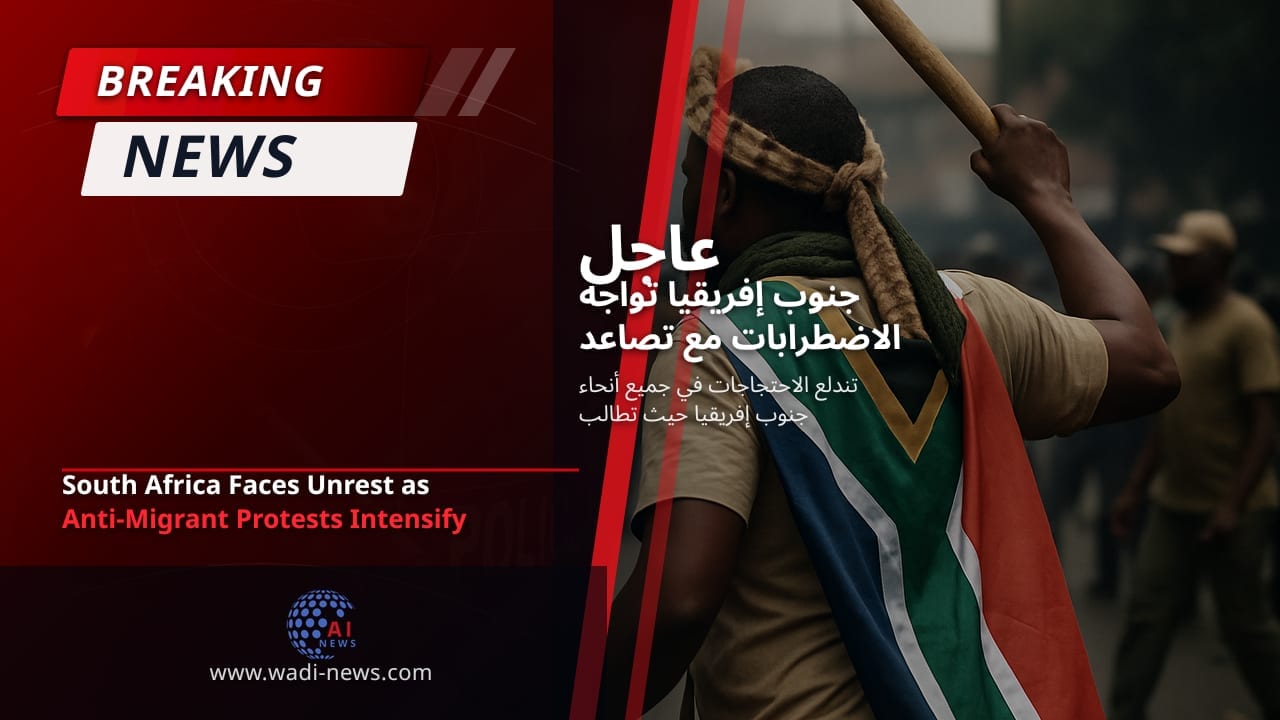
On June 30, 2026, South Africa witnessed widespread protests organized by anti-immigrant groups demanding that undocumented migrants leave the country. This unofficial deadline has heightened tensions across major cities, with demonstrators rallying in Johannesburg, Durban, and Cape Town. The protests have been marked by a heavy deployment of security forces, aimed at maintaining order amidst fears of violence. President Cyril Ramaphosa has urged protesters to express their concerns peacefully, emphasizing the importance of lawful demonstrations.
The March and March movement, led by activist Jacinta Ngobese-Zuma, has played a crucial role in mobilizing supporters. Protesters, some adorned in traditional attire and brandishing wooden weapons, voiced their frustrations against what they perceive as the detrimental impact of illegal immigration on job opportunities and public resources. The movement has vowed to continue its demonstrations until the government takes decisive action regarding immigration policies.
While the protests have seen significant participation, they have also been marred by reports of violence and intimidation. Isolated incidents of attacks on migrant-owned businesses have occurred, leading to arrests for looting and attempts to incite violence. The police have responded by securing areas known for high immigrant populations, including Hillbrow and Yeoville in Johannesburg, where tensions have flared.
As the situation evolves, thousands of migrants have begun to leave South Africa, fearing for their safety as anti-immigrant sentiment grows. Some foreign nationals report being evicted from homes or dismissed from jobs due to the rising hostility. The South African government, while condemning violence, faces criticism for its handling of the situation and the need for comprehensive immigration reform. The unfolding events raise questions about the underlying issues of unemployment and social inequality that fuel such unrest, reflecting a complex crisis that extends beyond immigration alone.