
ADVERTISEMENT
Economy
UN Warns of Ongoing Economic Strain from Hormuz Disruptions
The United Nations has cautioned that the reopening of the Strait of Hormuz will not alleviate the economic repercussions of over 100 days of navigation disruptions, affecting 61 fragile economies that will continue to face inflation and food pressures.
Jul 1, 2026, 1:26 AM | 1-2 min read | By Wadi News Editorial Team
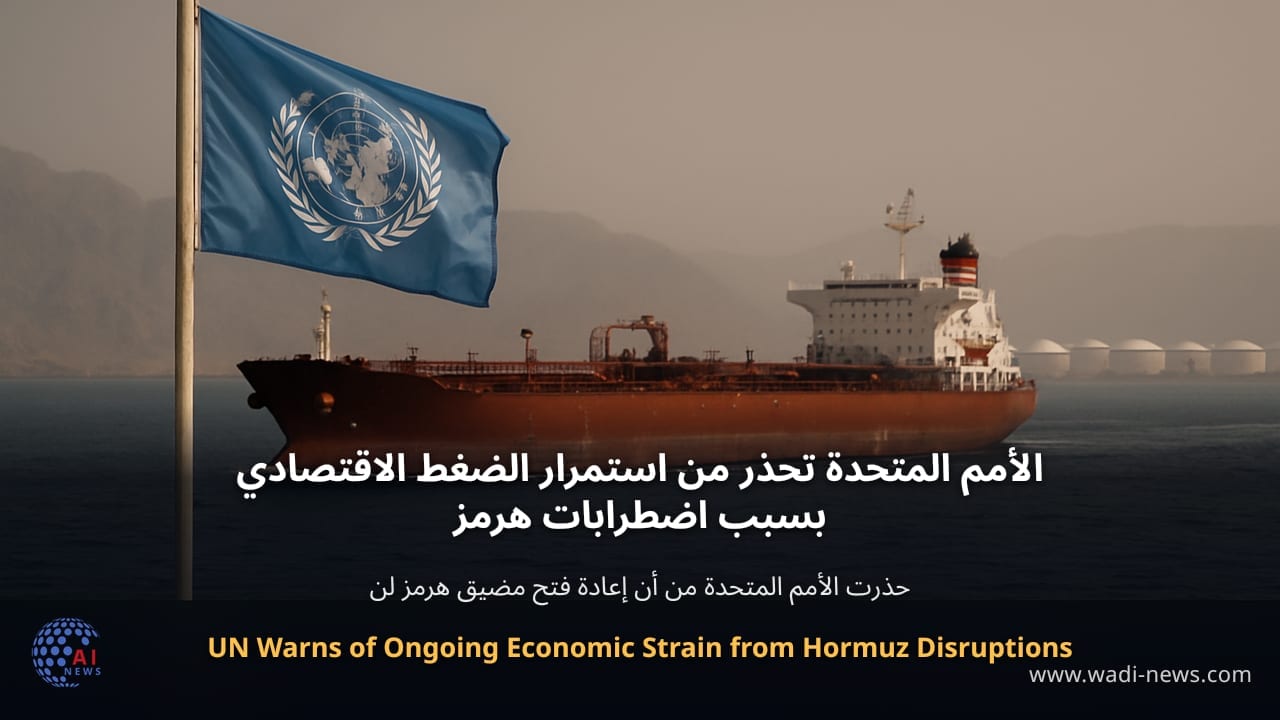
In a recent report, the United Nations has highlighted the ongoing challenges faced by fragile economies following the reopening of the Strait of Hormuz. Despite this critical step towards restoring international trade and energy flows, the report indicates that the effects of over three months of shipping disruptions will linger. Economies that are already struggling will likely continue to experience inflationary pressures and food insecurity for the foreseeable future.
According to UN Secretary-General António Guterres, while the resumption of navigation is a positive development, the shocks caused by the disruption have already permeated the global economy. He urged all parties involved to adhere to ceasefire agreements and to enhance efforts aimed at stabilizing the situation. The report emphasizes that the most vulnerable economies are experiencing heightened costs for energy and food, significantly impacting inflation rates and the affordability of essential commodities, particularly for low-income households.
Statistics reveal that prior to the crisis, approximately 125 vessels traversed the Strait of Hormuz daily, a figure that plummeted to as low as 20-25 during the disruption period. Following the announcement of the strait's reopening, the shipping activity began to recover, yet the report notes that shipping costs have not decreased at a similar rate, maintaining high levels for grain and oilseed shipping indices. This disparity indicates a persistent strain on global supply chains.
The report identifies 61 economies as particularly vulnerable, primarily due to their dual reliance on oil and grain imports. This situation exacerbates their exposure to rising import bills and accelerating inflation, especially as they grapple with limited financial resources and a weakened ability to absorb economic shocks. Countries such as Yemen, Kiribati, and Lesotho are highlighted for their significant reliance on grain imports, which poses a considerable risk to their economic stability in the face of rising global prices.