
ADVERTISEMENT
Economy
Canada Launches Ambitious Nuclear Energy Strategy
Canada has officially unveiled its first national nuclear energy strategy, aiming to transform the sector into a significant driver of economic growth and energy security, amidst skepticism from opposition parties regarding the government's ability to deliver on its promises.
Jun 30, 2026, 2:26 PM | 1-2 min read | By Wadi News Editorial Team
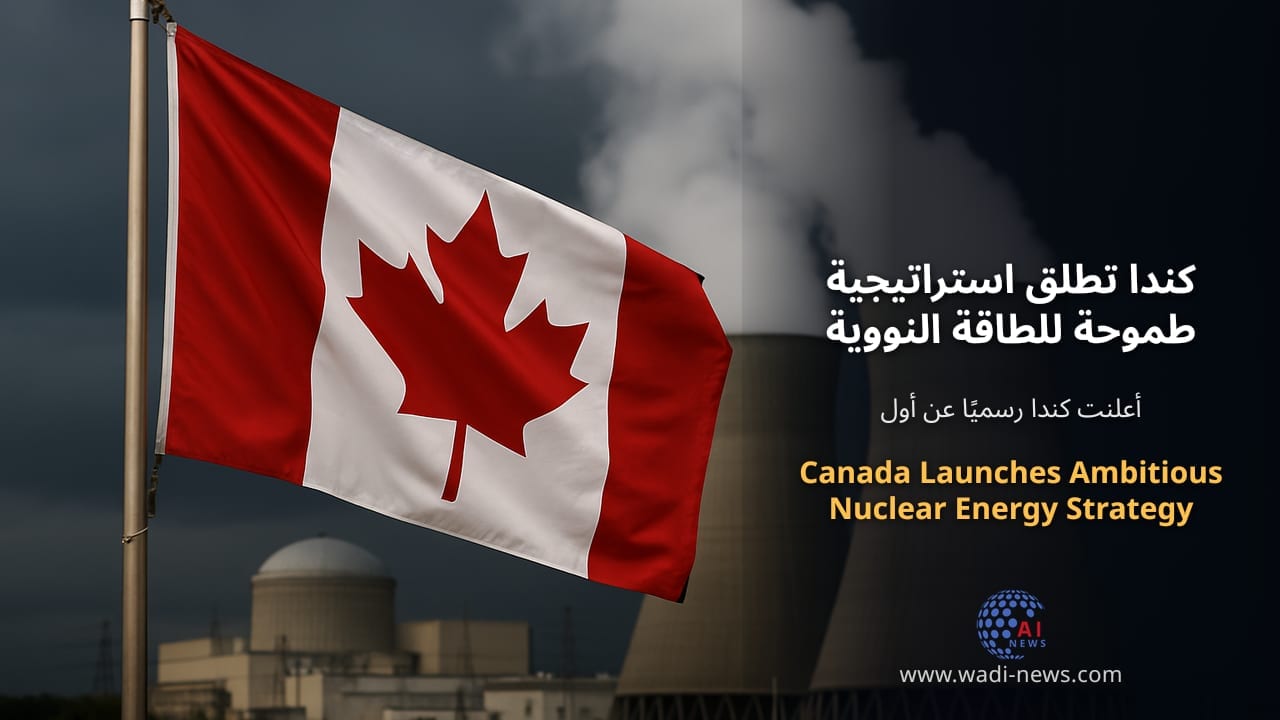
In a historic move, Canada has launched its inaugural national nuclear energy strategy, which is being hailed as a potential 'nuclear renaissance'. This initiative aims to shift the nuclear sector from a traditional energy source to a central component of sustainable economic growth. The Canadian government, led by Prime Minister Mark Carney, envisions this strategy not only as a means to enhance energy security and sovereignty but also as a way to elevate the nation’s productivity levels and boost its international competitiveness in clean energy and advanced nuclear technology.
The timing of this strategy comes as Canada faces a mild economic recession, following two consecutive quarters of GDP contraction. Economic forecasts suggest a modest growth rate of between 1.1% and 1.5% for 2026, against a backdrop of rising youth unemployment, skill shortages in specialized sectors, and ongoing trade tensions. The government’s plan consists of four main pillars designed to balance energy security, emissions reduction, and sustainable economic growth, as outlined in their official statement.
These pillars include the construction of up to ten new large nuclear reactors, with plans to begin building two reactors by 2035. Furthermore, the strategy aims to double the electrical grid capacity by 2050 to meet the increasing demands from industries and electric vehicles. It also focuses on expanding nuclear technology exports and increasing uranium and nuclear fuel production. Lastly, the strategy promotes future innovation, including the development of small modular reactors and nuclear fusion technologies.
Despite the ambitious plans, opposition leader Pierre Poilievre has criticized the strategy, claiming that merely announcing plans will not lead to tangible results. He argues that the government prioritizes promises over real achievements on the ground. Poilievre's party proposes to eliminate regulatory barriers to development and depoliticize the Canadian Nuclear Safety Commission to expedite project construction and produce cheaper, more abundant electricity.
Economic experts, like Dr. Ziad Al-Ghazali, believe that the nuclear energy program has the potential to become a key driver of economic prosperity in Canada in the coming years. The strategy could attract significant capital investments in infrastructure projects and create thousands of high-skill jobs, invigorating sectors such as engineering, manufacturing, and technological innovation. By providing reliable, low-emission electricity, the program is expected to enhance the competitiveness of Canadian industry and stimulate additional investments, thereby lifting the national economy and mitigating recession risks through increased domestic demand.