
ADVERTISEMENT
Politics
Pakistan's Strikes in Afghanistan: A Response to Escalating Attacks
Pakistan has conducted air strikes in Afghanistan targeting armed group hideouts following a deadly attack on its security forces. Analysts question the effectiveness of military pressure in addressing the ongoing threat from militant groups.
Jun 30, 2026, 1:56 PM | 1-2 min read | By Wadi News Editorial Team
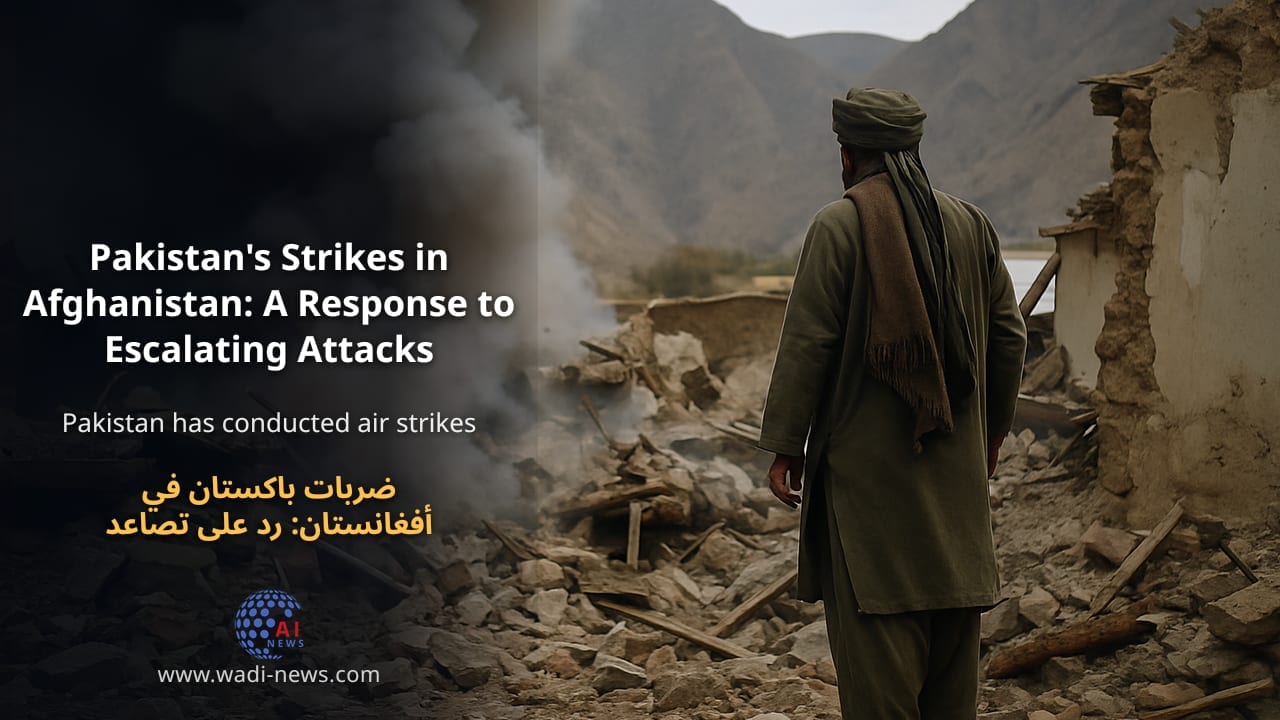
In response to a recent attack that resulted in the deaths of three paramilitary personnel in Karachi, Pakistan conducted air strikes targeting what it described as hideouts of armed groups in three Afghan provinces: Paktia, Paktika, and Kunar. This military action followed the assault on a Sindh Rangers base, which left four others injured and prompted the Pakistani government to summon the Afghan envoy for a formal protest. Information Minister Attaullah Tarar stated that these operations resulted in the deaths of 25 fighters, including members of the Jamaat-ul-Ahrar (JuA), a faction known for its violent activities in the region. The JuA has been linked to the Tehreek-e-Taliban Pakistan (TTP), responsible for numerous attacks within Pakistan, raising concerns about the ongoing security situation.
Despite the military response, analysts have expressed skepticism regarding the effectiveness of such tactics in curbing the persistent threat posed by militant groups. The Pakistani government has relied heavily on military strikes and diplomatic measures to combat terrorism, yet the frequency of attacks continues to rise. According to reports, attacks in Pakistan surged by 34 percent in 2025, with a significant number of incidents occurring in Khyber Pakhtunkhwa and Balochistan provinces. The question remains whether military action alone can address the underlying issues that fuel these attacks, or if a reevaluation of strategy is necessary.
The JuA's claim of responsibility for the Karachi attack underscores its desire to assert its relevance amidst internal competition within militant factions. Analysts suggest that the group aims to showcase its capability to execute significant operations independently, separate from the TTP. This dynamic adds complexity to the already fraught relationship between Pakistan and Afghanistan, as both nations navigate accusations and counter-accusations regarding support for militant activities.
As the cycle of violence continues, both nations find themselves entrenched in a narrative battle. Pakistan's military strikes have drawn condemnation from the Afghan Taliban, which claims civilian casualties resulting from these operations. This situation further complicates diplomatic relations and raises concerns about the humanitarian impact of ongoing conflicts. With public sentiment on both sides growing increasingly hostile, analysts warn that a fresh approach is needed to break the cycle of violence and foster a sustainable resolution to the longstanding issues affecting the region.