
ADVERTISEMENT
Politics
Vance vs Rubio: Is Team Trump Divided on Iran and Lebanon?
The White House denies any division between JD Vance and Marco Rubio regarding U.S. foreign policy towards Iran and Lebanon, despite their historically differing views.
Jun 30, 2026, 11:17 AM | 1-2 min read | By Wadi News Editorial Team
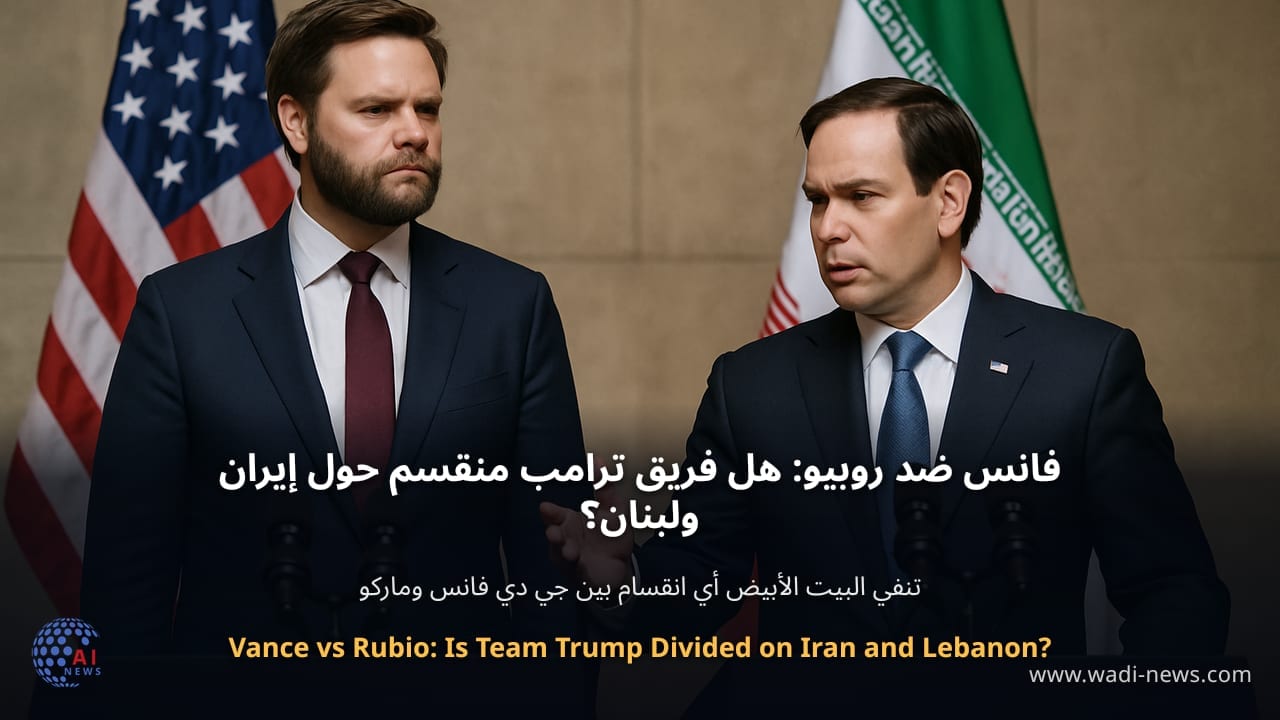
As U.S. President Donald Trump faces backlash, particularly from pro-Israel politicians and advocates, for signing the Memorandum of Understanding (MoU) with Iran, his deputy, JD Vance, has taken to the media to defend the agreement aimed at ending the prolonged conflict. Vance has emphasized the 'good progress' made and the 'very good foundation' laid for a successful final deal with Iran, which is expected to be concluded within 60 days. This optimistic outlook contrasts sharply with the sentiments expressed by Secretary of State Marco Rubio, who has been more cautious and critical of Iran's actions.
The divergence in their statements has raised questions about potential rifts within the Trump administration. Vance, who led negotiations with Iran in Switzerland, has not shied away from using strong language against Israel, criticizing its military tactics and suggesting that such actions undermine U.S.-led peace efforts. In stark contrast, Rubio has refrained from criticizing Israel and instead focused his rhetoric on condemning the Iranian government, emphasizing the need to reassure Gulf allies who feel threatened by Tehran's actions.
Both officials have been dispatched on high-profile trips to bolster support for the MoU, yet their differing tones have sparked speculation about the coherence of U.S. foreign policy. Vance's remarks have included calls for Israel to temper its military responses, while Rubio has defended Israel's actions as necessary responses to threats from Hezbollah. This apparent split in messaging has led to a vigorous denial from the White House, asserting that the administration is united behind Trump's policies regarding Iran.
The implications of this situation are significant, as Vance and Rubio represent two influential factions within the Republican Party. Vance's more isolationist stance contrasts with Rubio's hawkish approach, reflecting broader debates within the party about the direction of U.S. foreign policy. As both men are seen as potential successors to Trump, their differing views could shape the future of the Republican Party's approach to international relations, particularly in the Middle East.