
ADVERTISEMENT
Politics
Steinmeier Warns of a 'New World Disorder'
German President Frank-Walter Steinmeier emphasizes the increasing rule-breaking in international politics and insists that Germany must maintain its commitment to the United Nations.
Jun 29, 2026 | 1-2 min read | By Wadi News Editorial Team
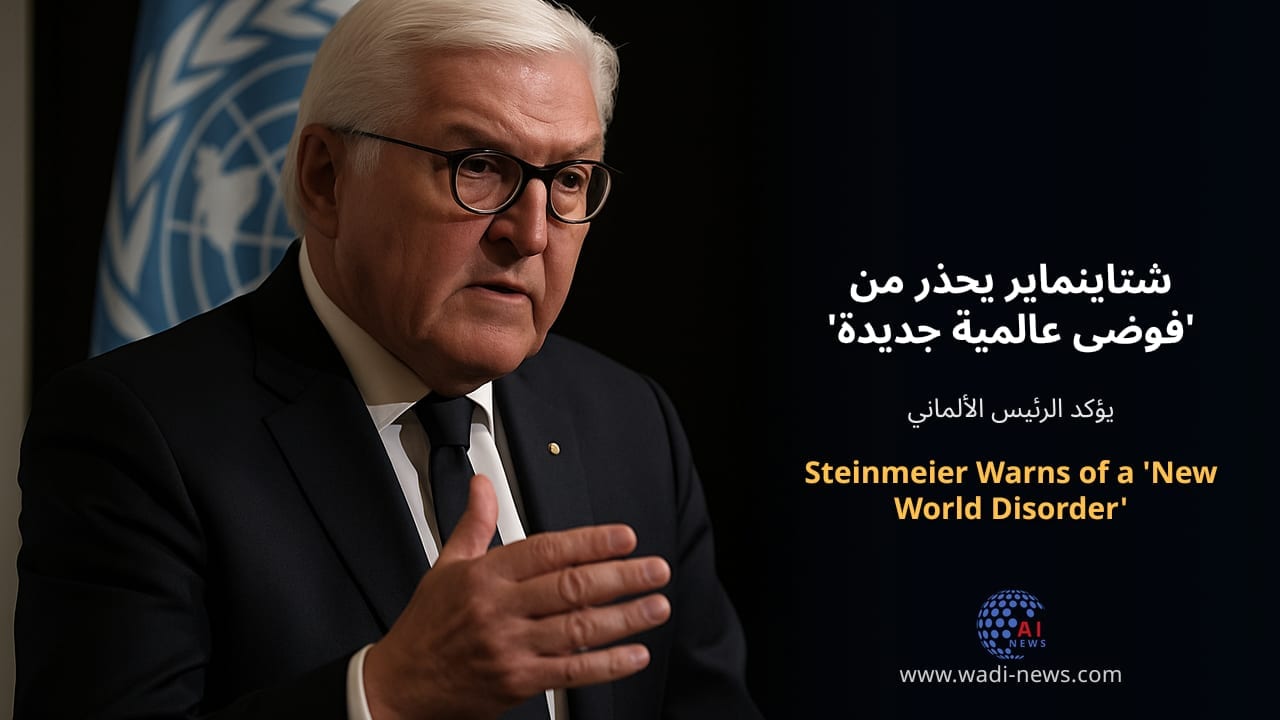
In a recent address at the Hamburg Sustainability Conference, German President Frank-Walter Steinmeier expressed deep concerns regarding the current state of international politics, which he described as increasingly characterized by rule-breaking. He emphasized that the principles of cooperative and rule-based order are being undermined by raw power politics and confrontational attitudes. Steinmeier's remarks come at a time when global stability is being challenged, and he called for a renewed commitment to international cooperation, particularly through the United Nations.
Steinmeier pointed out that Germany, along with the majority of other nations, cannot thrive in a world devoid of rules. He stressed the importance of nurturing and expanding partnerships, especially in development cooperation, to tackle global challenges such as climate change, hunger, and poverty. According to him, these issues cannot be effectively addressed without mutual trust among nations. He highlighted the critical need for countries to work together to ensure a stable and prosperous future.
One of the pressing examples Steinmeier cited was the blockade of the Strait of Hormuz, which starkly illustrated the world's reliance on free trade routes and secure supply chains. He noted that disruptions in the transport of food, fertilizers, and fuel lead to skyrocketing food prices globally, disproportionately affecting poorer nations. This situation underscores the urgency of maintaining open and cooperative international relations.
Steinmeier also addressed the recent failure of Germany's bid for a non-permanent seat on the UN Security Council, describing it as a bitter loss that raises important questions about Germany's role in global governance. He firmly rejected calls to reduce Germany's engagement with the United Nations, arguing that such a withdrawal would be shortsighted and detrimental. Instead, he urged the UN to become more efficient and effective in its operations, especially in light of the growing skepticism towards its contributions and budgets. Steinmeier's call to action reflects a broader need for international institutions to adapt and prove their value in a changing geopolitical landscape.